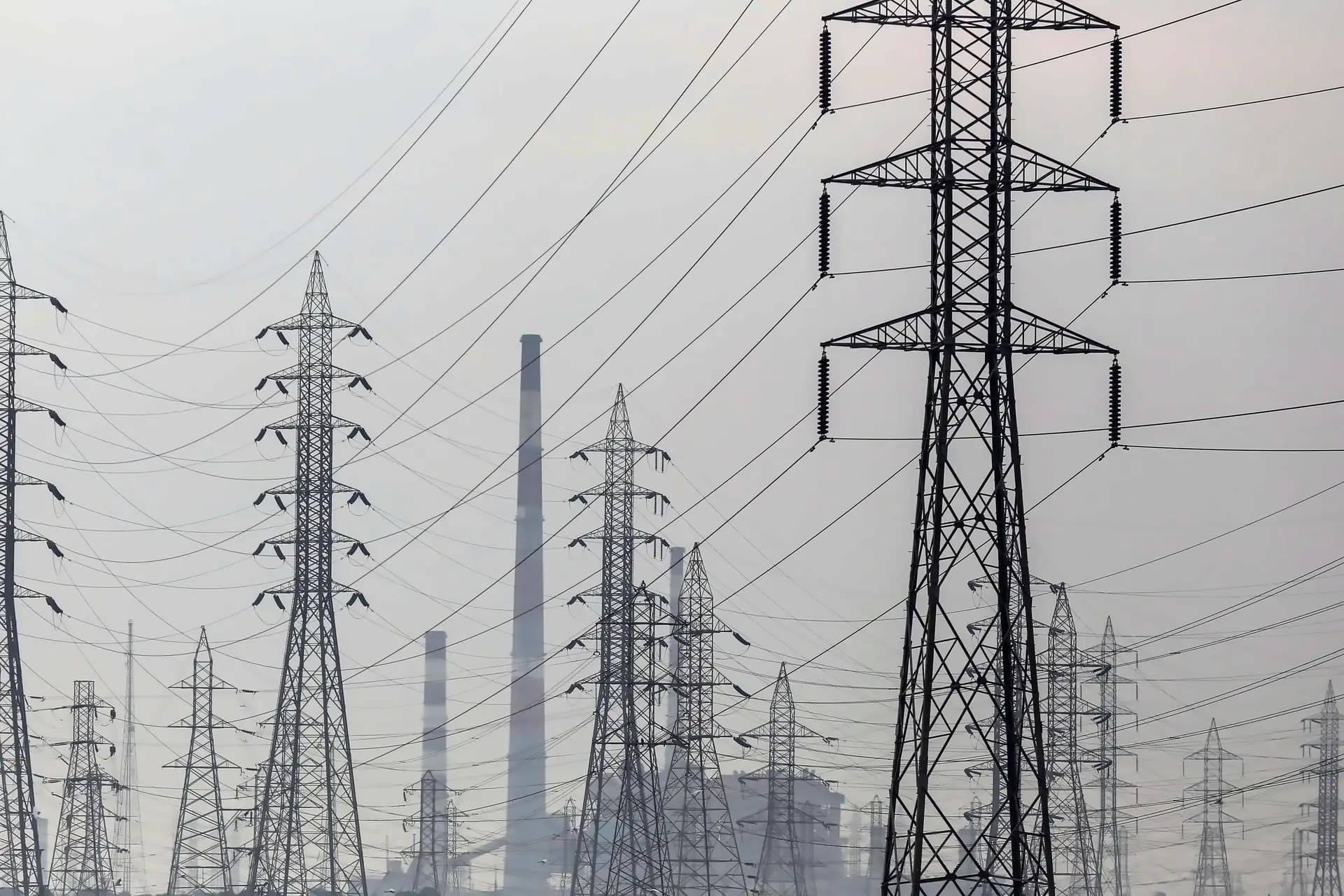
Power transmission projects worth nearly ₹5 trillion are currently under bidding or execution across India, according to a senior official from the ministry of power. This large pipeline comes at a time when transmission infrastructure has emerged as a bottleneck in expanding renewable energy capacity and meeting the country's rapidly rising power demand. In FY26, transmission projects worth ₹1 trillion cleared the National Committee on Transmission stage, while projects worth ₹1.47 trillion progressed beyond the special purpose vehicle stage. The government's broader objective is to build a next-generation, intelligent and integrated national grid capable of supporting renewable energy, storage solutions, green hydrogen, and emerging demand centres such as data hubs.
According to the business update Investor and analyst interaction on 23 March 2026, Power Grid Corporation of India has a strong, visible execution pipeline of over ₹1.48 trillion. Assuming a 50% win rate on a ₹15 trillion opportunity, the company estimates potential project wins of around ₹7.5 trillion over the coming decades, resulting in an illustrative long-term execution pipeline of over ₹9 trillion. Power Grid, a Maharatna central public sector enterprise under the ministry of power, is primarily engaged in the transmission of electricity through its EHVAC (extra high voltage alternating current) and HVDC (high voltage direct current) transmission networks. The company owns and operates approximately 84% of India's inter-state transmission system (ISTS) network, making it one of the largest transmission utilities globally, and operates one of the world's largest 765 kV transmission networks.
Tata Power has a diversified power portfolio with a total capacity of 26,346 MW as of Q3 FY25, including 16,310 MW operational capacity. The company also has a growing transmission footprint, with 4,738 circuit kilometres of operational transmission lines and 2,573 ckm under construction, indicating expansion in its transmission network. While the overall order book for transmission businesses was not disclosed as of Q3 FY26, the company reported an order book of ₹1,170 crore for its third-party rooftop solar segment. Tata Power is India's largest vertically integrated power company, with a well-established presence across renewable, thermal and hydro generation, transmission, energy trading, distribution, and next-generation energy solutions. Going forward, it plans to significantly expand its clean energy portfolio, targeting at least 70% of its overall capacity from clean and green sources by 2030.
As per the Q3 investor presentation, Torrent Power continues to maintain a strong execution pipeline across renewable energy and transmission segments, despite not disclosing a consolidated order book value. Torrent Power plans to expand its renewable portfolio to around 5.95 GW, supported by approximately 4.3 GW of projects under installation across solar, wind, and hybrid segments, with a total estimated project cost of around ₹27,880 crore. In addition, the company is developing a 3 GW pumped storage hydro project in Maharashtra, with an estimated investment of around ₹14,000 crore and commissioning targeted by October 2028. On the transmission front, Torrent Power has secured key projects, including a 400 kV transmission line for evacuation of 4.5 GW renewable energy in Khavda, Gujarat, along with the Solapur transmission project for evacuation of 1,500 MW of renewable power.
India has made substantial progress in its renewable energy transition, with the country adding roughly 55 gigawatts of renewable energy capacity in the last financial year, according to Vibhuti Garg, Director for South Asia at the Institute for Energy Economics and Financial Analysis (IEEFA). Solar alone contributed about 48 GW of this capacity addition, marking a substantial scale-up that is beginning to show not just in installed capacity but also in actual electricity generation. Electricity generation from non-conventional energy sources has increased gradually from 1.47 lakh MU in 2020-21 to 2.55 lakh MU in 2024-25, and further to 2.83 lakh MU in FY 2025-26 till February. This transition is particularly significant as renewables, especially solar, are now among the most cost-competitive sources of power in India, increasingly being dispatched to meet demand, particularly during daytime hours. However, India faces a dual peak demand pattern with a morning-to-afternoon peak and a sharper evening peak, which remains a challenge for solar-based generation.