The Nifty 50 index declined 0.32% at the close of Monday's trading session, with the BSE Sensex 30 falling 0.36% as reported by Investing.com. The decline was primarily driven by weakness in the IT, Technology and Fast Moving Consumer Goods sectors, continuing the broader market weakness that has seen the index fall 15% from its peak. On the NSE, falling stocks outnumbered advancing ones by 1,381 to 1,196, while 57 stocks ended unchanged. The India VIX, measuring implied volatility, increased 0.88% to 11.41, reflecting heightened market uncertainty.
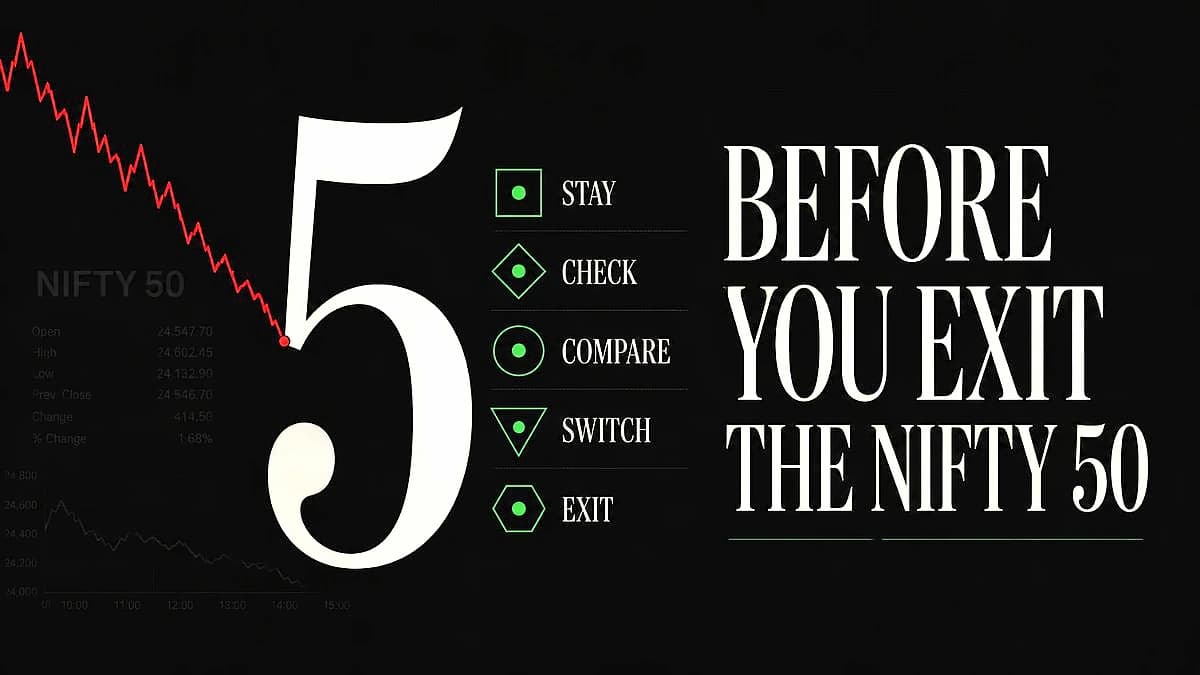
Financial experts recommend using five key criteria to evaluate investment decisions during this market downturn. The framework includes drawdown analysis, PE ratio evaluation, recovery history analysis, SIP behavior patterns, and investment horizon considerations. As reported by market analysts, these data-backed metrics provide a comprehensive approach to making informed investment decisions amid the current market volatility.
The first two criteria focus on market performance metrics. Drawdown analysis examines the extent of the current decline and compares it to historical market movements. PE ratio evaluation provides insights into the index's valuation relative to earnings. According to market reports, these quantitative measures help investors understand the severity of the current correction and its potential impact on future returns, particularly relevant as the market navigates through this period of uncertainty.
Monday's trading session revealed clear sectoral divergence with declining stocks outnumbering rising ones by 1,381 to 1,196 on the NSE. Infosys Ltd emerged as the biggest loser, declining 2.83% to ₹1,136.10, followed by Sun Pharmaceutical Industries which fell 2.54% to ₹1,881.00. On the positive side, Hindalco Industries led gains with a 2.18% rise to ₹1,051.95, while Tata Steel and Axis Bank also posted solid gains. The India VIX, measuring implied volatility, increased 0.88% to 11.41, reflecting heightened market uncertainty.

The final criterion emphasizes long-term investment perspective during this period of market volatility. Investment horizon analysis helps investors determine whether the current pullback represents a temporary correction or a more significant market shift. According to market reports, this consideration is particularly important for long-term investors who may view the current decline as an opportunity rather than a cause for panic, while maintaining a strategic perspective on their investment timeline.