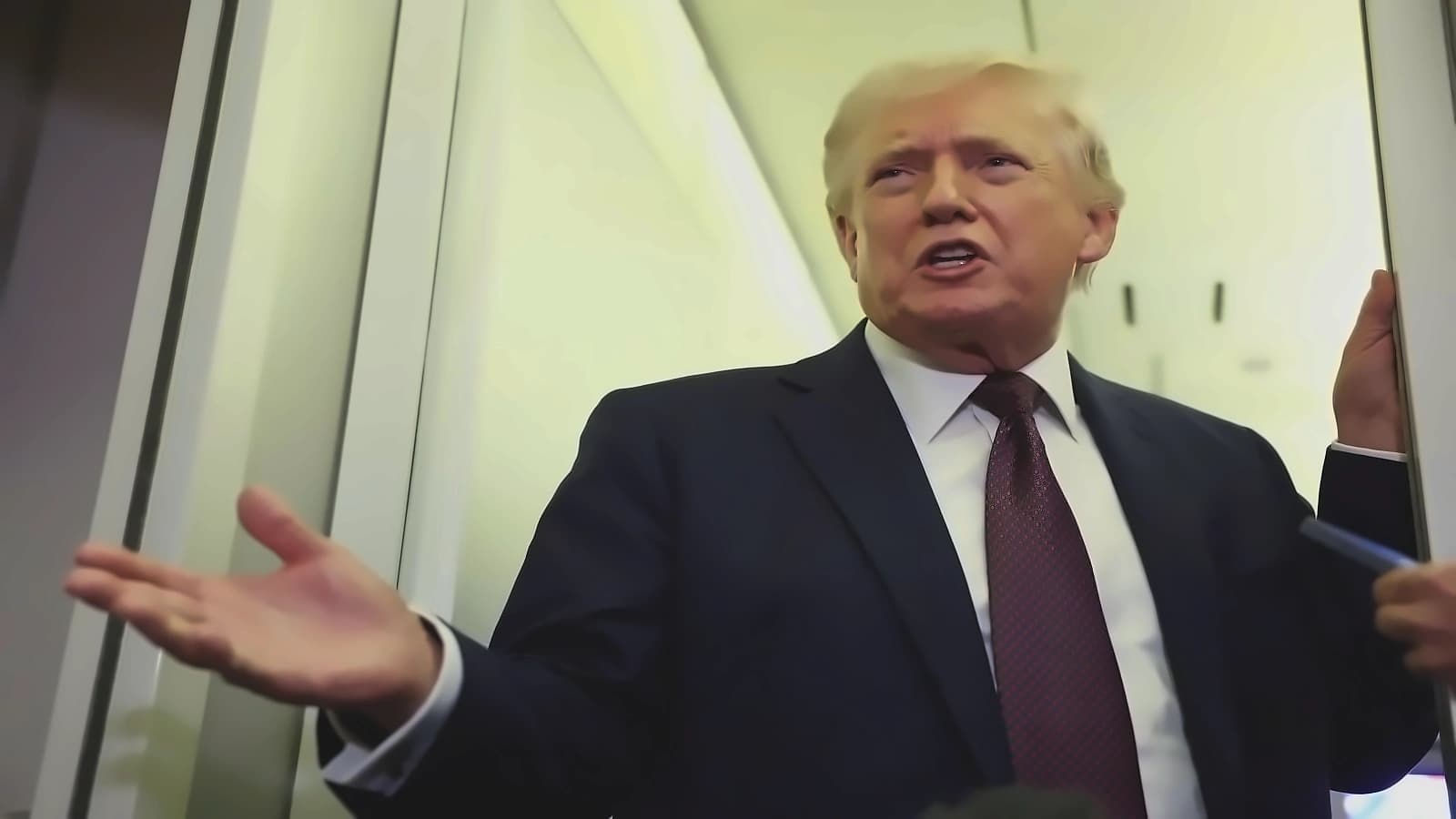
US President Donald Trump purchased at least $1 million in SpaceX debt during August, according to a financial disclosure released by the US Office of Government Ethics. Trump bought the SpaceX notes on August 18, and they mature in July 2031, as reported by Bloomberg News. This acquisition comes as SpaceX seeks to raise $40 billion in debt to acquire Nvidia chips for its AI expansion. The filing details 517 transactions completed during August, with Trump's investment accounts recording thousands of transactions each quarter involving tens of millions of dollars in major company shares. Trump also purchased Tesla shares valued at no less than $51,000, adding to his exposure to Musk's companies.
Elon Musk lost more than $21 billion from his net worth on Wednesday morning after SpaceX shares fell around 2%, according to Forbes. The fall came just two days after Musk regained his status as a trillionaire. As of 11:35 a.m. EDT on Wednesday, Musk's net worth stood at $1.03 trillion, down 2.04%, despite remaining the world's richest person with a trillionaire status. SpaceX shares were trading at $168.86, down around 2%, following reports that the company is in talks with banks and asset managers to raise billions for Nvidia AI chip purchases. The decline was triggered by concerns over the company's unprecedented debt financing plans and rising credit risks.
The price of five-year credit default swaps on SpaceX's debt rose as much as 0.167 percentage point, or 16.7 basis points, to around 197.6 basis points a year, according to ICE Data Services. This surge represents a fresh high for the company's credit risk as investors grow increasingly concerned about the massive debt financing plans. Sal Naro, chief investment officer at Coherence Credit Strategies, told Bloomberg News that "This is unprecedented debt supply with no real ending in sight." He noted that "The world has never seen an infrastructure build like this. This is larger than the railroads because this is global, all at once." The credit risk increase reflects growing investor skepticism about the company's ability to manage such massive debt obligations while funding its AI expansion.
Goldman Sachs has raised its SpaceX price target to $230 from $220, with CNBC's Jim Cramer noting that the earlier target was not guesswork. The investment bank, which served as a lead underwriter on SpaceX's $86 billion IPO in June, opened coverage at $205 in July under analyst Eric Sheridan. Cramer explained that analysts covering speculative stocks rarely lift targets until buyers have already pushed shares past the old one. Since SpaceX shares climbed from near $120 to $171.92 on October 6, Cramer said "Maybe there really is some rigor to the analysis." The latest raise comes before SpaceX reports third-quarter results, with Goldman citing higher expected AI capacity, revenue and margins.
SpaceX is in talks with banks and investors to raise $40 billion in debt to acquire Nvidia chips for its AI expansion, according to reports from Bloomberg and Financial Times. The company is seeking approximately $10 billion in bank loans and $30 billion in investment-grade debt to fund the massive chip procurement. Apollo Global Management Inc. is leading the financing, with Pacific Investment Management Co. and Pimco among the investment managers considering participation in the financing round. The deal is expected to close in 2027, with Apollo's life insurance and annuities arm Athene typically buying a large portion of these debt offerings. The fundraising discussions are in early stages and could end without completion, as reported by sources familiar with the matter. The $40 billion raise equals roughly 1.8% of SpaceX's market capitalization, based on Google Finance figures, representing a significant but manageable portion of the company's valuation.
Colossus 2, SpaceX's AI computing cluster built by xAI business, currently houses 110,000 Nvidia GB200 chips and 440,000 GB300s, according to Musk's latest updates on X. The cluster is experiencing significant expansion with 220,000 additional GB300s due to be operational next week, followed by another 220,000 expected in November. Musk indicated that an additional 220,000 may come online late December "if we get lucky." By December, xAI's Colossus 2 data center could run more than twice as many Nvidia chips, as Musk said last month. Just last month, Musk said Colossus 2 may more than double its current Nvidia chip count by the end of the year, representing the most detailed timetable provided yet for expansion plans for the Memphis-area cluster.

Musk has made clear that SpaceX plans to rely heavily on Nvidia's technology, stating during SpaceX's earnings call in August that "We've decided to build exclusively on Nvidia because we think the Vera Rubin architecture is the best architecture." He emphasized that "We think it's the best AI computer, and we greatly value our close co-operation and partnership on many levels with Nvidia." The deal would deepen the relationship between SpaceX and Nvidia at a time when Nvidia is facing growing competition from other chipmakers trying to challenge its lead in advanced AI semiconductors. Nvidia has responded by building its own financing network, announcing plans for a $500 billion funding platform with Apollo, BlackRock, Blackstone, Brookfield, Goldman Sachs and KKR in August, with the goal of lowering borrowing costs for smaller customers building AI infrastructure. Apollo already works with Nvidia on AI funding, having partnered with it and five other firms including BlackRock and KKR in August, targeting more than $500 billion for AI projects.
SpaceX closed Tuesday at $171.92, up $23.29 over five days, according to Google Finance data, representing a 16% five-day rally that has lifted the company's market value to about $2.17 trillion. However, the shares still sit about 24% below their 52-week high of $225.64, indicating that while investors are responding positively to the AI expansion news, there remains room for further appreciation. The latest decline came after Musk's wealth rose by more than $30 billion on Monday when SpaceX and Tesla shares gained, pushing him back into the trillionaire club. The stock has declined 30% below its post-IPO high of $225.64, with approximately 328 million shares becoming free to sell on September 24 as the post-IPO lockup ended. Investors are weighing the debt-funded chip order against the recent rally, testing whether credit markets remain open to AI infrastructure financing and whether equity holders accept the added leverage.