

Morgan Stanley has projected robust growth for Adani Green Energy Ltd., with Earnings Per Share (EPS) expected to grow at a Compounded Annual Growth Rate (CAGR) of 49% over financial year 2026-2031. According to the brokerage's note, the company's Return on Capital Employed (RoCE) can grow at a 14% CAGR by financial year 2031. Morgan Stanley has assigned an 'overweight' rating with a price target of ₹1,525, implying an upside potential of 17.3% from Thursday's closing price. The company continues to guide to 20-25% revenue CAGR over FY2025-30, maintaining a confident outlook for its clean energy operations.
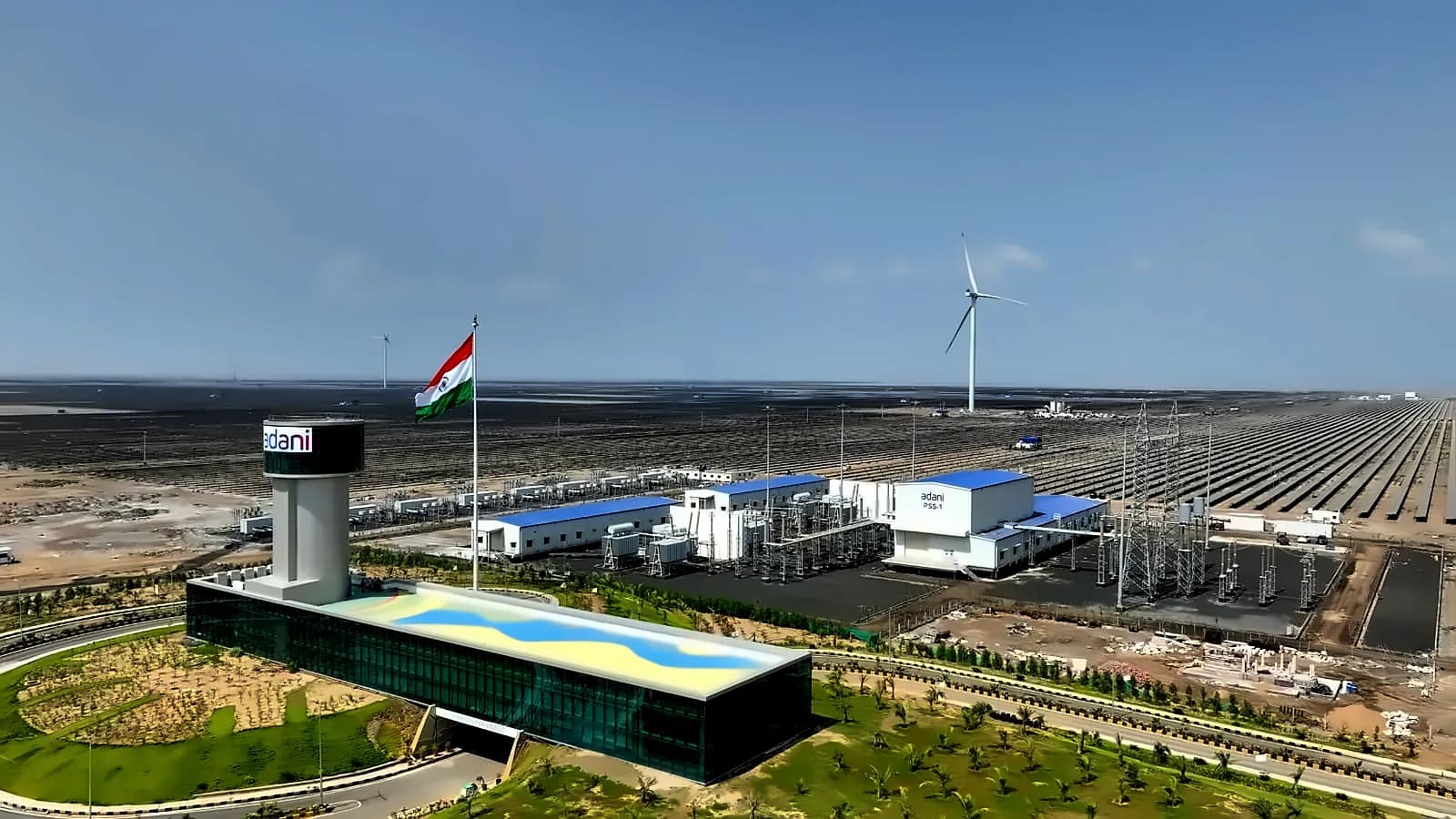
The brokerage's base case assumes significant capacity expansion, with contracted renewable energy capacity reaching 38 GW by financial year 2031 from the current 20.1 GW. As reported by Morgan Stanley, the contracted storage capacity is projected to scale to 49 GWh during this period, comprising 39 GWh BESS and 1.8 GW pumped storage. The company is positioned as India's leading clean energy platform, combining strong execution at scale across clean technologies with improving portfolio quality that supports better cash flow and returns visibility, with one of the strongest capacity and earnings growth profiles in the sector.
Morgan Stanley values the stock at 12.5 times its FY31 estimated enterprise value/EBITDA, justified by its scale, execution capabilities, storage-led evolution and superior growth prospects. According to reports from CNBC TV18, shares of Adani Green Energy are trading 1.4% higher on Friday at ₹1,320. The stock has delivered strong performance with a 29% gain so far this year. Among 11 analysts covering the stock, 10 have a 'buy' rating and one has a 'sell' rating.
While maintaining a bullish stance, Morgan Stanley has identified three key risks that could impact the investment thesis. As reported by CNBC TV18, these include slower data centre building which would consequentially result in slower commercial and industrial (C&I) contracting, slippages in renewable energy/storage build-out due to Khavda evacuation delays, and reduced access to low-cost capital. These factors could potentially impact the company's growth trajectory and financial performance.