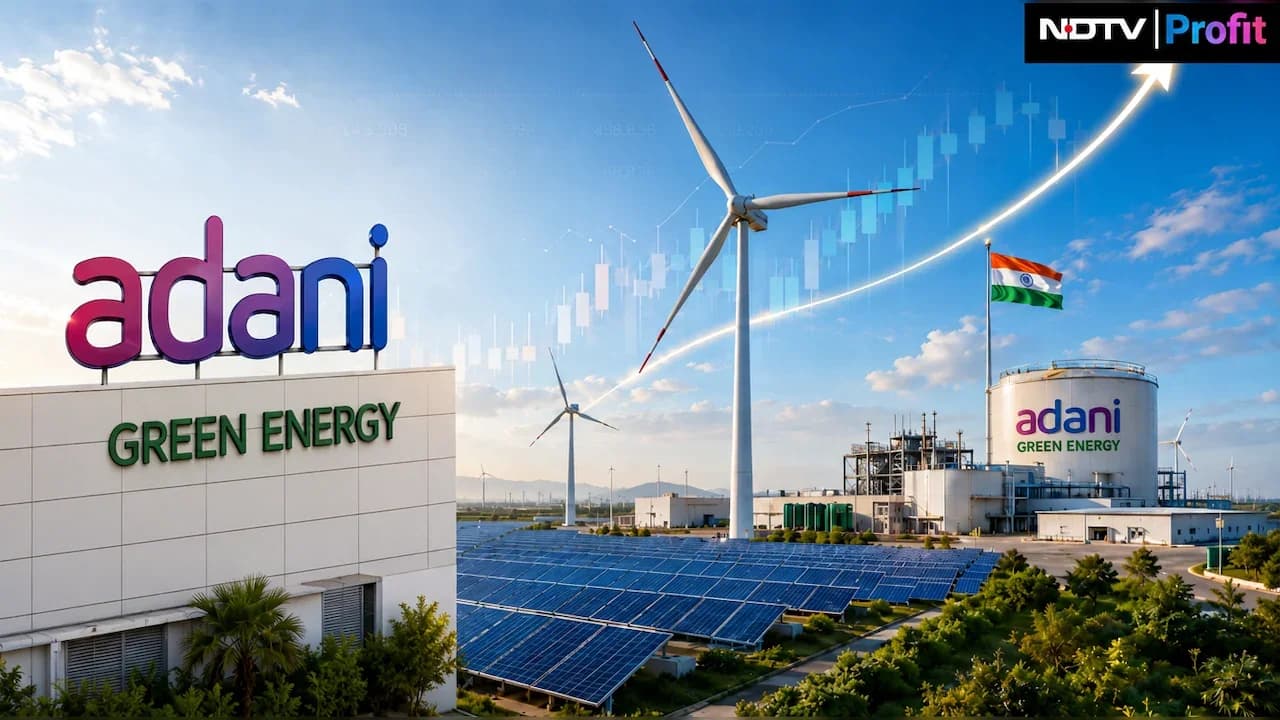
Adani Enterprises has emerged as the top gainer in Nifty 50 for 2026, gaining around 30% so far this year and positioning itself to finish as the index's leading performer. This marks a dramatic turnaround from the company's position at the centre of one of India's biggest stock-market sell-offs in early 2023. The flagship company of Gautam Adani's conglomerate last held this position at the end of 2022, before the Hindenburg Research report triggered a sharp sell-off across Adani Group stocks in January 2023. The report raised questions about the group's debt, accounting practices and use of offshore entities, causing more than $150 billion to be wiped off the combined market value of listed companies at one point.
Three years after the Hindenburg report, Adani Group is witnessing a return of institutional investors who are now increasing their exposure to the conglomerate's companies. Capital Group, Goldman Sachs Group and SBI Funds Management are among the large investors that have raised their holdings in Adani Group companies, according to Bloomberg reports. Morgan Stanley has also initiated coverage of Adani Enterprises with an Overweight rating in June, while the brokerage maintains an Overweight rating on Adani Green Energy with a target price of ₹1,525 implying a 17.1% upside. The renewed investor interest reflects the group's three-year effort to rebuild its investor base and raise fresh capital for its businesses.
Adani Enterprises has undergone a significant transformation, with its business mix moving further towards infrastructure projects with longer operating lives and more predictable revenue. Around 80% of the company's FY26 EBITDA comes from mature, long-term and contracted businesses, according to Adani Enterprises. The company has been building businesses across airports, data centres and other sectors where projects typically run for decades. This shift has given investors a clearer view of where future earnings could come from, supported by India's push to build roads, airports, ports, power capacity and digital infrastructure. The group has also been able to tap institutional funding for expansion, with AdaniConneX recently securing $800 million in debt financing.
Morgan Stanley expects Adani Green to deliver an 18% revenue CAGR between FY26 and FY31, while return on capital employed is estimated at 14% over the same period. The brokerage highlighted that execution at scale is becoming increasingly important as India's renewable energy market expands. Adani Green has more than doubled its capacity over the past two years, with multi-GW capacity additions broadly in line with its guidance. According to Morgan Stanley's analysis, contracted renewable energy capacity is expected to reach around 38 GW by FY31 from the current 20.1 GW, with contracted solar capacity projected to reach 49 GW.
Morgan Stanley identified rising power demand from AI-driven data centres as an opportunity for Adani Green. The brokerage estimates India's data centre capacity could reach around 10.5 GW by FY31, increasing demand for reliable and dispatchable clean power. Additionally, Adani Green is expected to benefit from the Adani Enterprises ecosystem's planned 3 GW data centre capacity by 2030, which could create an additional opportunity for the renewable energy company. This data centre expansion aligns with the broader infrastructure push that is creating favorable conditions for Adani Group's businesses across multiple sectors.
According to Bloomberg data, Adani Green has 10 Buy ratings among the analysts tracked, with the 12-month consensus target price standing at ₹1,570.45, implying a 20.6% potential upside from the August 20 close. Axis Capital maintains a Buy rating with a target price of ₹1,704, while Elara Capital has an Accumulate rating with a ₹1,502 target. The consensus target price of ₹1,570.45 represents a higher upside potential than Morgan Stanley's ₹1,525 target price. The return of institutional investors does not mean the concerns that emerged after the Hindenburg report have disappeared, but it suggests that some investors are again willing to take a longer-term view of the group's transformation and infrastructure-focused business model.