
Morgan Stanley has issued a positive recommendation for EchoStar, citing the company's compelling investment proposition. According to reports from CNBC TV18, the investment bank believes EchoStar is poised to rally following its recent market pullback. The recommendation centers on EchoStar's strategic positioning in the space industry through its partnership with SpaceX.
As reported by CNBC TV18, EchoStar offers investors exposure to SpaceX at a compelling discount. The company's multi-billion partnership with SpaceX forms the core of its investment appeal. This strategic alliance provides EchoStar with significant exposure to the rapidly growing space technology sector through its collaboration with SpaceX, one of the world's leading space companies.
Despite SpaceX's recent surge to a $2.5 trillion valuation, analyst Tim Farrar questions whether the company can justify such a massive market cap. According to CNBC, Farrar stated that investors are backing Elon Musk's long-term vision rather than SpaceX's current launch, Starlink, and AI businesses. He noted that SpaceX would need a 50x increase in revenue over the next five years to justify its current valuation, citing Musk's prediction of $1 trillion annual revenue by 2030.
Cathie Wood of ARK Invest calls the $1.75 trillion SpaceX IPO a deep value bargain, citing potential for $10 trillion in annual revenue from Starship operations. As reported by ARK Invest, Wood projects that a single Starship launch could generate $1 billion in revenue, based on Elon Musk's goal of 10,000 flights per year by 2030. The math assumes one Starship carries roughly 61 Tbps capacity, which would generate $19 million per year in recurring Starlink revenue when fully loaded. However, early investors have seen little return, with SPCX pricing at $135 in June and closing below IPO price in subsequent sessions.
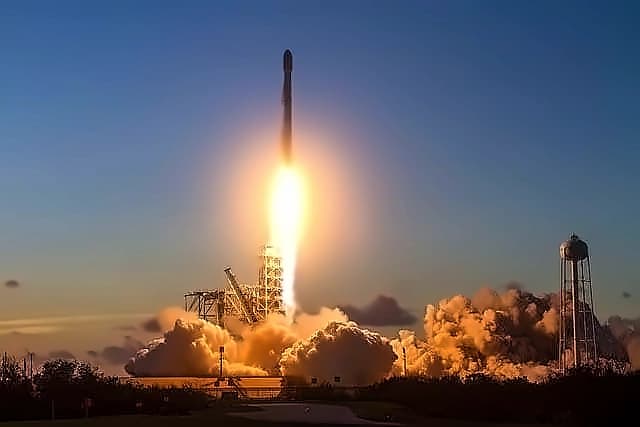
The SpaceX stock has struggled since its June listing, spending weeks below the $135 IPO price. According to ARK Invest data, revenue per Tbps has declined from $21 million in 2023 to $19 million in 2025, with the company flying only twice since the June listing compared to 165 Falcon 9 flights in the previous year. The next mission aims to reach Earth orbit for the first time with 26 operational V3 units, which would mark the first Starship launch to earn commercial revenue. Despite the challenges, Wood's bullish outlook rests on achieving the 10,000 flight rate Starship has yet to reach.

