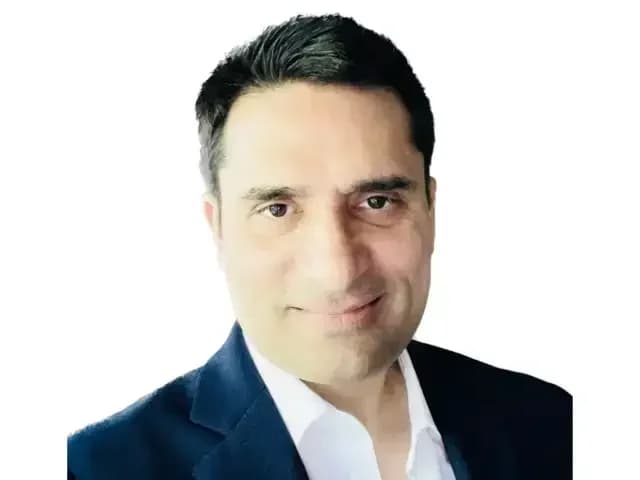
According to The Economic Times, Anurag Singh, Managing Partner at Ansid Capital, noted that markets have largely absorbed geopolitical shocks and moved beyond Iranian concerns. "We pretty much saw the bottom last month, somewhere at the end of March. And now the markets have really moved on from the Iranian trouble," Singh stated during his conversation with ET Now. He pointed out that the US currently holds a strategic advantage in the region, with the US having "nearly captured the strait, at least on the exit side, which means Iranian revenues are dropping." However, Singh flagged uncertainty around Iran's leadership, noting "The sense is we do not know who is in charge in Iran, and that is the bigger trouble." Despite these concerns, US investment banks have raised projections to 7200 to 7600 for the S&P this year, with earnings remaining solid.
As reported by The Economic Times, Singh emphasized a structural shift in global equities, stating that "The last two, three, four years have been all about the Mag-7. That may not turn out as good. Over the last six months to one year, the 'Mag-7' have been all over the place." Instead, a broader rally is emerging, which he described as "the broader rally outside of the Mag-7 which is actually good. Broadening of the market is always positive." This shift represents a move away from concentrated focus on a handful of dominant tech stocks toward broader market participation, with Singh noting that "It is the broader rally outside of the Mag-7 which is actually good. Broadening of the market is always positive."
According to The Economic Times, Singh acknowledged that India's weight in global indices is stabilizing, noting "India was at 9% weightage in MSCI before 2020, then peaked at 20%, and now it is back to around 14%." He dismissed the idea of a strong "anti-AI trade," stating "I do not believe so much in the anti-AI trade. I do not think that is happening. AI trade in Korea and Taiwan continues to propel forward." However, he urged policymakers to remain proactive, stating "The government really needs to do something here. This attitude towards foreign capital—that we do not need them—is a bit overdone."
As reported by The Economic Times, Singh identified largecap IT as a key opportunity, noting "Largecap IT—absolutely. At 4200, everyone was buying TCS. Now everyone is saying we should sell it. I think this is the right time." He acknowledged valuation gaps but still sees value, stating "TCS' market cap is roughly equal to Accenture, whereas its revenue is half. But that is the Indian arbitrage." Singh sees current pessimism as an opportunity, stating "I like the absolute consensus in India that these companies are going to die out. I love that situation." He expects steady returns, stating "Don't expect magic, but good solid dividend-driven companies with 10% to 12% growth in price—not bad."
According to The Economic Times, Singh remained cautious about earnings projections, noting that "Earnings projections always start at 15% and then drop to single digits. I have seen this pattern before, and I see some of that even now." He warned that near-term pressures, especially from energy costs, could weigh on results, stating "Do not look at this quarter and the next one—that is kind of a washout. But after that, once oil settles down, I hope 10% to 12% earnings growth from India should come in." Banks appear attractive, though Singh remains selective, stating "Banks have not been working, but they are reasonably priced." He acknowledged valuation gaps but still sees value in the current market conditions.