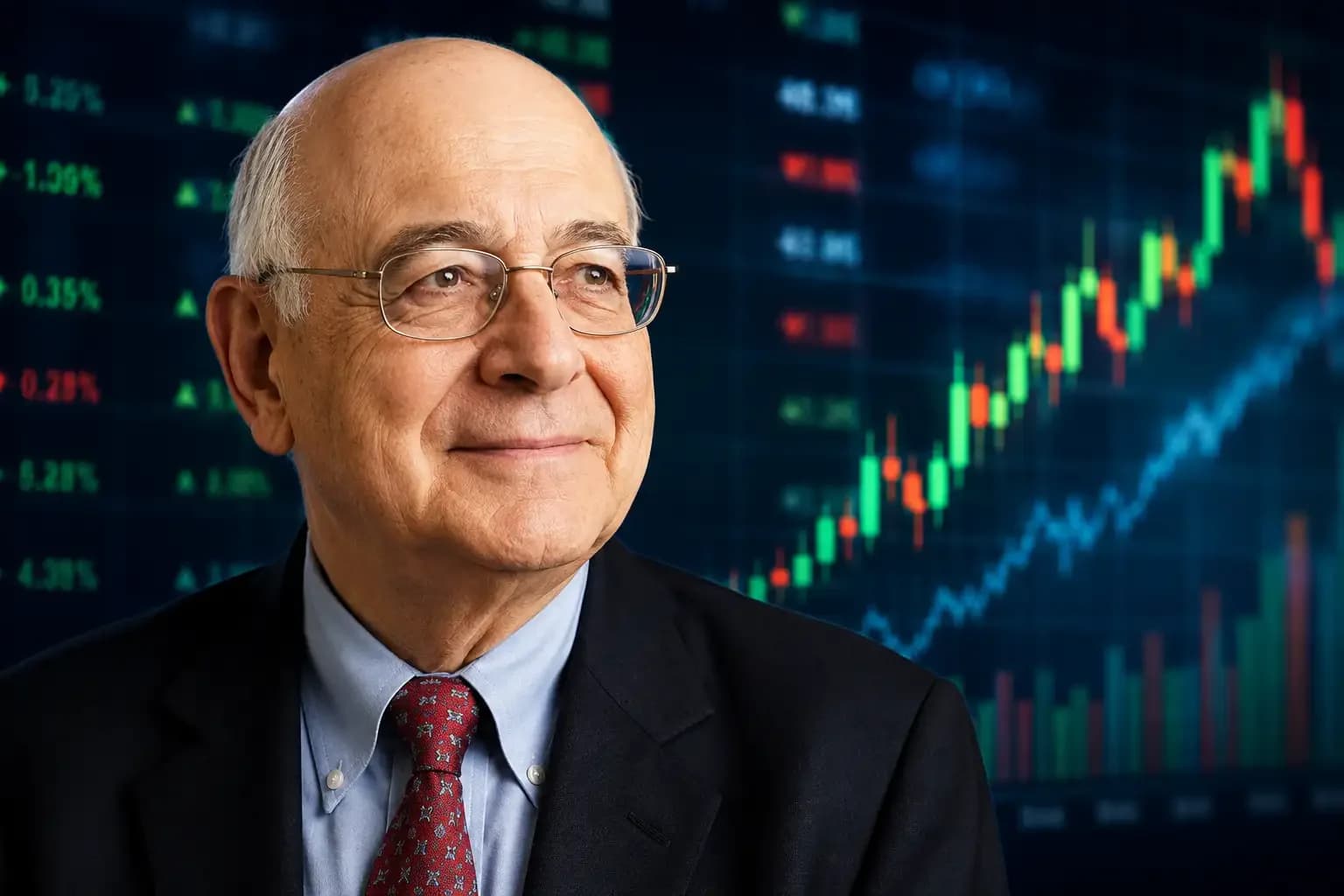
Financial markets expert Arthur Zeikel has issued a timely warning about the dangers of believing in perpetual market trends. According to reports from The Economic Times, Zeikel's quote emphasizes that while there appears to be a pattern to events, no pattern is perpetual. The expert warns that the more widely held the belief in the persistence of a current trend, the less likely it is to continue, highlighting how investor psychology, crowded trades, and stretched valuations often precede market reversals.
As reported by The Economic Times, financial history repeatedly demonstrates that no trend lasts forever. The dot-com boom of the late 1990s, the housing market surge before 2008, and numerous commodity cycles all appeared unstoppable until they were not. According to the analysis, the very belief that a trend is permanent often plants the seeds of its eventual reversal, with markets thriving on expectations until consensus optimism becomes a contrarian indicator.
According to the report, when a majority of investors crowd into the same trade, valuations often become stretched and expectations become unrealistic. As reported by The Economic Times, at that point, even a small disappointment can trigger a sharp correction. The piece explains that markets thrive on expectations, and once everyone expects the same outcome, there are often few new buyers left to push prices higher, making consensus optimism a warning sign for potential reversals.
Market concentration has reached alarming levels, with the top 10 stocks now making up approximately 40% of the entire S&P 500, which exceeds the concentration levels at the 2001 tech bubble peak. According to Graham Stephan's analysis, AI investment concentration specifically is tracking close to the same point as 2001 tech stocks and the Japanese everything bubble of the late 1980s. The S&P 500's price-to-earnings ratio exceeded 28, which is roughly two-thirds higher than the 100-year historical average of around 17, while the Shiller Cyclically Adjusted Price-to-Earnings ratio has reached its second highest level ever, surpassed only by the dot-com peak.
As reported by The Economic Times, the analysis emphasizes the importance of adaptability in investment strategies. The piece notes that markets evolve due to shifts in technology, economic conditions, government policies, consumer behaviour, and global events, with strategies that worked brilliantly in one decade potentially struggling in the next. The expert suggests that remaining humble, adaptable, and sceptical of universally accepted narratives positions investors to navigate changing market environments more effectively.

According to the report, the key takeaway is that certainty is an illusion in investing. As reported by The Economic Times, the most successful investors understand that by remaining humble, adaptable, and sceptical of universally accepted narratives, they position themselves to navigate changing market environments more effectively. The analysis suggests that the moment everyone becomes convinced that 'this time is different' is often the moment when caution becomes most valuable for long-term investment success.