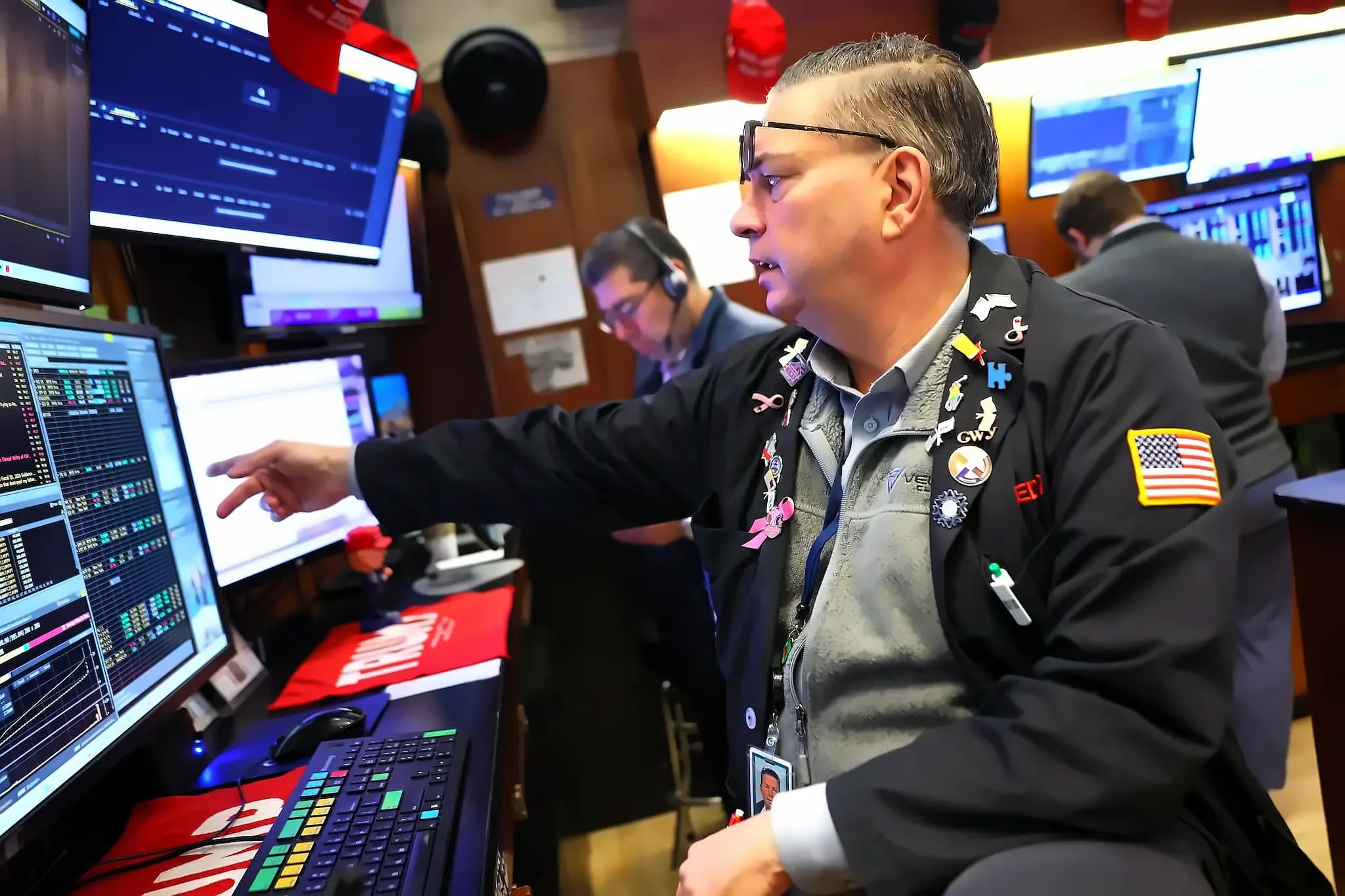
U.S. stocks have rebounded, erasing all losses related to the Iran war, with the S&P 500's recovery indicating a reassessment of risk by investors amid hopes for diplomatic solutions. According to reports from CNBC, Vice President Vance stated that the next move lies with Iran following unsuccessful negotiations, suggesting that this optimistic outlook could influence market sentiment, even though actual progress remains limited. The recovery comes as oil prices have retreated significantly, providing relief from earlier geopolitical tensions that had triggered market volatility. CNBC's Jim Cramer emphasized that low interest rates are a key driver behind the market's resilience, as investors focus on the impact of rates on stock valuations despite escalating geopolitical tensions.
JPMorgan has issued a buy recommendation for market dips, advising investors to view fresh declines as strategic entry points. According to the firm's analysis, the fundamental conditions supporting a sharp market rebound are already established. Mislav Matejka, JPMorgan's European strategy chief, recommends that investors operating on a three-to-twelve-month timeframe should increase their market exposure during selloffs rather than retreating to the sidelines. The bank's relative performance analysis suggests new market peaks in the year's second half. JPMorgan initially issued this buy recommendation on March 23, positioning themselves ahead of the current volatility.
Goldman Sachs strategist Ben Snider warns that investor uncertainty around AI disruption will persist for quarters if not years, requiring selective investment within the secular growth stock universe. According to Goldman Sachs analysis, for secular growth stocks facing AI disruption risk, resolving this uncertainty will likely require evidence that AI is not displacing existing business models. Growth stocks have been hit from multiple directions this year, including AI disruption fears, high AI spending, and higher-for-longer interest rates amid the US conflict with Iran. The 'Magnificent Seven' stocks are trading near fresh lows relative to the S&P 500, with only Amazon and Google posting marginal gains while Tesla has plunged 23%.
The software sector faces a fundamental transformation as the 'SaaSpocalypse' has erased about $2 trillion in market capitalization from software stocks this year. ServiceNow shares have crashed 48% this year, Salesforce is down 36%, and DocuSign has shed 42%. As reported by Yahoo Finance, investors are realizing that generative AI — specifically 'agentic' AI — is no longer just an add-on but a potential replacement for traditional software. The crisis has fundamentally broken the 'per-seat' subscription model, where an AI agent can do the work of five people, requiring only one software license instead of five, leading to severe 'seat compression' that has decimated recurring revenue projections.
According to a report by OmniScience Capital, the recent correction of around 13% from the September 2024 peak remains moderate and does not qualify as a bear market, which is typically defined as a 20% drawdown. The firm noted that with the Nifty 50 trading at around 3.0x P/B and 20x P/E, valuations are at or slightly below long-term medians. As reported by LiveMint, OmniScience Capital highlighted that market corrections are a structural feature, with historical data showing that recoveries to previous highs have taken around 24 months on average and up to 46 months in deeper drawdowns. The analysis suggests that long-term investors are likely to experience 'safety of capital with satisfactory returns'. However, Bagga warned against bottom picking, stating "Caution on the Indian markets, caution on the global markets, conserve capital right now, not the time to go bottom picking because you might be catching falling knives and get hurt in the process."

Despite current market volatility, analysts advise that long-term investors should focus on discipline rather than aggression. As reported by LiveMint, OmniScience Capital noted that while valuations appear supportive and long-term return prospects remain intact, the data suggests that investors should remain disciplined and selective, rather than turning aggressively greedy in the current environment. JPMorgan's Matejka cautions against adopting overly pessimistic outlooks amid current geopolitical uncertainties, emphasizing that maintaining a persistently negative stance carries significant risk of missing subsequent rallies. The bank observed that pessimistic market sentiment had become widespread approximately two to three weeks after the conflict intensified, with many investors significantly decreasing their equity allocations. JPMorgan favors global equities, emerging market exposure, smaller capitalization stocks, and value-oriented investments over growth stocks, with emerging market stocks continuing to trade at a substantial 34% valuation discount relative to developed market equivalents.