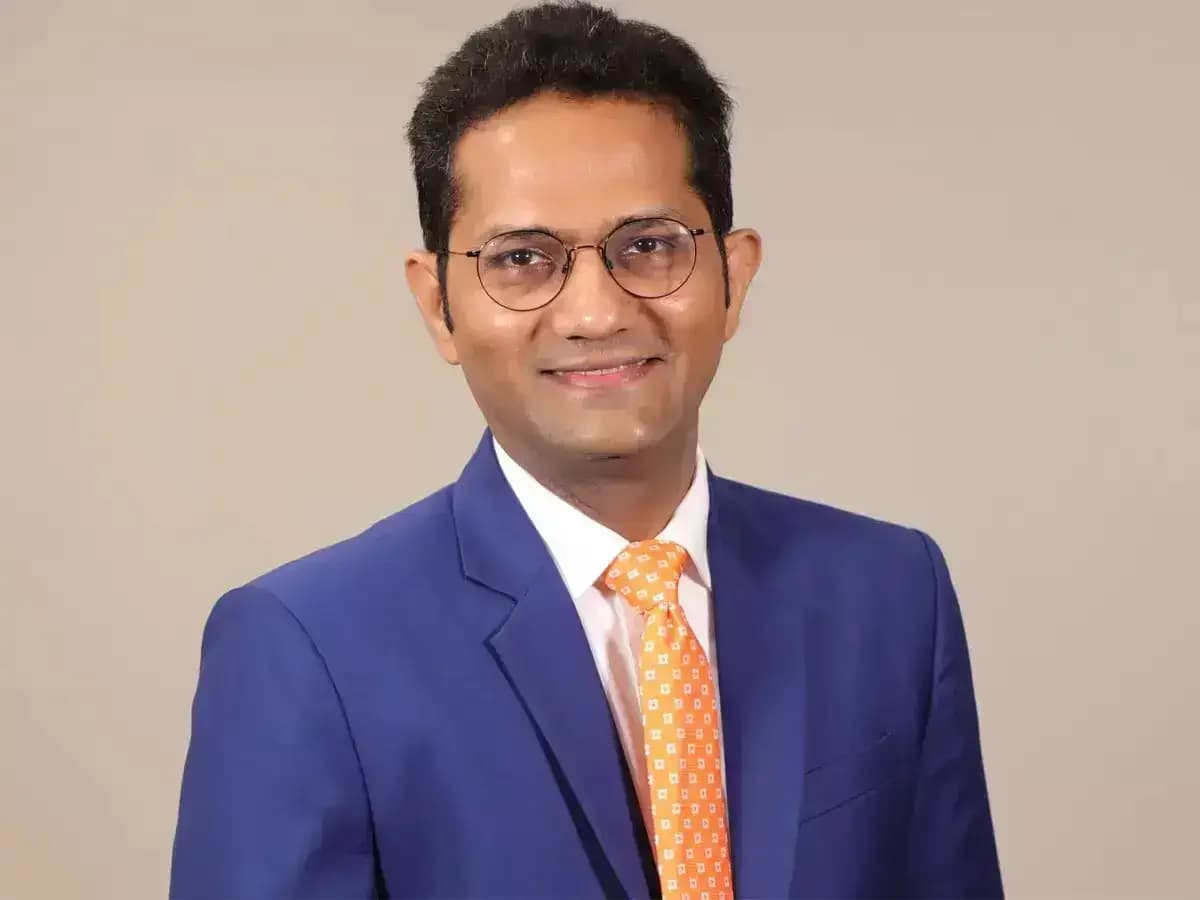
Market expert Gurmeet Chadha from Complete Circle Consultants has advised investors to be selective in the IT sector despite attractive valuations, focusing on stock-specific opportunities rather than buying the sector indiscriminately. According to The Economic Times, Chadha noted that TCS is trading at 13-14 times earnings, Infosys at 15 times, and HCL at 14-15 times, but cautioned that valuation comfort alone cannot justify investment decisions. "If the constant currency growth remains flat or negative, then even a 14-15 times valuation does not make too much sense," he explained. The expert highlighted the ongoing artificial intelligence revolution and massive capital expenditure commitments by global technology giants, with Google raising $80 billion in capex. Chadha believes mid-cap IT firms may be better positioned for AI monetization, specifically naming KPIT Technologies, Persistent Systems, and Coforge as companies with larger ability to pivot and participate in the implementation phase.
Chadha highlighted pharma as a strong investment due to multiple advantages, as reported by The Economic Times. Within the IT basket, he flagged niche pockets as more interesting, including companies supplying into semiconductor hardware, data centre infrastructure, and power supply for AI compute. He noted that most pure-play opportunities require investing through listed proxies rather than direct exposure. The expert described pharma as an evergreen sector with additional strengths that make it attractive for long-term investment. Recent analysis from Roland Berger's Future of Health 7 study reveals how healthcare companies are facing changing environments with new disruptive technologies and treatment individualization through stratified medicine.
According to Chadha's analysis, India currently has a stronger role in the application and implementation layer of AI rather than foundational AI models. As reported by The Economic Times, he divided the AI ecosystem into three segments: enterprise AI (where India has no presence), LLM (where India has Sarvam), and using LLM for creating applications, where India would be most beneficial. "I do not think we are completely out of AI, but between the three metrics, if you put it together, we are probably there in one," he explained. Chadha expressed a relatively constructive view on mid-cap IT companies, noting that "the multiple is now 20 times, the margin profile is good, there is a lot of margin of safety." He specifically highlighted KPIT Technologies as more auto-tech focused, despite recent headwinds from client contract expirations and management changes.
Among defence sub-segments, shipbuilders received the highest ranking due to growing order book visibility that is expanding by an order of magnitude, according to The Economic Times. Missile and munitions makers followed in the ranking. Chadha highlighted drone manufacturers and their component suppliers, noting that revenues are growing near-vertically, a shift accelerated by lessons from the Ukraine and Middle East conflicts. In the energy sector, he remains particularly bullish on India's power infrastructure build-out, with transmission capex expected between ₹7 lakh crore and ₹9 lakh crore over the next four-five years. He pointed to Waaree Energy as a recent portfolio addition, describing it as a full-stack play from polysilicon to modules. Among renewable energy plays, Chadha sees growing opportunities in defence, particularly as exports accelerate with BrahMos Indian content rising from 15% to 60-70% over the past decade.
According to Chadha's analysis reported by The Economic Times, investors should focus on selective opportunities in IT, energy, defence, healthcare, and capital market plays rather than buying the sector as a whole. The expert emphasized that for defence, investors should think in decades, not quarters, highlighting shipbuilders and drone makers as leading opportunities. His strategy reflects a patient approach to market timing, focusing on sectors with clearer revenue visibility and growth potential. Chadha believes buybacks could become a key catalyst for IT sector recovery, noting that many Indian IT companies are sitting on large cash reserves and may increasingly opt for buybacks over dividends. He added that "once the buybacks start and provided we have a little bit better CC growth quarter-on-quarter, this could give a bit of a tactical bounce across the sector."