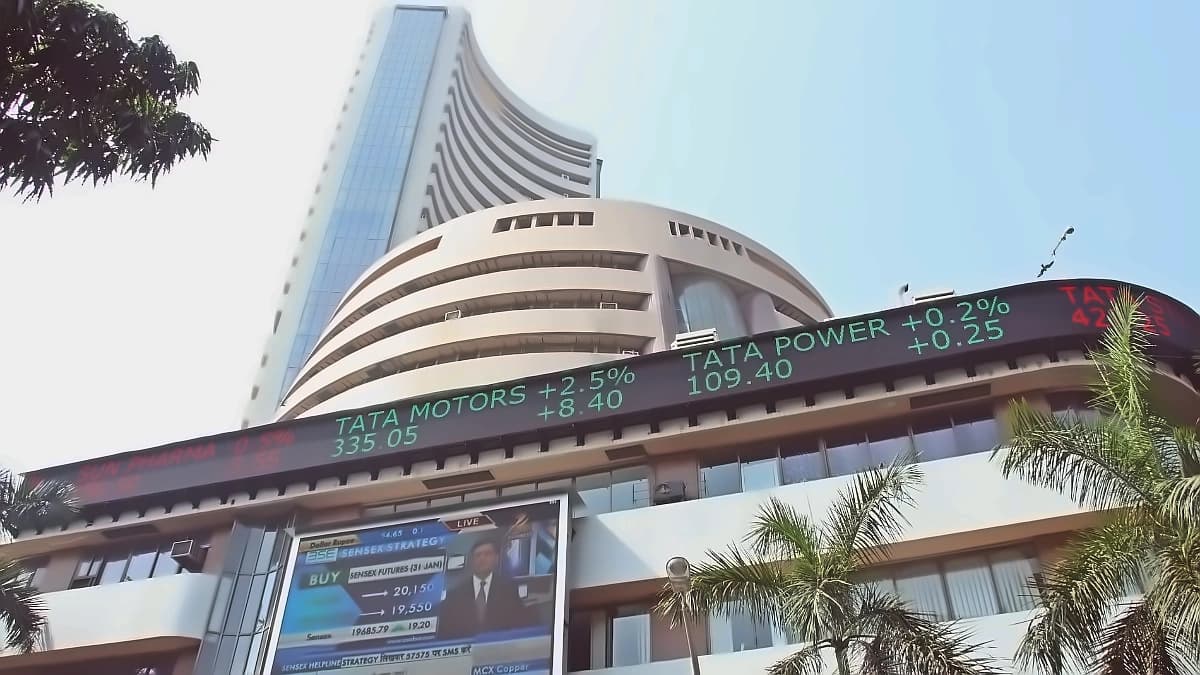
Indian markets recovered from early losses on May 18, with the Sensex cutting its decline to 336 points (0.45%) and Nifty 50 falling 111.80 points (0.47%) by midday trading. The recovery came after Sensex had shed over 800 points and Nifty had breached the 23,400 level during the gap-down opening, spooked by surging crude prices, weak rupee, and intensifying Iran conflict. Tech Mahindra emerged as the standout performer, surging 3.74% to ₹1,421.70 against its previous close of ₹1,370.50, while Bharti Airtel rose 1.94% to ₹1,942.30 from ₹1,905.40 and Infosys advanced 1.1% to ₹1,136.80 against ₹1,119. However, Power Grid Corporation remained the steepest decliner, sliding 4.54% to ₹291.95 from ₹305.85, while Tata Steel dropped 3.82% to ₹208.55 from ₹216.84 and State Bank of India fell 2.71% to ₹937.10 against ₹963.20. Eternal slipped 2.55% to ₹235.02 and Trent declined 2.41% to ₹4,002.40 from ₹4,101.30.

According to reports from CNBC TV18, Unmesh Sharma, Head of Institutional Equities at HDFC Securities, has outlined a comprehensive sector strategy focusing on three key areas: insurance, IT, and consumer stocks. The strategy emphasizes selective opportunities across these sectors based on current valuations and market conditions, though recent market volatility has created challenges for some of these positions. IT sector emerged as the clear outperformer, rising 1.77% while Nifty Consumer Durables fell the most at 2.78%, followed by PSU Bank down 2.45%, Media declining 2.24%, and Auto shedding 1.83%. Nifty Pharma added 0.12% providing some support to the broader market recovery.
As reported by CNBC TV18, HDFC Securities maintains an overweight position on SBI Life at 120 basis points in their model portfolio. The insurance sector strategy reflects the firm's confidence in selective opportunities within the financial services space, with Sharma specifically highlighting the attractiveness of certain insurance stocks in the current market environment. However, ICICI Prudential Life Insurance Company fell 9% after announcing a 75% stake acquisition in Bharti Life Insurance Company by promoter Prudential, requiring the company to reduce its shareholding to under 10%.
According to CNBC TV18, HDFC Securities has moved from an underweight to neutral position on IT stocks, specifically targeting valuations below 20x as a buying opportunity. The firm's strategy focuses on selective opportunities within the technology sector, particularly when valuations reach levels that present attractive entry points for investors. Nifty IT emerged as the clear outperformer, rising 1.77% with selective buying in IT stocks providing a floor for the broader market recovery. HCL Technologies and Wipro also held gains, trading at ₹1,142.80 versus ₹1,132.60 and ₹191.71 against ₹190 respectively, supporting the sector's strong performance.
As reported by CNBC TV18, Sharma identifies private banks trading below 2x price-to-book as strong accumulation opportunities. This banking sector strategy reflects the firm's view that current valuations in select private banking stocks present compelling value propositions for investors seeking exposure to the financial services sector. The recent market volatility has created additional challenges for banking sector performance, with PSU Bank declining 2.45% as part of the broader banking sector weakness.
According to CNBC TV18, HDFC Securities has identified consumer names including Asian Paints, Crompton, and Sobha as turning interesting following valuation corrections. The consumer sector strategy focuses on companies that have experienced valuation adjustments and are now presenting more attractive entry points for investors seeking exposure to the consumer goods and real estate sectors. Consumer Durables sector faced the steepest decline at 2.78%, reflecting the challenging environment for consumer-facing companies.
As reported by CNBC TV18, Power Grid Corporation carries a 2% overweight allocation with transmission identified as the cleanest play on India's power theme. This positioning reflects the firm's view that infrastructure and power sector opportunities remain attractive despite broader market conditions, with transmission specifically highlighted as a preferred sub-sector within the power sector. The recent market decline has impacted Power Grid's performance, with the stock falling 4.54% amid broader sector volatility and geopolitical tensions.