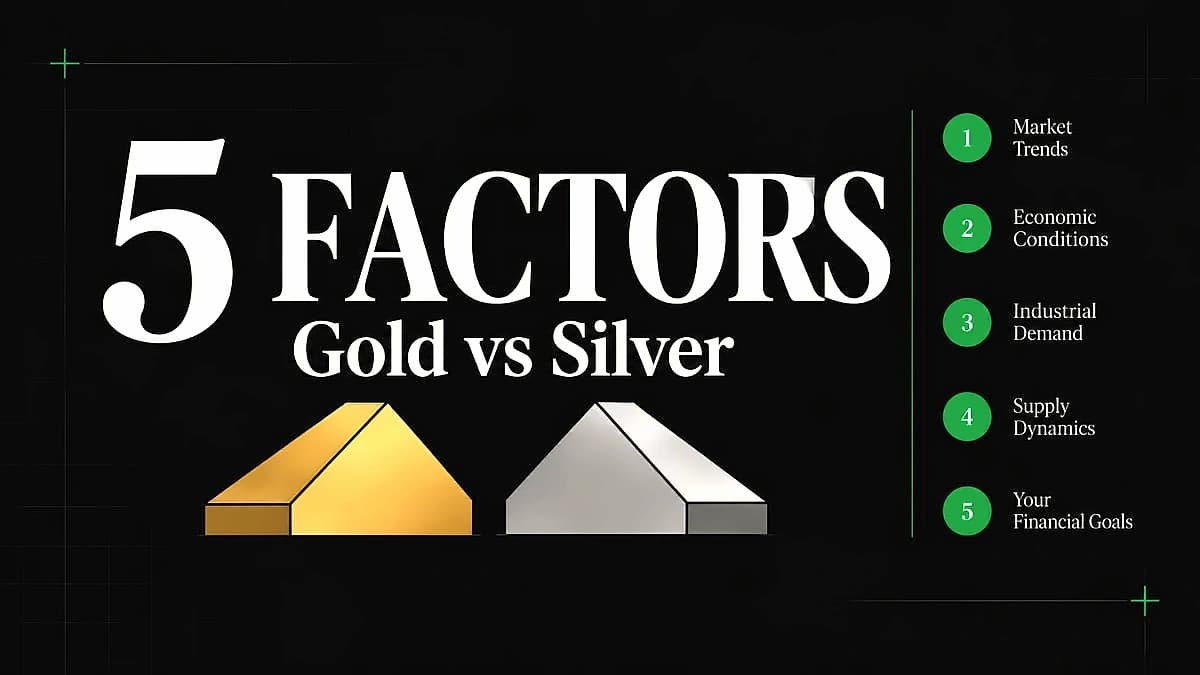
Gold and silver have delivered exceptional returns since 2024, with gold nearly doubling from ₹75,726 per 10 grams to around ₹1.49 lakh per 10 grams and silver rising by roughly 145% from ₹90,412 per kg to ₹2.21 lakh per kg according to IBJA rates as of October 9, 2026. However, recent market corrections have tempered investor enthusiasm, with gold sliding 6.45% through September, touching multi-month lows around $4,110 per ounce, and silver dropping towards $60 per ounce according to Quant Mutual Fund. Despite these corrections, the analysis suggests that while gold remains valuable as a portfolio hedge during uncertainty and silver benefits from industrial demand, the risk-reward profile for large lump-sum purchases at current levels appears uncomfortable. Recent data shows that silver outperformed gold and platinum over the year to October 2026, gaining about 47% in rupee terms compared with gold's 26% and platinum's 10.5%, as reported by Live Mint.

Equity markets present a contrasting picture with the Nifty declining 10% from 24,981 in October 2024 to 22,520 in October 2026, while the index's P/E multiple reduced from 23.48 times to around 19.20 times during the same period. According to the analysis, this improvement in valuation comfort, while not indicating that every stock is cheap, creates better overall market conditions. The expectation is that equities can outperform precious metals over the next two years, though this may not occur in a straight line. Recent data shows that equities have delivered a higher risk-adjusted return with a Sharpe ratio of 0.59 compared to 0.41 for gold and 0.27 for silver over five-year rolling returns since 1990.
Current macroeconomic conditions remain challenging with elevated crude prices, higher bond yields, interest-rate tightening, and pressure on the rupee expected to keep markets volatile in the near term. As reported by Paul Asset, markets typically turn before economic headlines become positive, and by the time oil falls and yields soften, stock prices may already have moved higher. The latest correction was fueled by a strong U.S. Dollar Index (up 2.06%), surging Treasury yields close to 5.30% with the 10-year yield approaching multi-decade highs, and a surprise 25 basis points interest rate hike by the U.S. Federal Reserve. Despite these headwinds, the analysis suggests that once crude and global bond yields settle, even modest foreign buying can have meaningful impact alongside domestic inflows.
For moderate-risk investors with ₹10 lakh, a recommended allocation could include ₹5 lakh in large-cap equities, ₹4 lakh in income-oriented assets (mainly good-quality bonds with limited REIT exposure), and ₹1 lakh across gold and silver. According to Morningstar Investment Research India, the robust inflows recorded in September reinforce gold's enduring appeal and suggest that investors increasingly view the asset not merely as a tactical trade, but as a long-term store of value and effective hedge against macroeconomic and geopolitical risks. Rajesh Minocha recommends a 5-10% gold allocation within the 20% debt portion of an 80:20 equity-debt portfolio, with silver kept below that level due to higher volatility. Domestic support comes from monthly SIP contributions reaching ₹32,297 crore in August 2026 and active contributing SIP accounts crossing 10 crore.
The analysis emphasizes that investors should avoid putting most of their money into an asset after everyone has become bullish on it, treating the principle of 'buy during fear and sell during greed' as a strategy for timing rather than perfect market timing. Minocha advises that at current price levels, consider spreading purchases over time rather than investing all at once, with gold as the primary precious-metal holding due to diversification benefits and relative stability. Choudhary cautions against buying gold or silver simply because of recent returns or rising ETF inflows, noting that silver ETFs lost an average of 4.29% over the same time period, with some like Zerodha Silver ETF losing around 4.36%. The recommendation is that fresh money should lean more towards equities rather than continue chasing gold and silver at current price levels, with equities remaining the core holding for long-term wealth creation.