Indian equity benchmarks ended Thursday's session largely unchanged despite foreign selling pressure, with the Sensex closing 13.84 points higher at 74,360.01 and the Nifty gaining 10.95 points to settle at 23,416.55. According to CNBC TV18, the market showed resilience as domestic institutions stepped in to offset foreign outflows. The broader market continued to outperform the benchmark indices, with both the Nifty Midcap 100 and Nifty Smallcap 100 advancing 0.5%, reflecting continued appetite for domestic-focused stocks. The Gift Nifty Live Chart had earlier indicated a negative start with GIFT Nifty trading lower by 154 points, or 0.66% at 23,345 on the NSE IX, but the session ended with benchmark indices closing above the 23,350 mark.
Foreign institutional investors (FIIs) continued their selling streak on Thursday, offloading shares worth ₹4,447 crore, while domestic institutional investors (DIIs) stepped in with net purchases of ₹4,360 crore to help stabilize the market. According to provisional exchange data reported by CNBC TV18, FIIs bought shares worth ₹14,013 crore during the session but sold equities totalling ₹18,460 crore, while DIIs purchased shares worth ₹16,824 crore and sold shares worth ₹12,464 crore. This continues the trend of foreign selling pressure that has seen FIIs pull out a record ₹3.18 lakh crore worth of Indian equities so far in 2026, with analysts attributing the outflows partly to India's relatively limited exposure to direct beneficiaries of the global artificial intelligence boom. The intensity of foreign selling has accelerated this year, with recent reports noting that FII secondary-market selling in 2026 is running at roughly ₹400 crore every trading hour, nearly double the pace seen in 2025.
Foreign investors have been particularly cautious on financial services stocks, with FIIs selling shares worth ₹23,141 crore in the sector in May, extending a trend seen over recent months. However, the pace of selling moderated from outflows of ₹30,856 crore in April and ₹60,655 crore in March. Not all sectors witnessed outflows, as services attracted net FII inflows of ₹7,204 crore in May, while capital goods received investments worth ₹2,799 crore and metals and mining recorded modest net purchases of ₹667 crore. The prolonged exodus has pushed cumulative foreign portfolio investments in Indian equities to their lowest level in nearly a decade, with aggregate net FPI investments standing at ₹7.3 trillion as of June 1, the lowest since 2016. Market participants attribute the sustained foreign outflows to a combination of global and domestic factors, including elevated US bond yields, a strong dollar, and concerns over slowing credit growth and rich valuations in Indian financial stocks.
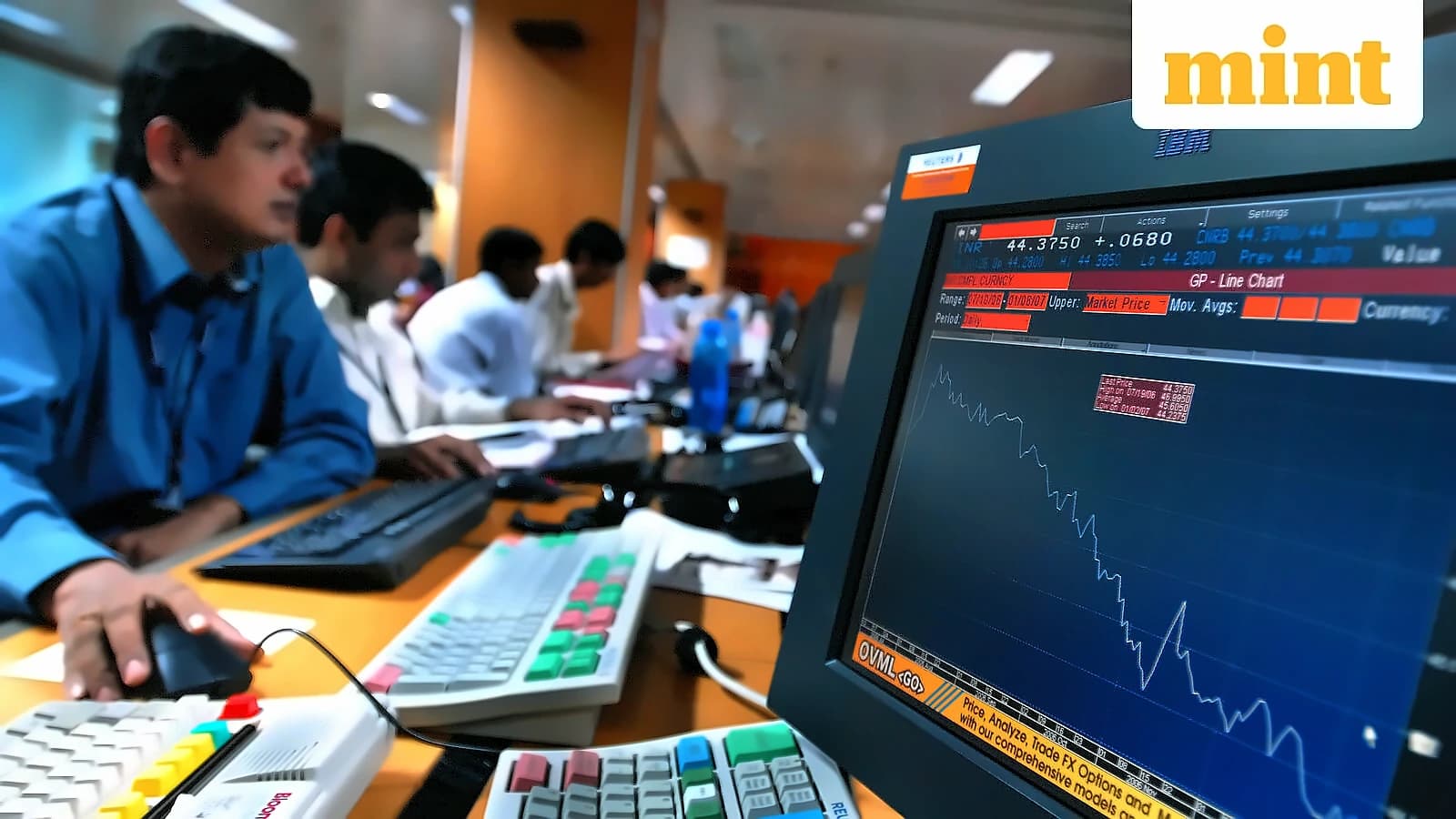
Asian markets traded lower on Thursday, tracking Wall Street losses as tensions between Iran and the U.S. keep oil prices elevated, stoking energy and inflation worries. The 30-stock Dow Jones Industrial Average pulled back 620.72 points, or 1.21%, to end at 50,687.07, while the broad market S&P 500 fell 0.74% to 7,553.68 and the tech-heavy Nasdaq Composite declined 0.89% to 26,853.98. The Kuwait International Airport was struck by Iran early Wednesday, just a day after the U.S. Central Command said it had defeated multiple Iranian ballistic missiles and drones, as well as launched "self-defense strikes on Qeshm Island in the Persian Gulf." Brent crude for July 2026 settlement lost 96 cents or 0.98% to $96.85 a barrel, while the yield on India's 10-year benchmark federal paper shed 0.10% to 7.019. The partially convertible rupee was hovering at 95.7325 compared with its close of 95.7600 during the previous trading session.
Despite the selling pressure from overseas investors, the domestic market remained resilient with the Sensex closing 13.84 points higher at 74,360.01 and the Nifty gaining 10.95 points to settle at 23,416.55. The latest decline marks the fifth loss in the past six trading sessions for domestic benchmarks, underscoring the impact of geopolitical uncertainty and persistent foreign selling on market sentiment. The US Dollar Index (DXY) was up 0.05% to 99.45, while the United States 10-year bond yield declined 0.24% to 4.485. In the commodities market, MCX Gold futures for 5 June 2026 settlement rose 0.26% to ₹158,930. The negative setup is largely driven by deteriorating global sentiment, as escalating tensions in the Middle East continue to push crude oil prices higher and heighten concerns about inflation, interest rates, and global growth. If necessary, Israel and the U.S. are prepared to strike Iran again, Israeli Prime Minister Benjamin Netanyahu has reportedly said, adding to geopolitical tensions that are keeping markets on edge.