According to the Bajaj Broking Privé Research September 2026 Monthly Outlook report, consumer durables and retail sectors have very high festive sensitivity, followed by automobiles and private banks/NBFCs rated as high. Hospitality shows medium-high sensitivity, while FMCG is rated medium. IT services demonstrate the lowest festive sensitivity among the sectors analyzed. As reported by Mint, Payal V. Pandya, Vice President at Bajaj Broking Privé Research, explained that sectors with high sensitivity are those that tend to benefit most from festival-driven consumer demand, with their business performance and earnings meaningfully influenced by festive spending patterns. The 2026 festive season begins with Raksha Bandhan marking the start, followed by major festivals like Dussehra and Diwali that brands eagerly anticipate for increased consumer activity across apparel, electronics, automobiles, jewellery, consumer durables and e-commerce sectors.
According to the research report, a very high sensitivity rating does not imply a higher allocation preference but indicates that the sector is more exposed to changes in festive demand. Pandya cautioned that strong festive demand could positively influence revenues and quarterly earnings, while weaker-than-expected demand could have the opposite effect. As reported by Mint, she noted that most sectors are already well represented across the mutual fund universe, giving investors access to sector-specific, thematic and market-cap-based funds. If demand holds up better than expected, sectors leveraged to domestic consumption could benefit, including consumer discretionary, retail, select automobiles, private-sector financials, hospitality and travel. However, she emphasized that valuations in several consumer-facing segments already reflect expectations of a demand recovery, making it important for investors to remain selective in their investment approach.
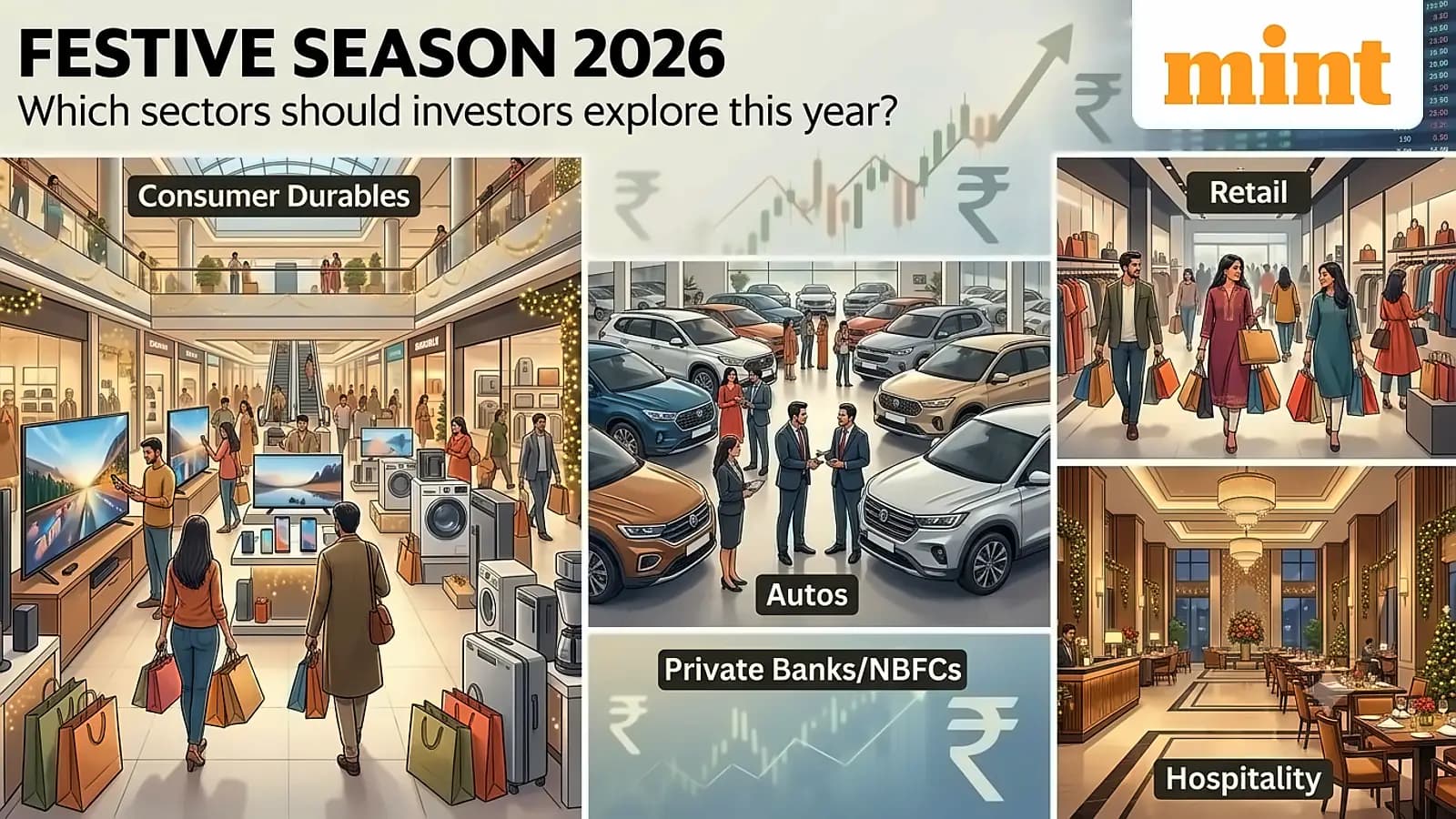
According to the report, India's upcoming festive season could provide an important boost to domestic consumption and economic activity, particularly given that private consumption accounts for 61.5% of GDP in FY26. Early expectations point to healthy demand, supported by resilient urban consumption, easier financial conditions, retail financing and continued premiumisation across categories. However, Pandya cautioned that the recovery is unlikely to be uniform, with India potentially experiencing a two-speed consumption story - resilient urban and premium demand on one side and a more cautious rural consumer on the other. As reported by Mint, she noted that with external uncertainties remaining elevated, the festive period assumes greater significance for the broader growth outlook.
The 2026 festive season presents unique challenges as geopolitical tensions and recent calamities cast a shadow over consumer sentiment, prompting brands to adapt their marketing strategies. Digital advertising is expected to grow due to its targeting capabilities, but traditional media remains crucial, especially in smaller towns where local engagement is key to successful campaigns. Brands must focus on creating meaningful messages that align with cultural moments and consumer emotions, recognizing that festivals are not just shopping events but opportunities to connect with consumers on a deeper level. The familiar festive formula of "Celebrate. Shop. Save." may not be sufficient this year, as consumers remain selective but willing to spend. Digital offers precision that traditional media cannot match, with brands able to target consumers by geography, language, interests and purchase intent, while traditional media continues to provide strong reach and familiarity in smaller towns and cities.