India's latest earnings season has largely met expectations, but market sentiment remains subdued due to broader economic concerns rather than company performance. According to Prateek Agarwal, MD & CEO, Motilal Oswal AMC, the weakness in equities is less about corporate earnings and more about underlying economic stress and investor positioning. As reported by The Economic Times, Agarwal argued that while companies continue to deliver expected numbers, investors are increasingly worried about economic stress and its potential impact on future growth. He noted that oil price increases have been transmitted only to a very small extent, indicating the stress is not yet fully reflected in corporate performance. Manishi Raychaudhuri, CEO of Emmer Capital Partners, reinforces this view, stating that India's corporate earnings growth is likely to remain in single digits in FY27, marking a third consecutive year of subdued expansion. He believes the market continues to trade at relatively high valuations despite weaker earnings expectations, creating challenges when compared with markets such as South Korea and Taiwan where earnings forecasts have been rising.
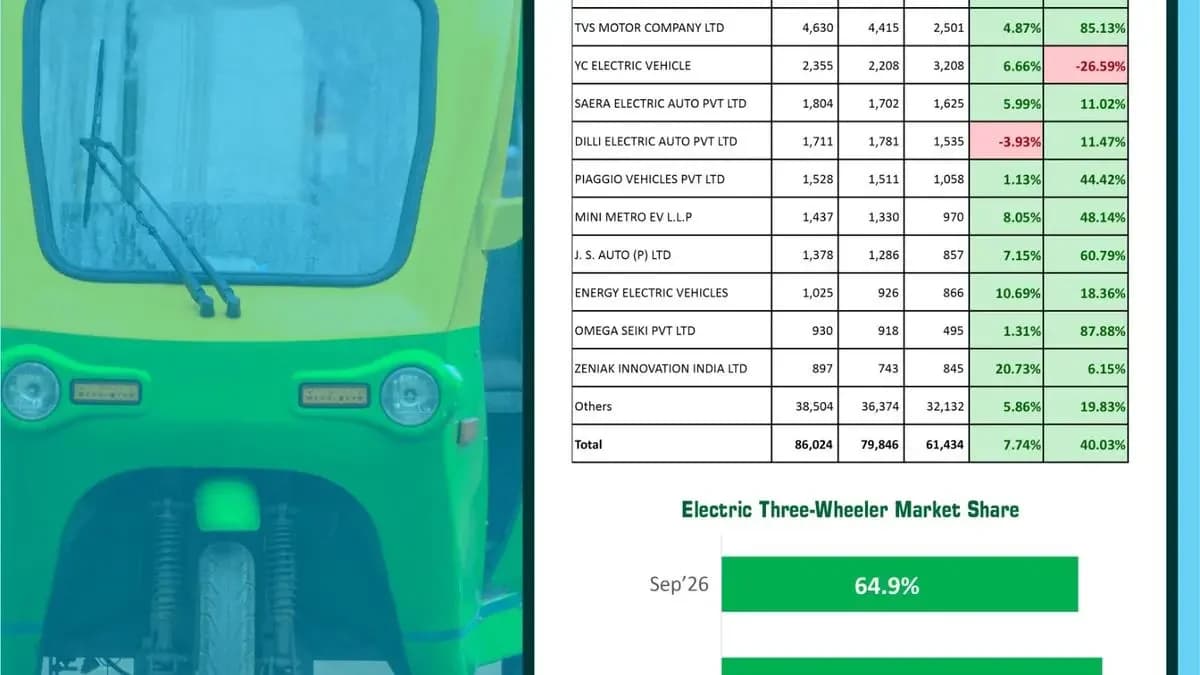
The performance of benchmark indices is being heavily influenced by two sectors—banking and information technology—which together account for nearly half of the large-cap index. According to Agarwal, IT, of course, is an AI trade with performance sometimes positive and sometimes negative based on new AI capability launches. However, he emphasized that growth is continuing strongly in mid and small-cap segments driven by themes like EVs, digital businesses, and defence. As reported by The Economic Times, market breadth has consistently outperformed the narrow set of index heavyweights over the past four quarters, with stock prices increasingly reflecting this divergence. Raychaudhuri recommends a selective approach, noting that investors should now focus on stock-specific opportunities rather than broad market exposure. He identified capital goods, defence, selected consumer discretionary businesses and metals as sectors that could offer opportunities despite the broader earnings slowdown. He emphasized that "one would have to navigate the Indian market on a stock-by-stock, on a very close business, stock selection basis," highlighting that growth is continuing in less-owned-by-foreigners spaces where foreign investors are reducing exposure.
Foreign investors are reducing exposure, particularly in heavily owned sectors like banking, due to economic stress concerns. According to Agarwal's analysis, banks, which are pretty heavy in the FPI ownership basket, are seeing selling as investors manifest their concerns through portfolio adjustments. "So, if you are stressed, then what do you sell? How do you manifest your thought into action? It is by selling what you have. So, banks, which are pretty heavy in the FPI ownership basket, are seeing selling on that count," he explained. The private banks are losing their premium as the gap between private and public-sector banks narrows. However, Raychaudhuri notes that private banks continue to gain market share and are trading at valuations below historical levels. He also expects leading industrial and capital goods companies to benefit from global infrastructure rebuilding and supply-chain diversification efforts. Many of his investment portfolios have zero banks, zero large-cap IT, and zero consumers as a result of this convergence.
Looking beyond quarterly earnings, Agarwal sees significant long-term investment opportunities in energy security and electrification. He expects policymakers to accelerate investments across coal, coal gasification, compressed biogas, renewable energy, and electric mobility to prepare for future oil price increases. "If the issue is a sharp rise in oil prices and that situation is unsustainable, considering we are spending nearly USD 7 billion a month. Expect greater policy focus on coal. It may sound surprising, but coal is a resource we have in abundance. We need electricity, and for a country of 1.45 billion people, it remains one of the cheapest sources of power," he explained. According to Agarwal, electrification could drive power demand growth at a pace that exceeds overall economic growth over the coming years. "Historically, power demand moved broadly in line with GDP growth, plus or minus half a percentage point. Going forward, that gap could widen on the upside," he noted. Additionally, import substitution is gaining momentum through production-linked incentives and cheaper land availability. He also highlighted defence as a long-duration growth story driven by changing geopolitical realities and evolving warfare technologies. "The nature of warfare is also changing. The conflict between Russia and Ukraine represents a more traditional form of warfare, whereas the confrontation involving the West and Iran demonstrated a very different dimension. Countries across the world are likely to strengthen their capabilities in response. This creates a multi-year growth opportunity, not just in India but globally," he noted. For growth-oriented investors, the next phase of market leadership may lie in sectors like EVs, digital businesses, pharmaceuticals, and capital-market plays that remain concentrated in mid-cap and small-cap segments.

Beyond India, Raychaudhuri recommends international diversification, particularly in AI-related opportunities across Asia. He remains positive on companies such as SK Hynix, Samsung Electronics and TSMC, arguing that demand for computing power and memory chips is likely to increase as adoption of artificial intelligence expands. "As we move from inference-based AI to agentic AI, the number of tokens that you would need would grow exponentially," he explained. He noted that the rising demand for AI infrastructure should continue to support semiconductor and memory-chip manufacturers, making them key beneficiaries of the global AI investment cycle. However, he maintained a cautious stance on technology stocks, stating he has avoided Indian IT stocks for more than a year and believes uncertainty around global demand and AI could continue to affect earnings visibility. He also identified Tech Mahindra as one Indian IT company that appeared attractive based on earnings growth forecasts, valuation metrics and balance-sheet strength.