Taiyo Yuden stock rose 7.51% on Wednesday after Situational Awareness disclosed a stake in the Japanese capacitor maker, but the hedge fund had already sold most of its position weeks earlier. According to Bloomberg, the filing looked like fresh buying, but the hedge fund had already cut its stake to 4.41% by August 3, below the reporting threshold. Situational Awareness filed nine change reports on August 12, covering trades made between June and August, though the filings came more than a month after the original disclosure deadline. The fund first crossed the 5% disclosure threshold on June 29 with a 5.99% stake, then added shares through mid-July before peaking at 16.61% on July 22. However, the position reversed almost immediately, falling to 15.22% by July 30 and dropping to 4.41% by August 3.
According to reports from The Economic Times, former OpenAI researcher Leopold Aschenbrenner's hedge fund, Situational Awareness, lost around $35 billion in weeks after leveraged bets on AI stocks turned sour. The fund fell from a peak of $45 billion in early July to around $10 billion by late July after a massive crash in AI-focused stocks. As reported by CNBC, citing sources, the fund began seeing heavy losses as heavyweight AI holdings, including SK Hynix, plunged, while short positions in software companies such as Adobe moved sharply against it. Aschenbrenner watched roughly $35 billion of investors' money disappear within days as lenders demanded additional collateral. The losses involved leveraged bets on public equities, with Nebius falling 17.98% between July 1 and August 7. Aschenbrenner sold most of his public-equity portfolio to Ken Griffin's Citadel at roughly a 10% discount to settle with lenders. Prime brokers called for additional collateral, forcing sales into a falling market, which generated further losses and further calls.
As reported by The Economic Times, the AI hedge fund was built entirely around a bet that AI would pay off big time and near term, buying companies in the AI orbit and selling short on businesses that AI would disrupt. The fund had been able to raise billions of dollars and had posted eye-popping returns, up almost 450% through late June. According to Damodaran's analysis, the fund's core belief that AI would win the battle with the status quo in most businesses, and that the win would be decisive and quick, was not unique, with other investors and companies also investing in AI capex. Damodaran, citing Portfolios Lab data, puts the fund up roughly 367 percent between August 7, 2025 and its high-water mark on June 19, 2026, with since-inception figures higher still. The fund's leverage was reported at as much as 400 percent, which magnified both gains and losses significantly. Aschenbrenner retained his private holdings, including Anthropic, last valued near $965 billion, compute provider Fluidstack and AI-chip startup MatX.
Despite the sharp decline, Aschenbrenner approached existing investors and lenders to raise fresh capital after the massive losses. As reported by The Financial Times, some investors have been offered the opportunity to purchase assets directly from the fund's portfolio, though one person familiar with the discussions described the process as "ad-hoc" rather than a formal fundraising effort. On August 4, the fund committed another $400 million to Source Foundry, following a $100 million investment in the same company the previous month, presenting a combined $500 million deployment as a sign of Aschenbrenner's continued confidence. The minimum reported investment in his fund was $25 million, with backers including Stripe founders Patrick and John Collison, former GitHub CEO Nat Friedman, investor Daniel Gross, as well as JPMorgan, Goldman Sachs and Bank of America.
The response in Silicon Valley has been markedly different from Wall Street's reaction to the collapse. Logan Bartlett of Redpoint Ventures described the mood by saying there is an "archetype of a hero" and that a movement is rallying around Aschenbrenner. Silicon Valley places a premium on being right about the direction of technology and can view a leveraged loss as a learning experience. Wall Street, by contrast, focuses on returns while also protecting capital, making Aschenbrenner's ability to attract backing based on conviction despite having a limited track record particularly notable. Aschenbrenner had no previous experience managing institutional money before putting together one of the largest AI-focused funds.
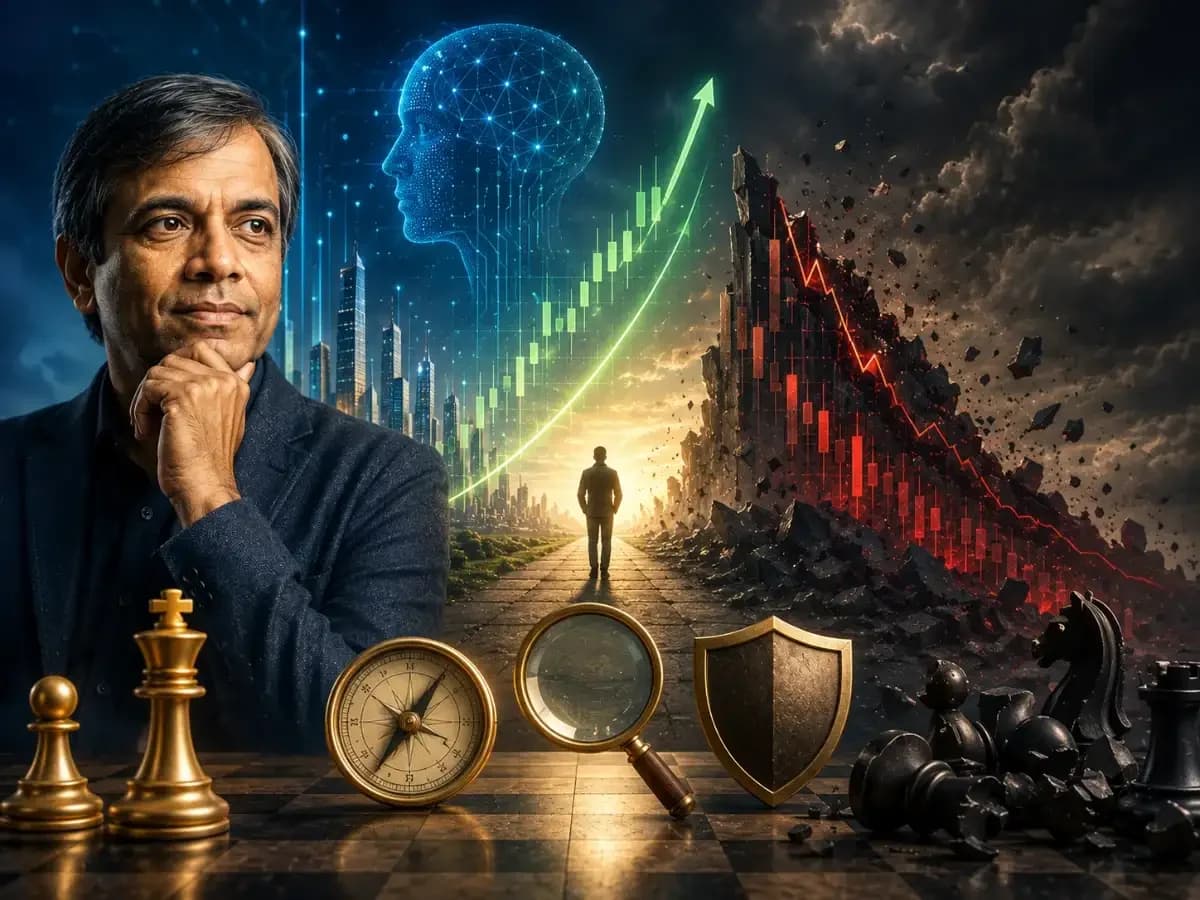
According to The Economic Times, Damodaran shares three critical lessons from the episode. The first lesson emphasizes that investment actions inconsistent with investment conviction risk ruin - combining a macro AI story with maximal leverage creates a time bomb, as the AI story has multiple obstacles to overcome including business economics and politics. The second lesson highlights that momentum is a wild card in every investment strategy, with the fund's composition primarily in AI beneficiaries and short positions in AI disruption targets being in line with market pricing, albeit in a more concentrated and leveraged form. The third lesson states that humble money beats smart money, with smart money's self-regard making it susceptible to over-reach through portfolios that are too concentrated or leveraged. Damodaran's contention is that the three caveats worth raising about Situational Awareness were all available on June 19, at the peak, and required no hindsight.
As reported by The Economic Times, the next key development will be whether Situational Awareness reopens to outside investors in the next quarter. Damodaran hopes Aschenbrenner can return as a fund manager, as he seems to be an original thinker willing to take a stand, which are scarce qualities among active fund managers. He believes that Aschenbrenner has learned some lessons, especially on humility and restraint, for his next venture and hopes he adopts a fee structure that gives his investors a chance of beating the market in the long term. Aschenbrenner has since made a roughly $400 million private investment, the first visible sign of a rebuild, demonstrating his commitment to returning to the market. Damodaran ends without malice, expressing the hope that Aschenbrenner returns to fund management, describing him as an original thinker willing to take a stand.