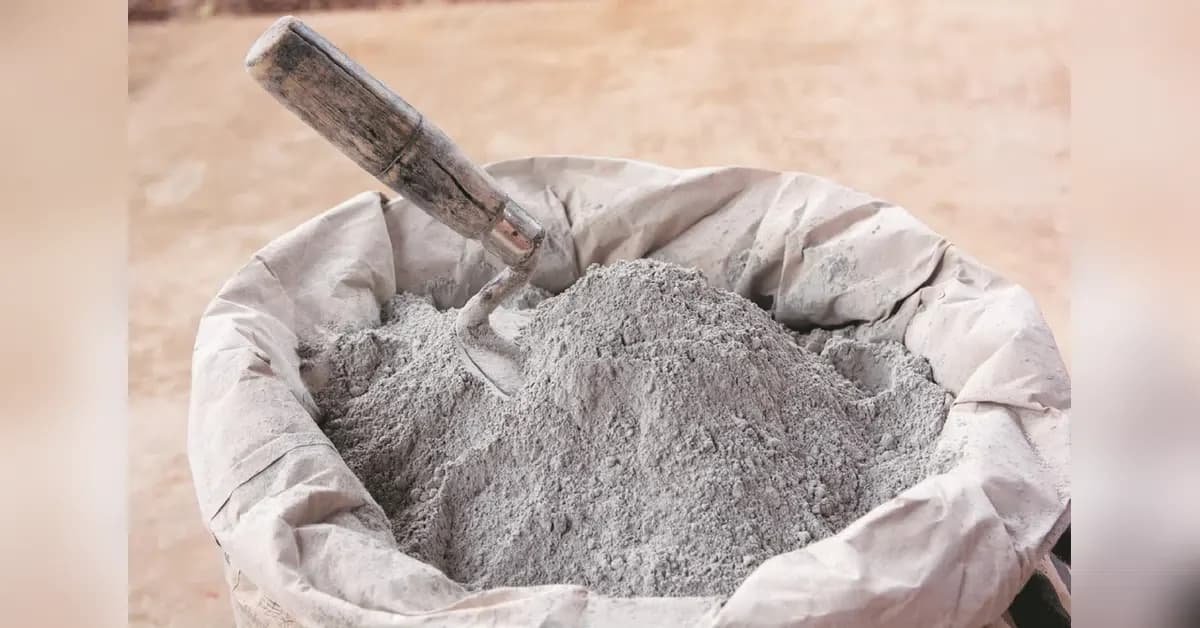
Leading cement manufacturers expect 7-8% industry growth in the second half of FY27, driven by construction activity, infrastructure spending, and urban housing demand. According to Business Standard, cement makers such as UltraTech Cement, Ambuja Cements, Shree Cement, and Dalmia Bharat posted sales growth in Q2 FY27 and anticipate further demand pickup. UltraTech Cement CFO Atul Daga noted that the industry was entering its strongest demand season, supported by better pricing environment, additional capacity, and improving cost structures. Ambuja Cements CEO Vinod Bahety highlighted emerging growth opportunities in data centers, semiconductor manufacturing, and private sector capital expenditure as key drivers.
Indian cement stocks continue to face significant consensus earnings downgrades over the past six months, with the likelihood of further cuts dependent on commodity price stability. According to Nirransh Jain, India analyst for consumer durables and cement at BNP Paribas Securities India, the sector outperformed muted expectations in Q2FY27 despite surging input costs, particularly international petroleum and coal, alongside rising diesel and packaging expenses. While companies delivered robust volume growth and better price realizations, the risk of further downgrades remains contingent on commodity price volatility. Regarding Q3FY27, channel checks suggest a gradual post-festive recovery with some lag in demand as labour availability and infrastructure execution normalize. Players have attempted price hikes of around ₹10-20/bag through October and November, though market absorption has been partial and region-specific.
The cement industry has undergone a fundamental transformation, moving from a highly fragmented market where the top four players held roughly 45% market share pre-Covid to a consolidated landscape where those players now control around 60% of capacity. As reported by BNP Paribas, this consolidation cycle is far from over, with the industry evolving into a 'concentration of growth' where organic expansion is now largely dominated by the top three or four players. While large-scale M&A activity may temporarily pause as companies focus on integrating newly acquired assets, the broader consolidation cycle continues. The sector has shifted from a highly fragmented market to a consolidated landscape, with major players now controlling roughly 60% of the sector's overall capacity.
Average domestic cement prices increased by around 3% month-on-month to ₹370 per 50-kg bag in October 2026, supported by price hikes implemented across markets following monsoon-led weakness, according to ICRA. This represents an improvement from the 2% increase to ₹355 per bag recorded in September. Despite increased consolidation expected to improve pricing discipline over the medium to long term, near-term volatility persists as major players prioritize capturing market share and driving utilization rather than maximizing price realization. Companies are focusing on structural cost efficiencies, disciplined capital allocation, and calibrated expansion to improve profitability in the second half.
Cement stocks have been laggards in CY26, leading to moderated valuations as fundamentals remain shaky due to lingering input cost pressures and uncertain market absorption of recent price hikes. According to BNP Paribas, while the sector has seen a broad-based rebound over the last month driven by easing input costs, lower valuations alone will not trigger significant re-rating. For investors to return in force, two key catalysts are needed: sustained relief in input costs, specifically softening in international petroleum coke and thermal coal costs, and clear evidence that the market can absorb recent price hikes without a drop in industry volumes. In the current backdrop, moderated valuations of cement stocks alone are not a selling point.