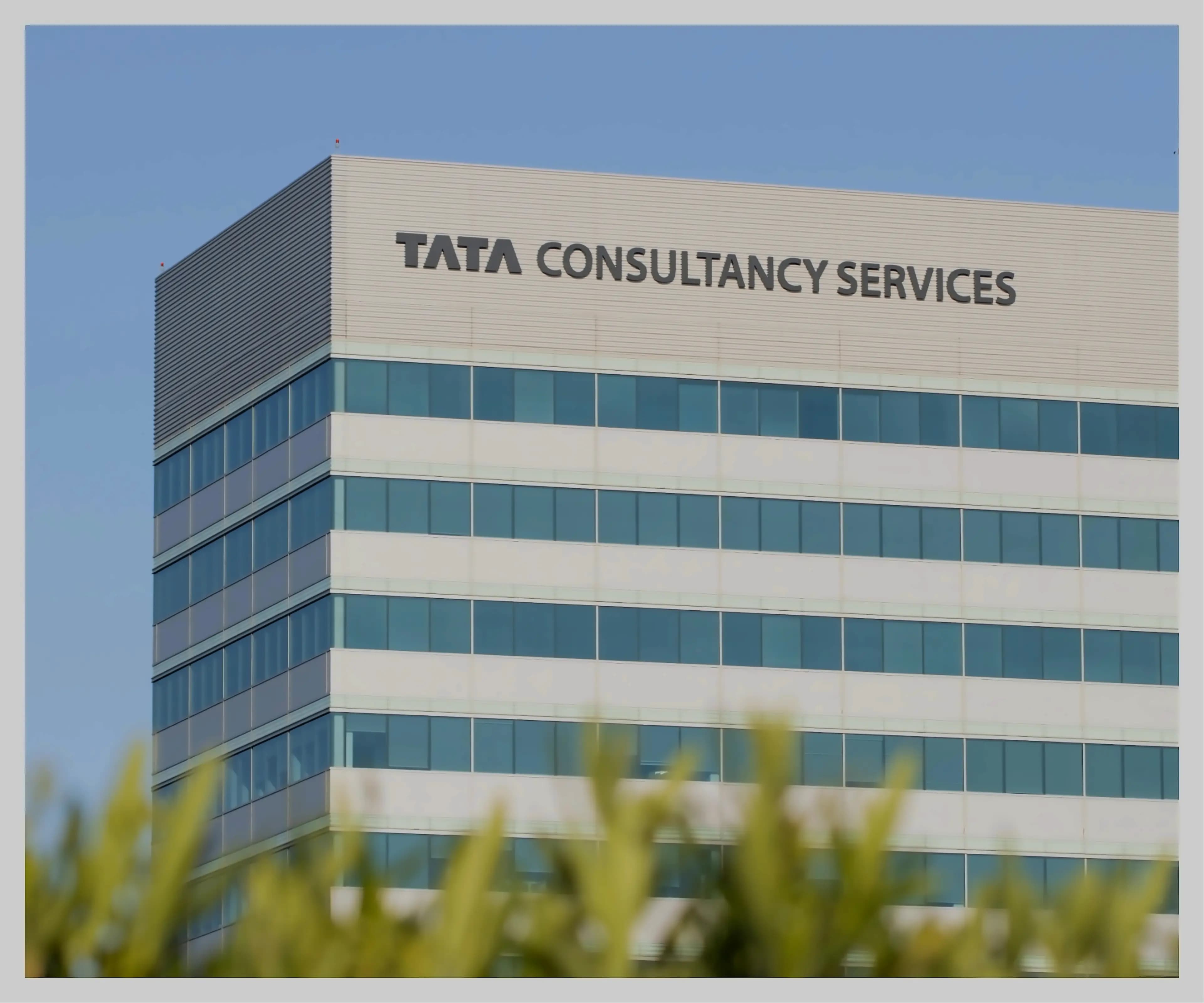
TCS shares surged over 4% to ₹2,161 on the NSE following the company's impressive Q2FY27 results, with the stock reaching an intraday high of ₹2,204 after touching ₹2,202.90 on Friday, October 9. The IT services giant reported consolidated net profit of ₹13,884 crore, marking a 15% year-on-year increase from ₹12,131 crore in Q2FY26, while revenue from operations grew 11% YoY to ₹73,188 crore compared to ₹65,799 crore in the corresponding quarter last year. On a quarter-on-quarter basis, the company's net profit surged 4%, with revenue increasing 1.3% sequentially and marginal growth of 0.5% in constant currency. The board also announced a second interim dividend of ₹12 per share for FY27, adding to investor confidence. CEO and MD K Krithivasan said the company saw broad-based growth across international markets and most industry segments, with the Porsche and Best Buy deals representing a new category of transformation partnerships where TCS is building repeatable platforms to industrialise AI at scale.
Abhay Agarwal, managing director of Piper Serica Advisors, has questioned the quality of TCS's September-quarter earnings, stating that the profit rise owes more to a weaker rupee than to underlying demand. Speaking to NDTV Profit, Agarwal said TCS's constant-currency growth was below 1% and that "the profits are largely driven by currency depreciation". The reported numbers show the gap he pointed to, with revenue up 11.2% to ₹73,188 crore in rupee terms, but only 0.5% sequential growth in constant currency. In dollar terms, revenue rose 2.4% to $7.64 billion, while net income slipped 0.9% to $1.45 billion. The difference between rupee and constant-currency figures reflects the weaker rupee, which inflates reported earnings of exporters. Agarwal said investors should not expect a lasting re-rating, stating "You will see momentary pickups and then sideways return", adding that this is "a classic space that has done nothing for last three, four years" and questioning what will change now to drive sustained growth.
TCS continued to see strong traction in its AI business, with annualised AI revenue reaching $3.1 billion in Q2FY27, accounting for more than 10% of the company's revenue. Aarthi Subramanian, executive director, president and chief operating officer at TCS, said AI momentum remained strong, with demand coming from AI-native solutions, AI-led enterprise transformation, autonomous global business services and cybersecurity. The company's commentary highlighted the growing role of AI in its business strategy, as it seeks to help clients integrate the technology into enterprise operations and scale its adoption across functions. CEO K Krithivasan highlighted the company's engagements with Porsche and Best Buy, describing them as a new category of transformation partnerships, with TCS working with clients to develop repeatable platforms that can help scale AI deployment across businesses. However, Nomura expects margins to remain subdued in the near term as TCS continues to reinvest in growth, with the integration of the Porsche project expected to weigh on margins by 50 basis points in the quarter in which it closes, either Q3 or Q4FY27.
TCS delivered encouraging Q2FY27 performance with international revenue accelerating to +1.2% quarter-on-quarter in constant currency, supported by strong growth across key markets. The UK market showed robust growth of +3.5%, while BFSI sector grew +2.5% and Manufacturing and Technology segments both expanded +3.1% each. However, India revenue declined sharply by 10.3% following project deferrals, which impacted overall growth momentum. North America remained subdued with +0.4% growth, while Consumer segment declined -0.7% and remains exposed to selective discretionary spending patterns. Total Contract Value (TCV) remained healthy at $9.6 billion, excluding the Porsche ($1.5 billion; 5-year) and Best Buy (GCC) engagements, with improving win rates supporting medium-term revenue visibility.
TCS addressed concerns about the US PERM suspension, stating that its PERM applications were in single digits over the last two years and the suspension will be unlikely to impact its US workforce strategy. The company emphasized that it does not expect the suspension to impact its workforce strategy or customer engagements, with the US workforce strategy anchored in hiring local talent supported by a strong campus recruitment model. TCS has built a significant local workforce across 31 offices and delivery centres in the US and plans to hire an additional 15,000 employees in the US over the next five years, while committing to comply with any directive issued by the US Department of Labor. The company's workforce strength stood at 598,056 at the end of Q2FY27, higher by 4,258 employees from the previous quarter, with the company adding 4,258 employees during the September quarter. A notable external development flagged by Kotak was the US administration's suspension of new and pending PERM applications involving TCS and other major Indian IT firms including Infosys and Wipro. Analysts assessed this as having limited operational impact given the extent to which Indian IT companies have already localised their US workforces.
Analyst reactions to the quarterly print were largely divided, with Goldman Sachs maintaining a Buy with a target price of ₹2,210, citing broad-based sequential growth across most regions and a third consecutive quarter of headcount additions. Nomura was the most bullish, holding a Buy with a target of ₹2,630, despite lowering FY27 estimated EPS growth by 2.6% to factor in lower margin estimates. JPMorgan reiterated Overweight at ₹2,300, while Kotak Institutional Equities retained Add with a revised target of ₹2,320, down from ₹2,450. Axis Securities and Anand Rathi maintained Buy ratings with targets of ₹2,360 and ₹2,430, respectively. However, caution dominated the sell-side as well, with Citi maintaining a Sell with a target of ₹1,840, flagging that forward contract value growth turned negative year-on-year and margins have consistently missed the company's aspirational 26-28 per cent band. Jefferies rated the stock Underperform with a target of ₹1,800, citing uninspiring growth and rising margin pressures. CLSA and HSBC held neutral stances with targets of ₹2,038 and ₹2,350 respectively, while Morgan Stanley kept an Equal-weight at ₹2,160. The mixed reactions reflect concerns over margin pressures and macro uncertainties despite the strong quarterly performance.
The stock's 4% surge brings some relief to investors who have seen TCS shares decline sharply over the past year, with the stock down nearly 29% over the last 12 months and shedding almost 33% year-to-date. Traded volume stood at 81.04 lakh shares worth ₹1,758 crore, reflecting heavy institutional and retail activity. The stock remains well below its 52-week high of ₹3,350, touched on February 3, 2026, though it has recovered from its 52-week low of ₹1,976.80 hit on July 1, 2026. EBIT margin held steady at 24 per cent, slightly below estimates, while constant currency revenue growth came in at 0.5 per cent. The move comes as the Nifty IT index surged 2.74% to 28,495.30, emerging as the top sectoral gainer despite fresh regulatory uncertainty from US visa curbs, with TCS shares jumping 6% to ₹2,202.90 and being the star performer in the IT sector. Abhay Agarwal from Piper Serica Advisors noted that with growth missing, valuation support is what matters for IT stocks, pointing to FMCG as a space he is now looking at after staying away for two years.