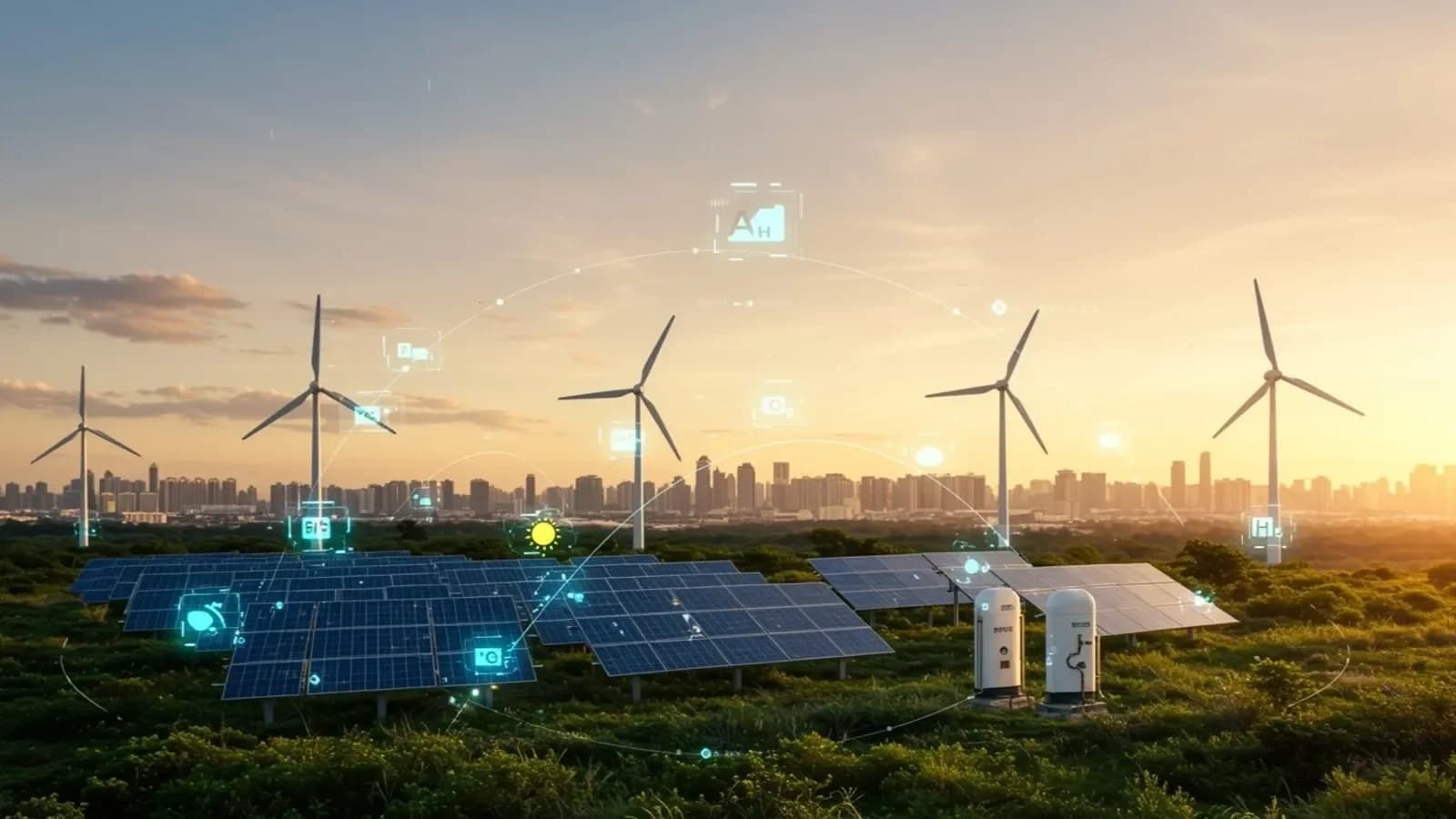
The artificial intelligence trade in the US stock market is moving beyond chipmakers as investors chase companies that supply the electricity, grid equipment and cooling systems needed to run AI data centres. According to Reuters, the first leg was chips, the next is the physical infrastructure required to make AI work. US power demand is expected to hit fresh records in 2026 and 2027 as AI use, data centres and electrification increase electricity consumption, with power use projected to rise from a record 4,195 billion kilowatt-hours in 2025 to 4,271 billion kWh in 2026 and 4,397 billion kWh in 2027. This surge is already creating stress, with PJM Interconnection issuing warnings as high summer demand pushed up electricity prices and strained transmission lines, especially in northern Virginia, one of the world's biggest data-centre hubs. Spot power prices in parts of PJM jumped from around $30 to more than $300 per megawatt-hour during peak demand, highlighting the strain on the power grid infrastructure.
India is positioned for a massive expansion in data-centre capacity with an estimated ₹25 billion in investments committed through 2030, creating significant opportunities across power equipment, electricals, cooling infrastructure, electronics manufacturing services and allied sectors. According to The Economic Times, nearly 75% of data-centre spending flows into power, electricals and cooling, making these segments the biggest beneficiaries of the AI infrastructure build-out. India's data-centre capacity is expected to triple from roughly 1.6 GW today to about 5 GW by 2030, representing a 26% capacity CAGR with major players like Google, Microsoft, Reliance and TCS all investing in the expansion. Power T&D and electricals are up around 41%, Electronics and EMS up 54%, defence electronics up 28%, cables and wires up 26%, significantly outperforming IT services which are down 23%. As per The Economic Times, India has one advantage because the capital cost of setting up a megawatt of AI infrastructure is probably 30% cheaper than what it would cost in the US.
Multiple brokerages have turned positive on a range of stocks across sectors including IT, private banks, capital goods, energy technology, AMC and FMEG. According to reports from Essential Business Intelligence, the recommendations span from HDFC Bank to Siemens Energy, HCLTech, Polycab, Wipro, Tech Mahindra, BHEL, 360ONE, RBL Bank, and Piramal Finance. The recommendations cover both established players and emerging opportunities in the current market environment, with the AI infrastructure theme now gaining additional momentum as power producers and equipment suppliers emerge as key beneficiaries. Wall Street's AI trade has become a second leg of the AI boom, with investors now looking at companies that can supply electricity, grid equipment and cooling systems needed to run AI data centres.

Jefferies maintains a Buy rating on HDFC Bank with a target price of ₹1,050, citing steady deposit growth with higher share of Top-20 clients and loan growth led by corporate and SME segments. As reported by Essential Business Intelligence, the brokerage notes moderate fee growth with pickup as key, while PSL buyout reductions are expected to aid profits. RBL Bank also receives attention with MS maintaining Equal-weight and raising the target price to ₹335 from ₹205, factoring in completion of capital infusion despite EPS estimates falling 52% for FY27 and 42% for FY28 on share count dilution.
Tech Mahindra shows strong momentum with MS maintaining Underweight but raising the target price to ₹1,270 from ₹1,160 following robust Q1 performance and strong revenue beat. According to Essential Business Intelligence, the company announced a new seven-year agreement with Guardian Life Insurance Company potentially translating into total contract value of $400 million over the life of the contract, which could contribute 30-40 basis points of revenue growth in FY27. However, Wipro faces mixed sentiment with Jefferies maintaining Underperform and cutting the target price to ₹150 from ₹180 due to another soft print and guidance implying delayed recovery. HCLTech has further strengthened its AI capabilities with a $10.5-million deal to acquire Guardian Life's India GCC operations, as reported by NDTV Profit, with Guardian India reporting revenue of ₹578.8 crore in FY26, up from ₹483.2 crore in FY25.
According to Essential Business Intelligence, liquidity conditions are improving with local liquidity remaining resilient at $4 billion per month, with mid-caps continuing to see the highest traction. The report indicates that foreign sentiment seems to have turned from bearish to neutral with mild inflows in July against record outflows in 1H26. Primary activity including Jio and NSE is expected to gather momentum to absorb this liquidity. Foreign selling was primarily driven by Korea's surging neutral weighting in the MSCI Emerging Market Index, which soared from 9% to 23.7% since the beginning of last year. As per The Economic Times, FII ownership across India's top 10 listed companies has fallen to just about 34% of the free-float market cap, the lowest level seen in the past two decades. However, the second half of 2026 is anticipated to be better for Indian equities with improved earnings visibility and reduced FII selling intensity. Atul Suri from Marathon Trends emphasizes a 'buy strength, sell weakness' philosophy, noting that the current AI rally is increasingly a 'picks-and-shovels' story rather than a conventional technology rally, with equipment makers outperforming EPC companies in the infrastructure build-out phase.