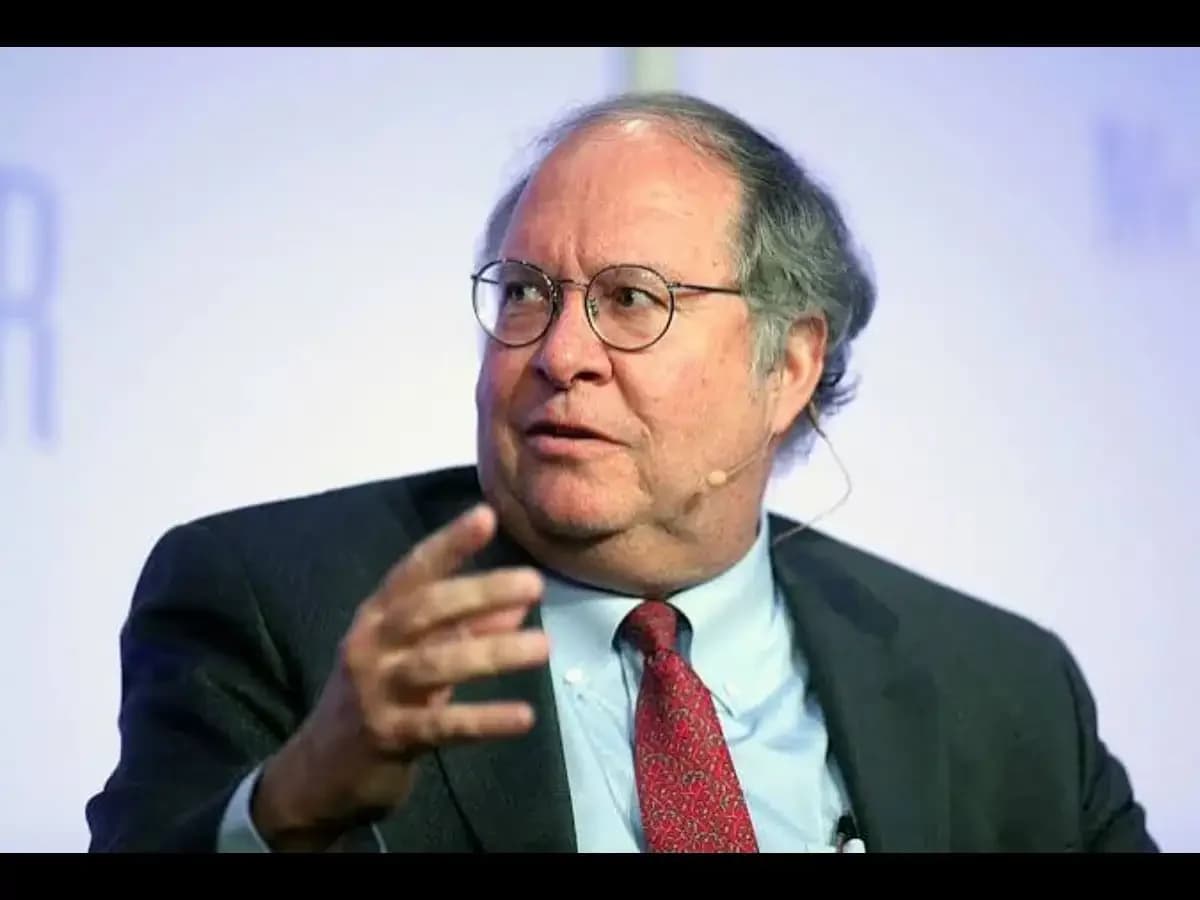
Legendary investor Bill Miller has articulated a fundamental principle of market investing: 'Markets are all about expectations, and the critical question for investors is always, what is discounted? Are the expectations reflected in market prices too high, or too low?' According to The Economic Times, this observation highlights how financial markets are forward-looking rather than reacting solely to current performance. The quote emphasizes that stock prices typically reflect expectations about future earnings, growth prospects, cash flows and risks, with investors constantly adjusting their expectations based on new information. As reported by The Economic Times, earnings announcements, economic data, interest-rate decisions and corporate developments can all trigger unexpected market moves because investors are constantly adjusting their expectations. David Booth, founder of Dimensional Fund Advisors, reinforces this perspective by explaining that 'markets work like we hope they would, and you can buy market portfolios easily. You don't have to try to outguess the market. You can sit back and let markets work for you.' Booth emphasizes that 'markets aren't perfect, but people don't seem to be able to do better than that' - they try to outguess the market and end up generating costs and anxiety that aren't necessary.
The gap between market expectations and reality creates significant investment opportunities. When expectations are extremely pessimistic, even modest improvements in earnings or business conditions can lead to sharp re-ratings of stocks. Conversely, when expectations are excessively optimistic, strong results may fail to satisfy investors. This dynamic is particularly important during periods when valuations are elevated and markets are highly sensitive to changes in earnings forecasts, interest rates and economic growth. The key lesson for investors is to look beyond whether news is simply positive or negative, focusing instead on whether the news is better or worse than what the market had already expected. As reported by The Economic Times, investors should not judge an opportunity solely by the quality of a business or the attractiveness of its growth story - they should also examine what the current market valuation assumes about the company's future. Booth reinforces this approach by stating that 'uncertainty is underrated because that's what really creates the opportunity' - it's the unpredictable aspects of markets that present the greatest opportunities for investors who can develop sensible plans for dealing with uncertainty.
Miller's philosophy underscores the importance of valuation discipline in investment decision-making. Investors can become attracted to stocks because of strong growth stories, popular market themes or impressive earnings momentum. However, the crucial question remains whether the current price already assumes too much future growth. A company expected to deliver rapid earnings growth for several years may command a premium valuation, but if growth slows or forecasts are downgraded, the stock could face pressure as investors reassess what they are willing to pay. The quote emphasizes that being right about a company is only part of the equation - understanding what the market expects and whether those expectations are too high or too low can be equally important. As reported by The Economic Times, investors need to ask two separate questions: How good is the business, and how much of that success is already reflected in the share price. Booth reinforces this by explaining that 'without the science, hope really just kind of becomes a wish' - scientifically based evidence provides the foundation for making informed investment decisions. He emphasizes that 'there are no guarantees about the future for sure' but that stocks and bonds have demonstrated consistent long-term behavior over 100 years of data, with stocks delivering approximately 10% annual returns compared to bonds at 4.5%-5%.
Stocks facing subdued expectations can sometimes offer attractive opportunities, as reported by The Economic Times. If a company's fundamentals improve faster than the market anticipates, investors may revise their earnings forecasts upward, resulting in both stronger earnings and a higher valuation multiple. The reverse is also true - stocks priced for perfection can be vulnerable to sharp corrections if results fall even slightly short of expectations. This dynamic is particularly relevant during periods when valuations are elevated and markets are highly sensitive to changes in earnings forecasts, interest rates and economic growth. Booth reinforces this by explaining that 'there's no magic out there. Investing—and life—is usually dealing with trade-offs rather than having optimal solutions' - investors should avoid seeking silver bullets or expecting optimal outcomes. He emphasizes that 'there are no guarantees about the big issues' but that understanding how markets work can help investors feel safe and stay calm, just as people want to feel safe in their personal lives regardless of what happens.
The revolution in financial science over the past 60 years has fundamentally transformed investing accessibility. As Booth explains, 'there's no excuse not to invest, and there's no excuse for not being optimistic that you can have a good investment experience' - the research and applications from academics like Eugene Fama, Myron Scholes, and Robert Merton have made investing in public markets easily accessible for everyone. The efficient-market hypothesis, which Booth characterizes as 'the equivalent of the discovery of fire in the world of finance', has led to lower fees, better-designed portfolios, and more transparent investment processes. Booth emphasizes that 'there's no excuse for not being optimistic that you can have a good investment experience' - the data and research support consistent long-term returns with stocks delivering approximately 10% annually over the past century. He concludes that 'the fact that these markets that work so well for so many and have now for decades—it was kind of a discovery. It feels like, in the world of finance and investing, almost the equivalent of the discovery of fire' - this scientific understanding of markets has become internalized by investors and should provide confidence for long-term investment success.