SpaceX's Nasdaq-100 entry on July 7 marks a historic milestone as the first mega-cap company whose entire public life has operated in parallel on crypto rails. The company raised $75 billion through 555.6 million Class A shares at $135 on June 12, achieving the largest IPO in US history at a valuation near $1.75 trillion. As reported by CoinDesk, the listing broke conventional mega-cap conventions by allocating 30% of the offering to retail investors instead of the usual 10%, with pre-IPO perpetual futures processing $3.2 billion in volume across 8 venues and open interest peaking above $390 million. The tokenized layer includes redeemable tokens on Solana backed 1:1 by actual shares through Backpack Securities and Ondo's trackers on Ethereum and Solana, while perpetual futures cleared over $50 million in liquidations during a 48-hour period when the stock fell below its opening price.
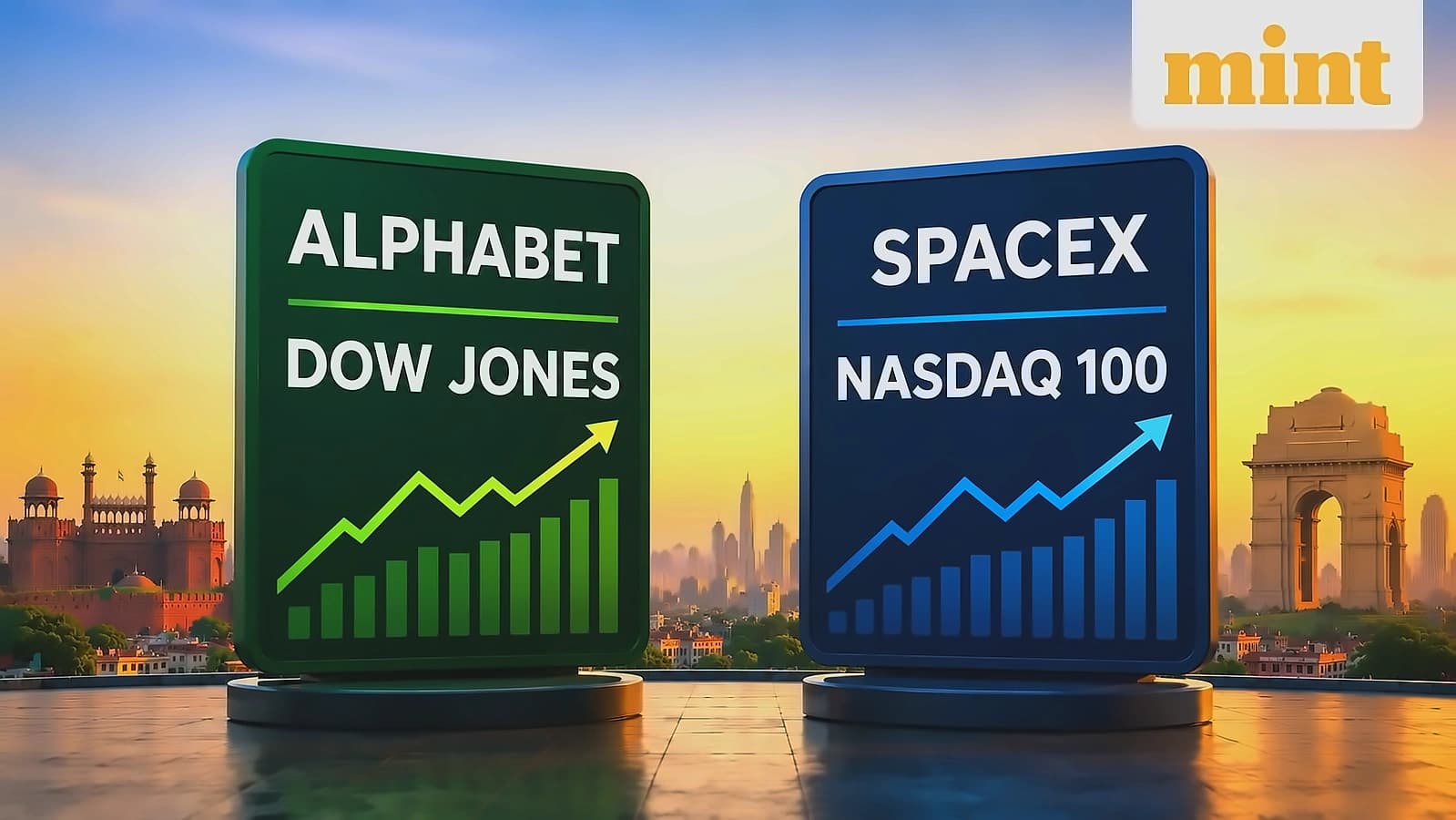
According to reports from Mint, Alphabet, the parent company of Google, has officially joined the 30-stock Dow Jones Industrial Average (DJIA), replacing Verizon Communications, effective 29 June. Meanwhile, Space Exploration Technologies Corp. (SpaceX) made a record-breaking public market debut earlier this month, raising $85.7 billion, and is set to enter the Nasdaq-100 from 7 July. The twin developments underscore the growing influence of technology companies in global equity markets, with experts noting that SpaceX's Nasdaq-100 inclusion is expected to attract passive investment flows. SpaceX's rapid ascent into the Nasdaq-100 was made possible by rule changes adopted by Nasdaq in May this year, introducing a fast-entry framework allowing newly listed companies to join the index just 15 trading days after their IPO. The exchange also relaxed its 10 percent minimum public float requirement, explicitly accommodating very large, tightly held companies like SpaceX.
As reported by Mint, investors seeking exposure to these companies have multiple options available. Gaurav Arora, Head of Research at Sahi, recommends Nasdaq-100-based funds such as Motilal Oswal's Nasdaq-100 fund, which will now automatically hold a slice of SpaceX alongside companies like Apple, Microsoft and Nvidia. For direct ownership, investors can use Interactive Brokers under the RBI's Liberalised Remittance Scheme, which allows up to $250,000 a year abroad. Apurva Sheth from Samco Securities noted that investors can also buy US stocks directly through Indian brokers offering international investing facilities, or invest in ETFs such as the SPDR Dow Jones Industrial Average ETF Trust (DIA) for broader market exposure.
According to Mint reports, experts believe SpaceX's entry into the Dow Jones remains several years away. Gaurav Arora explained that SpaceX isn't even S&P 500-eligible yet, requiring at least a year of trading history along with sustained profitability under GAAP, which SpaceX hasn't demonstrated. Tanvi Kanchan from Anand Rathi Share & Stock Brokers noted that since SpaceX is still loss-making, it doesn't fit the Dow's typical profile of established, profitable companies. However, she added that it's not impossible over the next three to five years if SpaceX achieves sustained profitability and its public float expands.
Despite Alphabet's Dow inclusion, the company faces significant challenges in its artificial intelligence strategy. Alphabet shares rose 4% on Monday as the company officially joined the Dow Jones, but the stock remains under pressure, tracking for its worst month since February of last year with six of the past seven weeks in the red. The weakness stems from investor concerns about the payoff from Alphabet's AI spending, with lower-cost Chinese models improving, Google DeepMind researchers tied to Gemini and coding tools leaving for rivals like Anthropic and OpenAI. Compute access has emerged as both a customer constraint and recruiting issue, with Alphabet reportedly not having enough compute capacity to meet demand from enterprise customers such as Meta, and turning to infrastructure rivals, including SpaceX, to help close the gap. The strain is showing up on Alphabet's balance sheet, with its cash pile shrinking, it skipped buybacks in the first quarter for the first time in nearly a decade, and it has raised more than $140 billion in debt and equity.