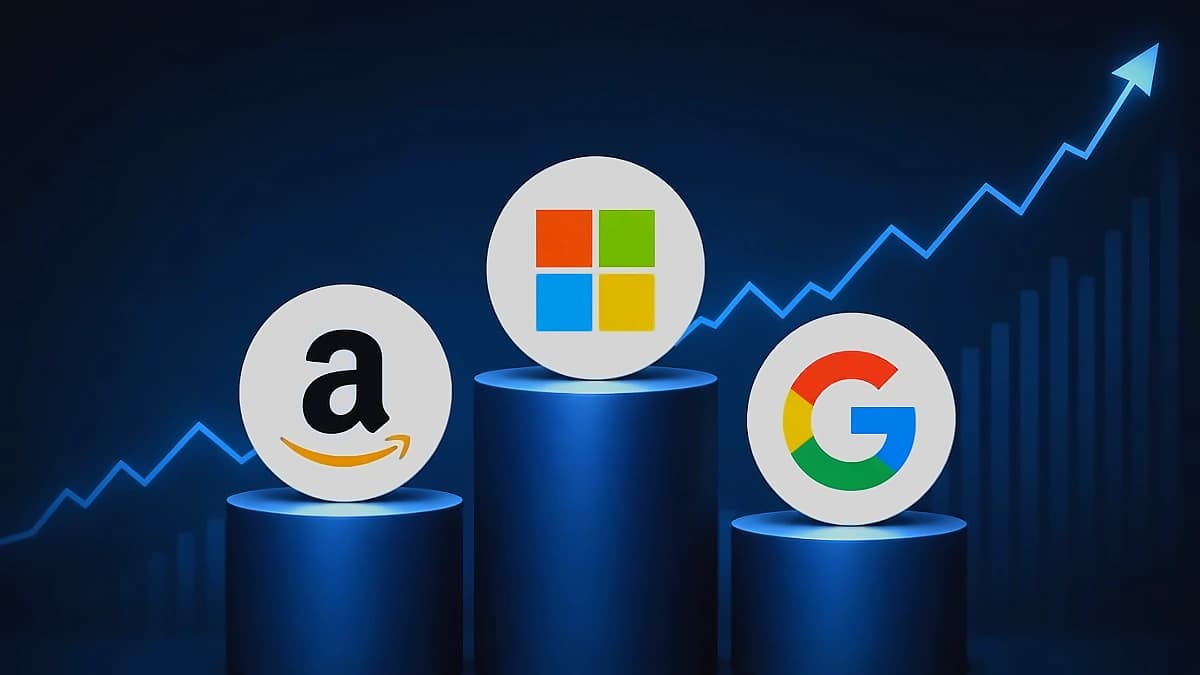
Billionaire fund manager Bill Ackman has made significant changes to his investment fund Pershing Square's portfolio this year, according to an analysis by the Motley Fool. The investor fully exited three prominent companies: Alphabet (Google parent), Universal Music Group (UMG), and Hertz Global (car rental company). According to the report, his exit from Alphabet came alongside deeper investment in Microsoft, despite both seeing artificial intelligence (AI) driven growth, as Ackman prefers the latter for its valuation and software business. The exit from UMG came after the company rejected his takeover bid, while he shed his small position in Hertz in July after expected 'turnaround' did not materialise. As reported by The Motley Fool, Ackman used market volatility to find new investments outside the biggest AI names, stating in his semi-annual shareholder letter that the market had become too focused on AI infrastructure companies.
Ackman raised $5 billion for Pershing Square USA last quarter, launched in April, with the plan for the new fund to match portfolios with the flagship fund Pershing Square Holdings. As reported by the Motley Fool, the investor said that 95% of the capital has already been invested. The fund has added six companies to its portfolio: Alcon, Intercontinental Exchange, Netflix, Mastercard, S&P Global and Visa. The analysis noted that the large caps have seen negative returns in the first half and are not popular choices, while Netflix faces growth concerns, and Alcon has consistent revenue growth. The six new purchases show that Ackman is looking beyond the AI trade, buying businesses in areas such as payments, financial data, stock exchanges, streaming and medical equipment rather than focusing directly on AI infrastructure.
According to The Motley Fool, Visa and Mastercard are two of Ackman's new bets on financial companies, both among the large-cap financial stocks that struggled during the first half of 2026. Ackman appears to be using the weakness in the sector as an opportunity to buy businesses he believes have long-term value. S&P Global is another financial-sector investment, providing financial information and data, while Intercontinental Exchange operates financial exchanges and other market infrastructure businesses. These companies had been largely overlooked by investors during a year when attention was heavily focused on AI. The strategy comes as investors have become heavily concentrated in AI-related stocks, with Ackman believing the market's strong focus on AI infrastructure has created pricing opportunities elsewhere.
According to reports from Nai 500, Pershing Square Capital Management has bought over 13 million shares worth over $934 million in Netflix, which accounts for around 5% of the portfolio. The report noted that the fund has also made buys in private companies, with plans to use cash from the fund's balance sheet to seed a new fund — Pershing Square Ventures — focused on private players. This new fund will launch later in 2026 and offer shareholders a way to invest in late-stage private businesses before their IPOs. As reported by The Motley Fool, Ackman used Netflix's stock weakness as an opportunity to take a new position, with the company's stock having fallen for much of the year as investors worried about its growth.
Pershing Square is also moving into private companies through strategic investments. According to The Motley Fool, the investment firm made several private investments using its own balance sheet during the second quarter, with Ackman planning to use those private investments to build a new fund. Pershing Square Ventures Ltd. is expected to launch later this year and will focus on late-stage private companies. The fund will be much smaller than Pershing Square's public stock portfolios, but could give investors access to companies before they go public. Ackman expects it to provide a more shareholder-friendly way for investors to gain exposure to late-stage private businesses before their IPOs. Buying private companies now also gives Pershing Square a head start, as the firm can build a portfolio of private businesses that could later become part of the fund. Ackman also sees research benefits from investing in private companies, believing running a venture fund will help Pershing Square understand the technology industry better and identify new competitors and technological threats to companies already held in its public stock portfolios.
According to the Nai 500 report, Pershing Square has delivered a cumulative return of 2,530% since 2004 and a compound annual return of 15.6%, compared with roughly 964% and 11% for the S&P 500. The fund's long-term buy-and-hold strategy has proven successful despite the recent major portfolio changes, demonstrating Ackman's ability to adapt his investment approach while maintaining his overall investment philosophy. The bigger message from Ackman's 2026 moves is clear: he is not simply chasing the AI rally, having sold Alphabet, replaced it with Microsoft, exited Universal Music Group and Hertz, and added six companies from areas that have been less popular with investors.