The race for critical minerals has emerged as one of the biggest investment themes of this decade, with countries scrambling to secure supplies of lithium, rare earth elements, graphite, nickel, and other strategic minerals. According to reports from Equitymaster.com, India doesn't have abundant reserves of many of these resources but is building its own critical minerals ecosystem through mining company expansions, metal producer diversifications, and government-backed initiatives. This shift is creating opportunities that extend well beyond traditional mining names, with some listed companies making calculated bets that could shape their growth trajectory over the next decade.
Midwest, established in 1981, is India's largest producer and exporter of granite, reaching 17 countries across 5 continents. As reported by Equitymaster.com, the company has demonstrated strong financial performance with sales and net profit growing at a compounded annual rate (CAGR) of 20% and 52% respectively over the past 5 years. Its return on equity (ROE) and return on capital employed (ROCE) have averaged 19% and 25% during the same period. The company is expanding beyond granite into quartz and rare earth materials, targeting to cater to 11-13% of the raw material needs of India's growing solar glass industry, which is expanding at 30% CAGR. Midwest has secured four exploration licenses in Sri Lanka for heavy mineral sand mining with commercial operations targeted for FY27, and aims to grow revenue 2.5 times over the next 2-3 years.
Sterling Tools, India's second-largest manufacturer of high-tensile cold-forged fasteners, specializes in precision-engineered components used in EV battery packs, thermal modules, and high-reliability joints, earning 42% of revenue from this segment. According to Equitymaster.com, the company has grown its revenue and net profit at a CAGR of 23% and 13% respectively over the past 5 years, with ROE and ROCE averaging 10% and 14% during the same period. In May 2025, through its subsidiary Sterling Gtake E-Mobility (SGEM), it announced entry into manufacturing rare-earth magnet-free traction motors for EVs via a technology licensing agreement with UK-based Advanced Electric Machines (AEM). The company's expansion into EV drivetrain components and rare earth magnet manufacturing positions it as an established player in the rare earth space.
GMDC, India's second-largest lignite-producing company, has pivoted from lignite to critical rare earth minerals development, focusing on one of the world's largest rare earth deposits at Ambadungar. As reported by Equitymaster.com, the company has grown sales and net profit at a CAGR of 16% and 37% respectively over the past five years, with ROE and ROCE averaging 10% and 13% during the same period. With an investment plan of ₹3,000-4,000 crore, GMDC is developing an entire ecosystem from mining to refining, targeting to build an integrated rare earth value chain across metals and alloys, NdFeB magnets, electric motors, glass, and optical glass. The company's rare earth portfolio includes neodymium, praseodymium, cerium, and lanthanum, with most critical minerals being essential for clean energy, electric mobility, and advanced technology applications.
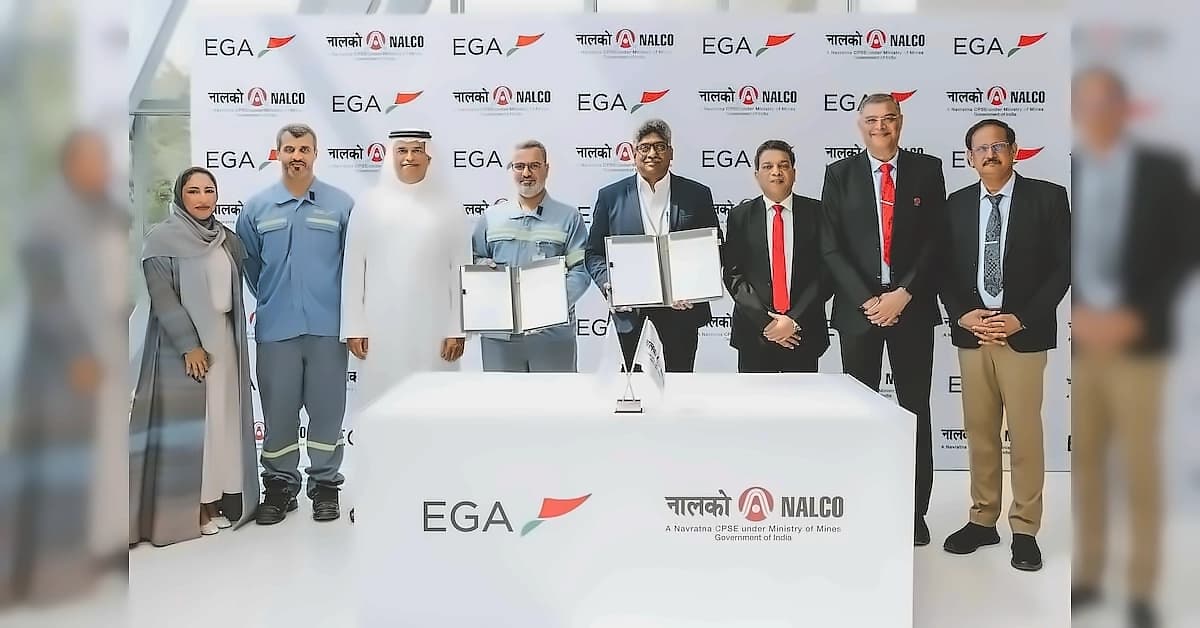
NALCO, a navratna Central Public Sector Enterprise, is exploring critical mineral extraction from alumina red mud and Bayer's liquor through partnerships with private companies and Bhabha Atomic Research Centre (BARC). According to Equitymaster.com, the company has demonstrated exceptional financial performance with sales and net profit growing at a CAGR of 15% and 108% respectively over the past five years, while ROE and ROCE have averaged 18% and 24% during the same period. NALCO is expanding its aluminium smelting capacity from 0.46 MTPA to 0.5 MTPA, with a new aluminium refinery set to begin commissioning in June 2026, expected to achieve annual alumina production of around 3 million tonnes. The company is also participating in overseas critical mineral exploration via Khanij Bidesh India (KABIL) joint venture, focusing on securing long-term contracts spanning 1-2 years.