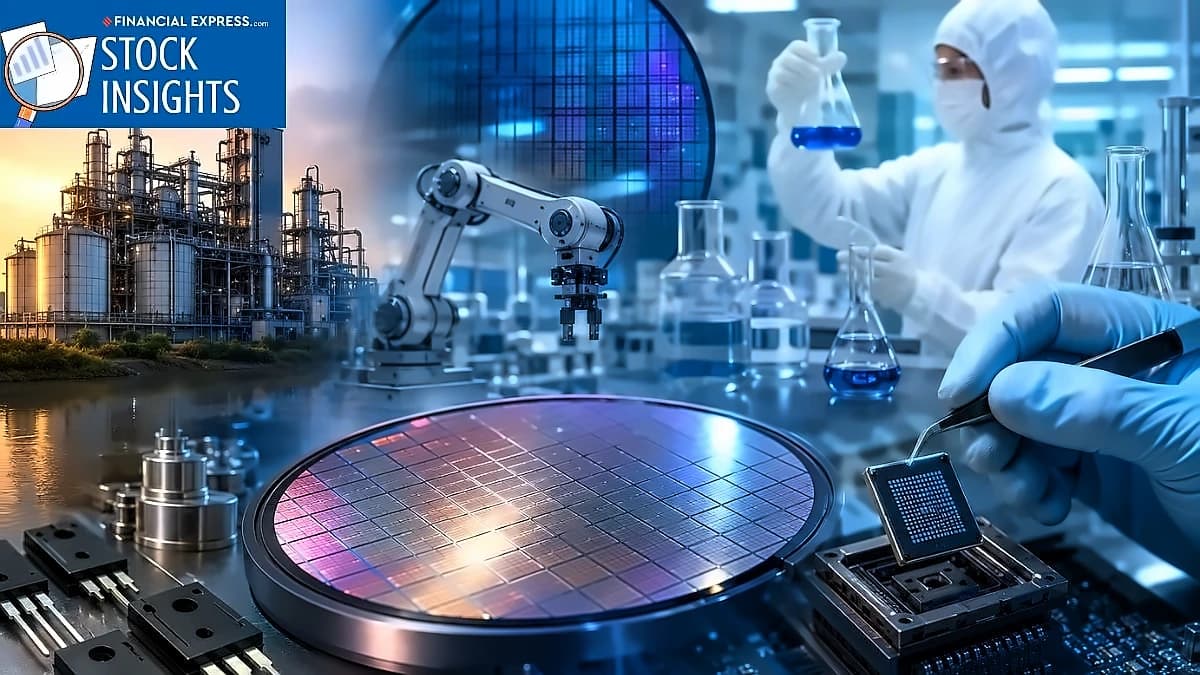
India's semiconductor ecosystem is experiencing significant expansion driven by rising demand for artificial intelligence (AI), cloud computing, electric vehicles (EVs) and automotive electrification. According to reports from The Financial Express, this growing demand reflects a structural shift in the global technology landscape rather than typical market cycles. The rapid adoption of emerging technologies, coupled with changing geopolitical priorities, has made semiconductors a critical component of modern industries. While India does not yet have listed pure-play semiconductor companies, several established businesses are building exposure through chip manufacturing, advanced electronics and supporting infrastructure. The government has launched ISM 2.0 to improve domestic production and develop full-stack Indian IPs, with ₹1,000 crore allocated for this initiative in FY26-27. Additionally, the Electronics Components Manufacturing Scheme (ECMS) was launched in April 2025 with an outlay of ₹40,000 crore to capitalise on the rising momentum for producing semiconductors and electronics.
CG Power & Industrial Solutions leads the list with an unexecuted order backlog of ₹236.46 billion as of September 2026, representing a 58% year-on-year increase. As reported by The Financial Express, the company is a leading Indian engineering firm engaged in electrical products for power generation, transmission, distribution and railways. The company's subsidiary, CG Semi Pvt. Ltd., commenced commercial production at its first outsourced semiconductor assembly and test (OSAT) facility in Sanand, Gujarat in July 2026, with an annual peak capacity of 300 million semiconductor units. During Q2 FY27, CG Power reported consolidated order intake of ₹84.85 billion, up 78% year-on-year, with standalone order intake reaching ₹8,016 crore, up 90% year-on-year.
Bharat Electronics (BEL) has secured an order book of ₹687.17 billion as of October 2026, with implied order inflows of ₹37 billion during Q2 FY27. According to The Financial Express, BEL is a Navratna PSU under the Ministry of Defence manufacturing advanced electronic products for the Indian armed forces. The company has strengthened its semiconductor capabilities through a Memorandum of Understanding with RRP Electronics and RRP Defense to explore business opportunities in semiconductors, electro-optics, unmanned systems and advanced defence technologies. This collaboration combines BEL's experience in developing advanced electronics with RRP Electronics' semiconductor manufacturing expertise and RRP Defense's electro-optical systems capabilities.
Polycab India maintains an EPC order book of ₹90-100 billion providing visibility into its infrastructure and EPC operations. As reported by The Financial Express, the company is one of India's leading manufacturers of wires and cables with presence in fast-moving electrical goods and EPC businesses. While Polycab does not manufacture semiconductor chips directly, it has indirect exposure through electrical infrastructure, cables and EPC capabilities that support infrastructure development across industries. During its Q2 FY27 earnings call, management discussed execution outlook for BharatNet and Revamped Distribution Sector Scheme projects, with similar order book profiles continuing for the EPC business.
The recent retreat in AI-linked stocks suggests investors are beginning to reassess the trade, with six of seven companies associated with data centres or allied AI businesses declining over the past month. According to Business Standard analysis, the combined market capitalisation of MTAR Technologies, Sterlite Technologies and HFCL shows growing correlation with the Nasdaq Composite, with their beta to the US technology index rising to 1.03 while their beta to the domestic smallcap index fell to 0.62. The Philadelphia Semiconductor Index has declined 17% while the Nasdaq Composite is down 7.5%, coinciding with corrections in major US technology companies including Alphabet (-17%), Meta (-15%), and Bloom Energy (-26%). Despite India's position benefiting from global AI infrastructure spending, analysts warn that raw material inflation remains a key challenge that could reset valuations in FY28, advising investors to remain selective based on earnings growth durability rather than past performance.