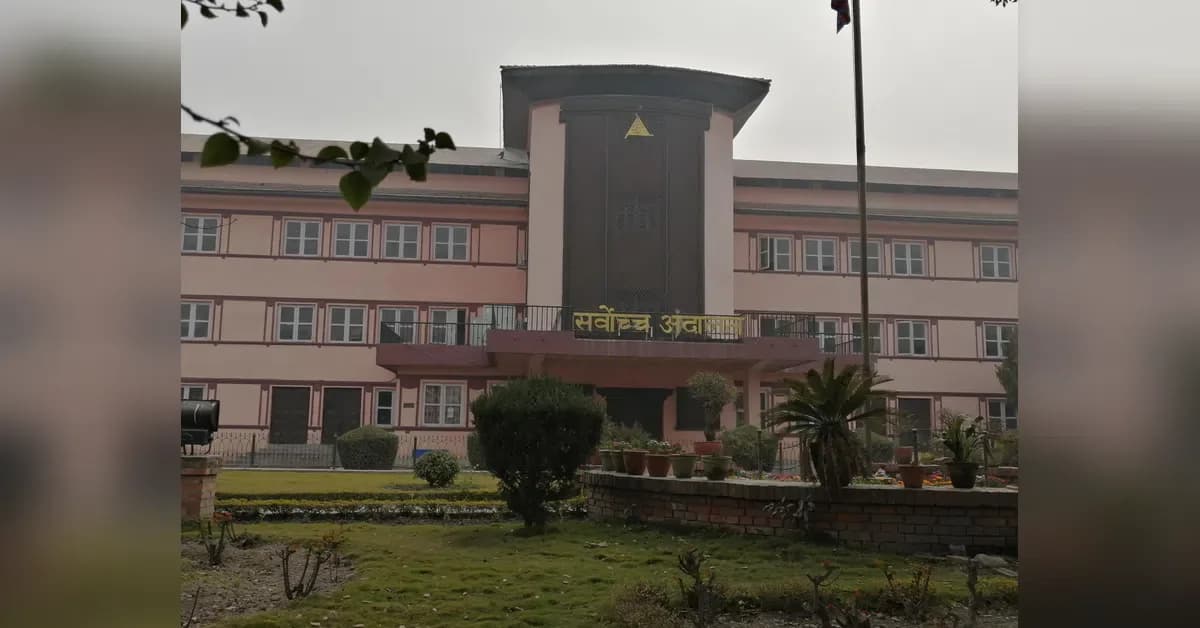
Nepal's Supreme Court issued an interim order on Friday blocking the government's order imposing customs duties on goods above NPR 100 (approximately ₹62) brought across the border from India. According to reports from News Setu, a joint bench of Justices Hari Prasad Phuyal and Tek Prasad Dhungana directed the Office of the Prime Minister of Nepal, Council of Ministers, Ministry of Finance, and concerned authorities not to enforce the disputed provision until further notice. The court observed that imposing such strict restrictions on essential goods used by ordinary citizens was unjustified and ordered authorities to restore normal conditions at border crossings.
The interim order was issued in response to a writ petition filed by advocates Amitesh Pandit, Akash Mahato, Suyogee Singh, and Prashant Bikram Shah, challenging the Finance Ministry's decision. As reported by News Setu, petitioners argued that the policy of imposing customs duty on goods exceeding NPR 100 is inconsistent with provisions of the Customs Act, 2081, particularly those relating to exemptions. The Ministry of Finance under Prime Minister Balendra 'Balen' Shah had made customs duty mandatory on goods above NPR 100, leading to stricter checks at Nepal-India border points in the Terai-Madhesh region. The court's decision specifically referenced the Customs Duty Act, 2024, highlighting the legal framework violation.
Following the imposition of mandatory customs provisions, the Armed Police Force began urging people to mandatorily pay customs duty on goods worth more than NPR 100 brought from India. According to News Setu, the strict enforcement reportedly led to frequent disputes between citizens and border security personnel. Under the now-suspended rule, even low-cost everyday items such as packets of chips, biscuits, bananas and other essential goods brought from India into Nepal were being subjected to customs scrutiny and taxation. The policy had sparked outrage among local residents, especially those living in border areas who regularly cross into India to purchase affordable daily-use items, with small traders claiming the measure was hurting their livelihoods and disrupting local business activity. The order had triggered public criticism against the 'Gen-Z' government, as reported by bongaigaon_live.
The unilateral and strict policy created significant problems in border districts of Madhesh, affecting the daily lives of residents. As reported by News Setu, the situation at border points from east to west was thrown into disarray, making it tense and abnormal. The checks conducted by the Armed Police Force on Nepalis returning from weekly markets forced people to stand in long queues, with their bags and packages opened and inspected thoroughly. With the interim order, the government is barred from collecting such duties until the final verdict on the petition is delivered, providing relief to thousands of people engaged in daily cross-border shopping and small-scale trade.