India is hosting the fourth India Africa Forum Summit (IAFS) at the end of this month, marking the first such gathering in 11 years since the third instalment in 2015. According to reports from Business Standard, this summit represents a significant milestone in India's Africa engagement strategy, with the event expected to be attended by several African heads of state and government. The summit will conclude on May 31 with an outcomes document, focusing on exploring further opportunities for India to become a partner in Africa's progress. The theme for this year's summit is "IA SPIRIT – India Africa Strategic Partnership for Innovation, Resilience and Inclusive Transformation". As described by India's External Affairs Minister S. Jaishankar, the meeting will be "a message of stability in a turbulent world, of reliability in an uncertain one and of solidarity in difficult times."
India's trade relationship with Africa remains significantly smaller than China's dominance in the region. As reported by Business Standard, India's trade with Africa in financial year 2024-25 was ₹81.99 billion, with Indian exports accounting for ₹42.6 billion and imports amounting to ₹39.2 billion. In contrast, China has emerged as Africa's largest trading partner with trade reaching a record $348 billion in 2025, though heavily skewed in Beijing's favour. China's exports to Africa increased by almost 25% to $225 billion, while Africa's exports to China increased by only 5% to $123 billion. Recently, Beijing also rolled out a policy of tariff-free access for African countries for the next two years to address this trade imbalance, which also aligns with Africa's desire for newer markets after the US imposed tariffs on its goods.
India's ministry of external affairs maintains that its engagement with Africa is guided by principles of mutual respect, equality, and demand-driven development partnership aligned with African priorities. According to Business Standard, India maintains diplomatic missions in 46 out of 54 African countries and has opened 17 new missions across the continent since 2018. The summit will feature an India-Africa business dialogue alongside the main proceedings, with discussions expected on India's duty-free tariff preference scheme benefiting 33 African nations and the implementation of the African Continental Free Trade Area. During its G20 Presidency, India played a key role in securing the permanent membership of the African Union in the G20, while New Delhi also worked closely with BRICS members to include two African countries, Egypt and Ethiopia, in the grouping during the 15th BRICS Summit held in Johannesburg in 2023. The return of the summit responds to the contemporary rupture of the international order that has left India in a particularly difficult position, prompting New Delhi to shore up ties with its traditional friends in the Global South.
India has committed significant development assistance to the African continent, with 190 Lines of Credit worth over $10 billion to 41 African countries, supporting projects in power, water supply, agriculture, transport, rural electrification, and digital connectivity. As reported by Business Standard, 220 projects worth $4.5 billion have been successfully completed so far. India has also provided grant assistance exceeding $700 million for development projects since 2015 and set up eight vocational training centres and seven IT centres across Africa. The country has offered more than 70,000 scholarships and trained over 40,000 officials under various schemes since 2015. India has also supported agricultural development, including seed development and fertiliser production, and set up technology parks in Rwanda, Mozambique, Ivory Coast, and Lesotho. An Indian Institute of Technology (IIT) campus has been established in Zanzibar, Tanzania, as well as a National Forensic Sciences University campus in Uganda. However, India's development spending has taken a major hit since the last summit in 2015, with only $34 billion delivered of the $10 billion pledged to India's flagship subsidized finance scheme, contrasting with official statistics showing $6.7 billion lent between 2004 and 2015.
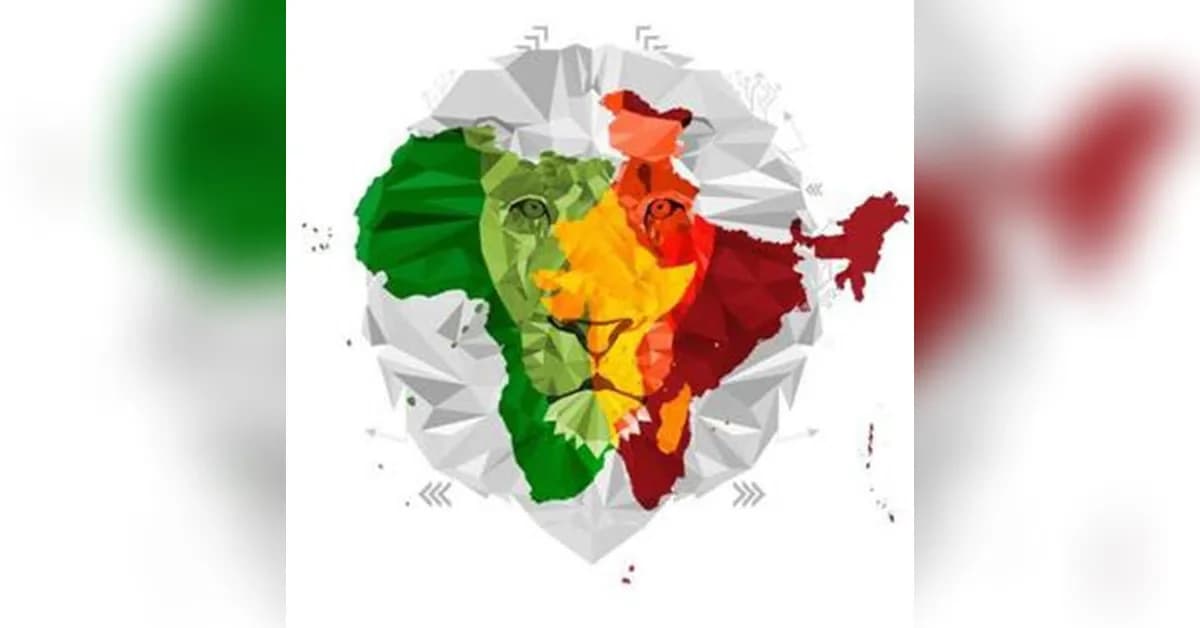
India's defence cooperation with Africa includes deploying over 5,000 peacekeepers in United Nations missions across the continent and exporting defence equipment to train military personnel from Seychelles, Mauritius, Nigeria, and Mozambique. According to Business Standard, India will also host the International Big Cat Alliance (IBCA) after the IAFS, with nine African countries as members, including successful cheetah translocation experiments. India supplies nearly 50% of Africa's generic medicines and provided medical assistance of $5 million to 32 African countries during the Covid-19 pandemic. India's cumulative investment in Africa has reached approximately $80 billion between 1996 and 2025, making it currently Africa's fourth-largest trading partner and among its top five investors. The rise of security and defence cooperation will be closely watched, particularly maritime security and joint efforts to protect Indian Ocean supply lines. India undertook perhaps its biggest maritime deployment to support the anti-Somali piracy contact group, though both sides prefer discussion of "soft security" collaboration to avoid the perception of military alliances.