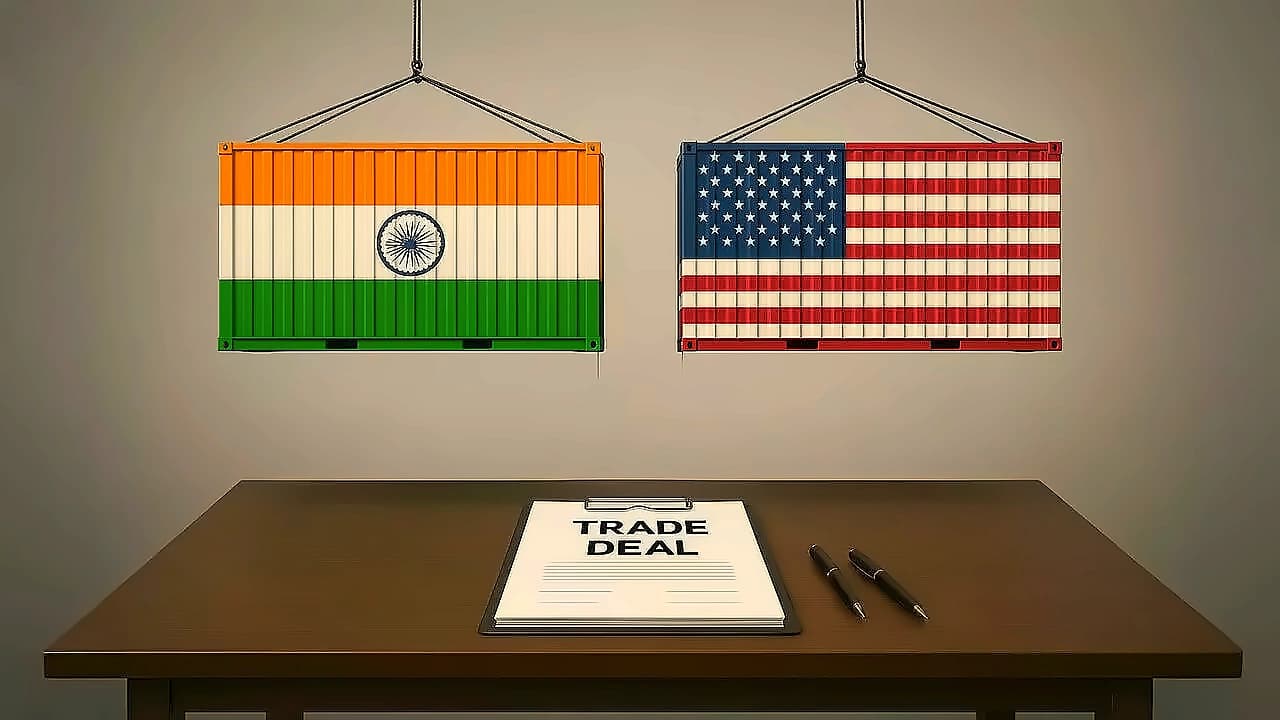
India and the United States have successfully concluded their latest round of bilateral trade negotiations, with both sides describing the discussions as 'positive and productive'. According to The Times of India, a senior US official confirmed that 'most of it is almost done' and there aren't many loose ends left in the agreement. The final round of talks, which concluded on April 23, involved senior representatives from both countries, reflecting growing momentum behind the proposed deal. Commerce Minister Piyush Goyal announced that the country has 'almost finalised the first tranche of the bilateral trade agreement', with discussions focusing on securing preferential market access for India in the US market relative to competitors. As per The Times of India, Goyal emphasized that 'We are trying to work out what would be the mechanism by which India can get a preferential access, market access in the US market compared to our competitors'. The three-day meetings marked the first face-to-face engagement since the two countries announced a framework for the first phase of the deal, with a 12-member Indian delegation led by Additional Secretary in the Department of Commerce Darpan Jain meeting with a US team headed by Brendan Lynch, Assistant US Trade Representative for South and Central Asia.
Under the proposed interim arrangement, the United States has reduced tariffs on Indian goods from 50% to 18%, representing a significant improvement from the previous trade relationship. Previously, in August last year, Trump had imposed a 25% reciprocal tariff on India, along with an additional 25% penalty linked to India's purchases of crude oil from Russia. According to The Times of India, the 12-member Indian team, led by Darpan Jain, held extensive discussions with the US delegation over three days, focusing on key provisions of the proposed pact. The negotiations covered a wide range of issues, including market access, non-tariff barriers, technical trade regulations, customs procedures, trade facilitation, investment promotion, digital commerce, and alignment on economic security. The ministry confirmed that India and the US have agreed to remain in close contact to preserve the momentum generated during these talks. As per The Times of India, the meetings were conducted in a constructive and positive spirit, with meaningful and forward-looking discussions enabling progress on key matters. Both sides agreed to remain engaged to maintain this momentum as they move forward.
US Trade Representative Jamieson Greer acknowledged the complexity of agricultural negotiations during his testimony to the Committee on Ways and Means of the US Congress on Wednesday. 'India is a tough nut to crack... they've protected their agricultural markets for a very long time,' Greer stated, while noting that 'there are things, though, where I think we can find mutual agreement'. According to The Times of India, Greer confirmed that 'Indian trade negotiators are in town this week. So we've been talking this week about these issues, including these specific commodities you talked about, DDGs'. India struck a more upbeat tone, with MEA Spokesperson Randhir Jaiswal calling the discussions 'ongoing and constructive' at a weekly media briefing. The negotiations come as both sides are working towards a balanced, mutually beneficial and forward-looking trade agreement, taking into account each other's concerns and priorities, and to achieve a trade target of $500 billion by 2030.
The negotiations occur against the backdrop of recent US trade policy changes, with the Trump administration imposing a 10% tariff on all countries from February 24. As reported by The Times of India, these tariffs can remain in place for 150 days and are part of the administration's efforts to develop alternatives to levy country-specific duties. The current policy replaces the reciprocal tariffs that were declared illegal by the US Supreme Court, creating new dynamics for bilateral trade relationships. According to government sources, 10% tariffs under BOP are in place for 5 months under Article 122, hence any deal that India signs has to be against this tariff structure. Following the Supreme Court's decision, President Donald Trump imposed a temporary 10% tariff on all countries for six months, with uncertainty remaining about what happens after this period. The timing of the talks follows recent developments in the US tariff structure, with the US administration introducing a temporary flat 10% tariff on all countries for 150 days starting February 24.
A significant development has emerged alongside the trade negotiations as the US has opened a $166 billion refund window for customs duties that were later struck down by courts. According to the Global Trade Research Initiative (GTRI), this process, which began on April 20, allows businesses to seek refunds for previously paid tariffs. However, Indian exporters face a significant hurdle as only US-based importers are eligible to file claims under the current framework. This means Indian companies, despite being indirectly impacted by the tariffs, do not have a direct legal pathway to claim refunds. Instead, they must rely on negotiations with their American buyers if they wish to benefit from any reimbursements, potentially requiring exporters to renegotiate commercial terms or explore rebate-sharing agreements.
The negotiations have been significantly impacted by recent US Supreme Court rulings, with a February ruling against tariffs imposed under the 1977 International Emergency Economic Powers Act prompting the Trump administration to adopt a flat 10% tariff regime for all trading partners. As reported by The Times of India, a planned February meeting between chief negotiators was postponed as a result of these changes. A government source explained that 'the agreement will have to be recalibrated, redrafted' and that 'that amount of change will take place from their side'. However, 'In our case, since the agreement has not been signed, we have the flexibility to revise provisions as required,' the source added. Earlier this month, Prime Minister Narendra Modi said he had spoken with Trump and reviewed 'substantial progress' in bilateral ties, stating that 'we are committed to further strengthening our Comprehensive Global Strategic Partnership in all areas'. The text of the agreement, which was released on February 7, is now being re-examined by both sides as they adapt to the changed tariff landscape.
US Ambassador to India Sergio Gor expressed strong support for the trade delegation's visit, describing it as a significant step toward finalising the bilateral trade deal. In a post on X, Gor stated that 'the Indian trade delegation will be arriving in Washington this week. A great step to finalise our bilateral trade deal. A win-win for both nations!' The diplomatic backing underscores the importance of the negotiations for strengthening economic cooperation between the two countries. If finalised, the agreement would mark a major milestone in India-US economic ties, strengthening trade cooperation between the world's largest economy and one of its fastest-growing major markets. The talks also follow a framework agreement announced earlier this year aimed at reciprocal and mutually beneficial trade, reinforcing commitments made during discussions between Prime Minister Narendra Modi and President Trump.