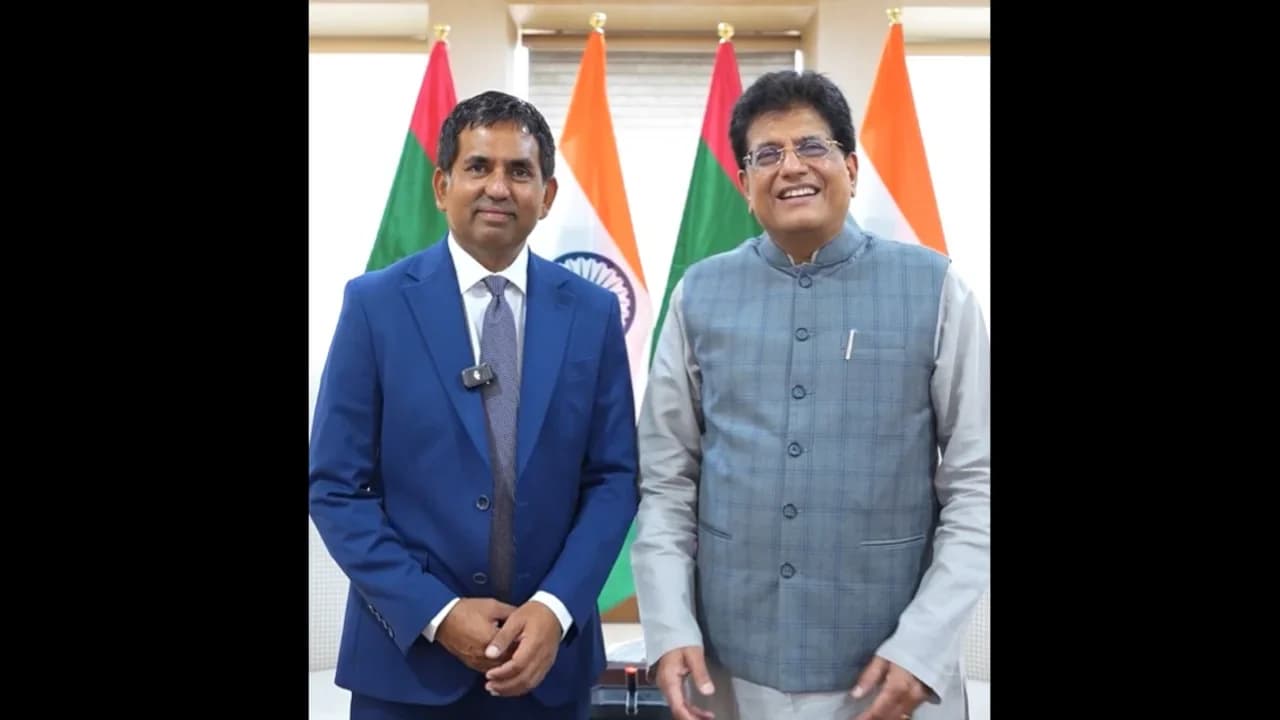
India has signed the Terms of Reference (ToR) for a preferential trade agreement (PTA) with the South African Customs Union (SACU) on Wednesday, marking a significant milestone in the bilateral trade negotiations. Commerce and Industry Minister Piyush Goyal emphasized the importance of expeditious negotiations, stating "Speed is necessary for outcomes. I am not at all advocating haste," but added that "discussions and negotiations held in a tight timeline expeditiously will give far better results than long-drawn negotiations spread over several years." The ToR was signed by Department of Commerce Additional Secretary Yashvir Singh and Namibia's Ministry of International Relations and Trade Executive Director Ndiitah Nghipondoka-Robiati, the chief negotiators for the PTA from both regions. As per Commerce Secretary Rajesh Agrawal, "As we discuss, there might be more additions and deletions" during the formal negotiations. The ceremony was attended by Minister of State for Commerce and Industry Jitin Prasada, senior Indian government officials and members of the SACU delegation.
The bilateral trade between India and the five-member SACU group reached $16.81 billion in 2025-26 (FY26), with India's exports worth $7.55 billion to the region. The latest developments show that negotiations for a preferential trade agreement are expected to begin soon following the ToRs signing. Major Indian exports to SACU include vehicles and components, transport equipment, drugs and pharmaceuticals, engineering goods, footwear, dyes and intermediates, chemicals, textiles, rice, and gems and jewellery. India mainly imports gold, steam coal, copper ores and concentrates, phosphoric acid, manganese ore, aluminium ingots and other minerals from the regional bloc. Minister Goyal highlighted that the proposed agreement would provide preferential market access to an already established commercial relationship, with complementarities in sectors including engineering goods and machinery, automobiles, pharmaceuticals, textiles, agriculture and agri-processing.

The tentatively agreed chapters cover comprehensive trade areas including trade in goods and market access, rules of origin and origin procedures, customs procedures and trade facilitation, trade remedies, including a bilateral safeguard mechanism, sanitary and phytosanitary measures, technical barriers to trade, dispute settlement, and legal and horizontal provisions. According to Minister Goyal, more chapters could be added as discussions progress during the formal negotiations. Both sides are targeting the conclusion of negotiations within a year, though officials are looking to complete the process sooner. Commerce Secretary Rajesh Agrawal noted that "What we sign today does not by itself lower a single tariff or clear a single container. Only a final agreement will do that." He highlighted that "This signing is India's first ToR with the African region and noted SACU's importance as the world's oldest customs union."
India's trade with Botswana rose by 21.26% to USD 614 million in 2025-26 from USD 506.33 million in 2024-25, though India has a trade deficit of USD 278.94 million in the last fiscal. Diamonds are the major trading commodity between the countries, with Botswana exporting rough diamonds to India and India's exports including pharmaceuticals, machinery, iron and steel, electrical equipment, and precious stones. India's trade with Namibia increased by 4.32% to USD 593 million in 2025-26, with India maintaining a trade surplus of USD 105.24 million in the last fiscal. Other SACU members like Botswana and Namibia show growing trade with India, indicating positive momentum across the regional bloc.
Under such preferential trade pacts, two trading partners provide duty concessions to each other on goods to boost two-way commerce. Minister Goyal outlined specific cooperation areas, stating that "the agreement could help the two sides diversify their markets and that India could also help SACU integrate into global supply chains in areas where their businesses are competitive or where skills and talent are available or can be developed." He emphasized that "India can play an important role in supplying affordable medicines and supporting the development of new talent in the IT sector in the SACU region." The minister assured that "New Delhi would not touch the issues that SACU may deem sensitive," while expecting "reciprocity and your consideration on sensitive issues on the Indian side as well." Namibia's Executive Director Ndiitah Nghipondoka-Robiati emphasized that "SACU looked forward to a balanced, mutually beneficial and development-oriented agreement" that takes into account the interests of "our least developed countries and small vulnerable economies." Minister Goyal noted that "India's engagement with Southern Africa is rooted in a longstanding partnership of equals and extends well beyond trade," recalling that "Southern Africa occupies a special place in India's national memory, noting that India's relationship with Southern Africa did not begin with commerce. It began with conscience."