India and Canada concluded the third round of negotiations for their proposed Comprehensive Economic Partnership Agreement (CEPA) in Ottawa on July 10, 2026, as reported by the Department of Commerce. The five-day talks from July 6-10 witnessed positive progress across multiple negotiating tracks, with both countries reaffirming their commitment to conclude the negotiations by 2026, in line with the vision of the leaders. The Department of Commerce confirmed that the negotiations are strategically important as both countries have targeted to increase bilateral trade to $50 billion by 2030. However, the urgency has intensified significantly as Prime Ministers Modi and Carney have set an ambitious target to finalize the trade pact by November 2026, with Carney personally pushing to seal the deal before world leaders gather for the G20 Summit in Miami this December. The two leaders even met on the margins of the G7 Summit in Evian, France, to keep the pressure on their respective negotiation teams, with Modi expressing satisfaction with the progress and reaffirming their commitment to building a forward-looking strategic partnership.
The negotiations are strategically important as both countries have targeted to increase bilateral trade to $50 billion by 2030. However, two-way trade declined 8.22% to $7.95 billion in 2025-26 compared to $8.66 billion in 2024-25, with exports at $4.67 billion and imports at $3.28 billion. Canada represents a market of 41.65 million people and a GDP of $2.34 trillion at purchasing power parity, making it a significant trading partner for India. The latest data shows 2025-26 exports at $4.67 billion and imports at $3.28 billion, compared to 2024-25 exports of $4.22 billion and imports of $4.44 billion. With Canada-India bilateral trade currently over CA$31 billion, the intent of the CEPA is to double that figure by 2030, representing a significant expansion opportunity for both economies.
The third round of CEPA talks from July 6-10, 2026 in Ottawa covered trade in goods, services, intellectual property, rules of origin, sanitary and phytosanitary measures, and technical barriers to trade, as confirmed by the Department of Commerce. Joint Secretary in the Department of Commerce, Brij Mohan Mishra, is the chief negotiator from the Indian side, while Bruce Christie serves as Canada's chief negotiator. The discussions witnessed positive progress across multiple negotiating tracks, with both sides reaffirming their shared commitment to conclude the negotiations by 2026. The negotiations are strategically important as both countries have targeted to increase bilateral trade to $50 billion by 2030, with the current trade relationship showing a decline of 8.22% to $7.95 billion in 2025-26.
Key exports from India to Canada include pharmaceuticals, iron and steel, seafood, cotton garments, electronic goods and chemicals, while main imports comprise pulses, pearls and semi-precious stones, coal, fertiliser, paper and petroleum crude. India's main services sector exports include telecommunications, computer and information services, and other business services. The bilateral relationship is strengthened by over 425,000 Indian students in Canada and a strong Indian community. As per the Canadian Minister of International Trade office, opportunities between Canada and India remain strong, including in energy, critical minerals, agri-food, digital and clean technologies, education, and services, providing a solid basis for deeper economic cooperation. New Delhi wants concrete commitments on professional mobility, making it easier for Indian IT professionals, engineers, and tech consultants to work in Canada without drowning in visa red tape. India's core service exports—telecommunications, data architecture, and software development—are the real prizes here, representing the most significant opportunities for bilateral economic integration.
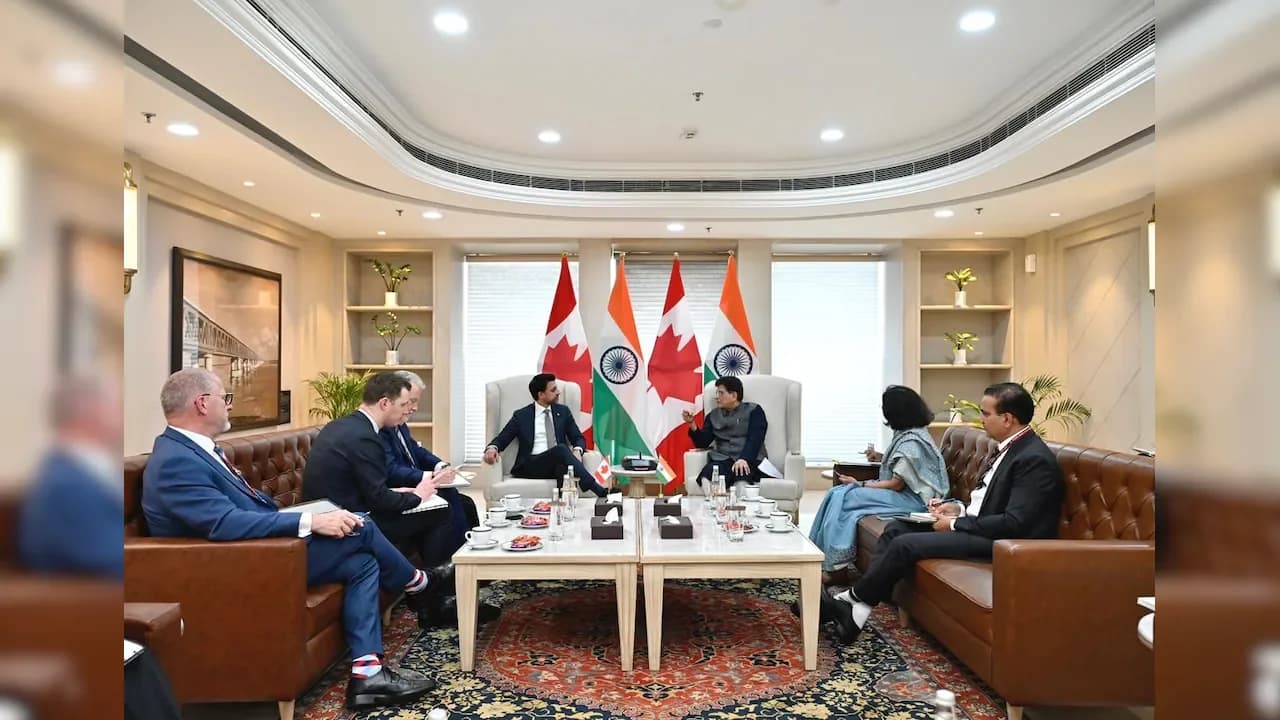
Canadian Trade Minister Maninder Sidhu announced a massive "Team Canada" trade mission scheduled for October 12 to 16, 2026, as confirmed by his office. This follows Canadian Prime Minister Mark Carney's invitation to Prime Minister Narendra Modi to visit Canada this year. The diplomatic engagement builds on the positive momentum from PM Modi and PM Carney's meeting on the sidelines of the G7 Summit in France last month. Sidhu called on Canadian businesses to join the Team Canada Trade Mission to India, emphasizing that "India is one of the world's fastest-growing major economies, and Canadian businesses have a real opportunity to grow alongside it." The application windows opened by Global Affairs Canada aren't just for multinational conglomerates; middle-market firms in tech and advanced manufacturing need to get their foot in the door before the market gets saturated. For businesses relying on import-export logistics, cross-border tech services, or international student recruitment, sitting on the sidelines right now is a mistake. If your operations rely on items like specialized chemical fertilizers or pharmaceutical ingredients moving between these two nations, start mapping out how a sudden tariff reduction in December will shift your cost margins.