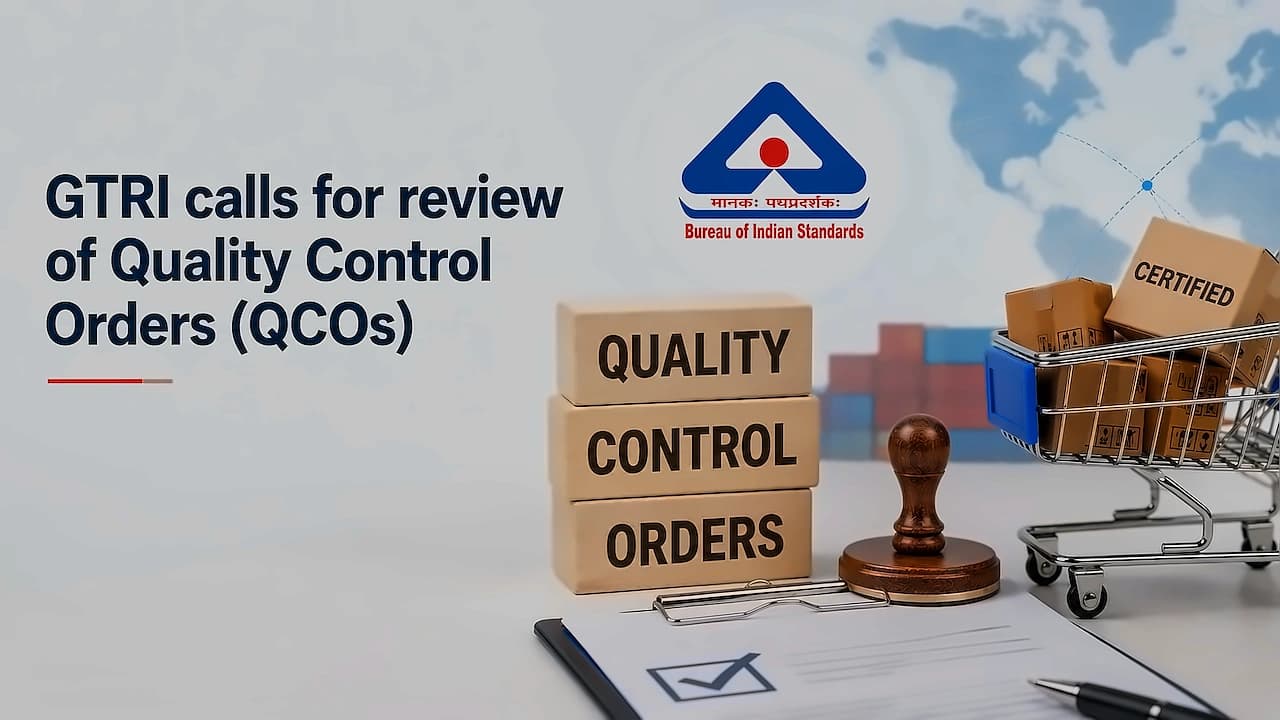
The Global Trade Research Initiative (GTRI) has called for a comprehensive review of Quality Control Orders (QCOs) to ensure they protect consumers without becoming licensing or import restrictions. According to GTRI, mandatory quality certification under these orders increases expenses, damages MSMEs, and boosts the price of goods. As reported by GTRI founder Ajay Srivastava, a top-level review is needed to ensure QCOs protect consumers without becoming import restrictions or licensing barriers. "Without wider reform, the system risks weakening MSMEs, raising prices and discouraging the manufacturing investment that Make in India seeks to attract," he said.
If other nations enact similar regulations, Indian exporters might have to pay hefty travel and per diem expenses for visiting officers, licensing, renewal, and testing fees in addition to obtaining separate country-specific certifications even if their products already meet accepted international standards. According to GTRI, this would increase export expenses, postpone shipments, and erect new trade barriers. Commerce and Industry Minister Piyush Goyal recently announced that India would evolve a framework to ease or waive mandatory quality certification for high-technology industries. The announcement comes amid concerns voiced by Japanese companies over the Quality Control Order system in India.
A Japan External Trade Organisation (JETRO) survey for fiscal 2025 found that 71.9% of Japanese manufacturers operating in India reported that BIS certification had already affected, or was expected to affect, their operations. QCOs are government regulations that make Bureau of Indian Standards (BIS) certification mandatory for certain products, with products covered under a QCO required to comply with prescribed Indian Standard and obtain the BIS mark before sale or import. The proposed relief for high-technology industries is welcome, but India needs a broader review of its QCO regime, according to GTRI.
Without wider reform, the system risks weakening MSMEs, raising prices and discouraging the manufacturing investment that Make in India seeks to attract. As reported by GTRI, the proposed relief for high-technology industries is welcome but India needs a broader review of its QCO regime, which is raising costs for manufacturers, disrupting supply chains and discouraging investment. The announcement comes amid concerns voiced by Japanese companies over the Quality Control Order system in India.