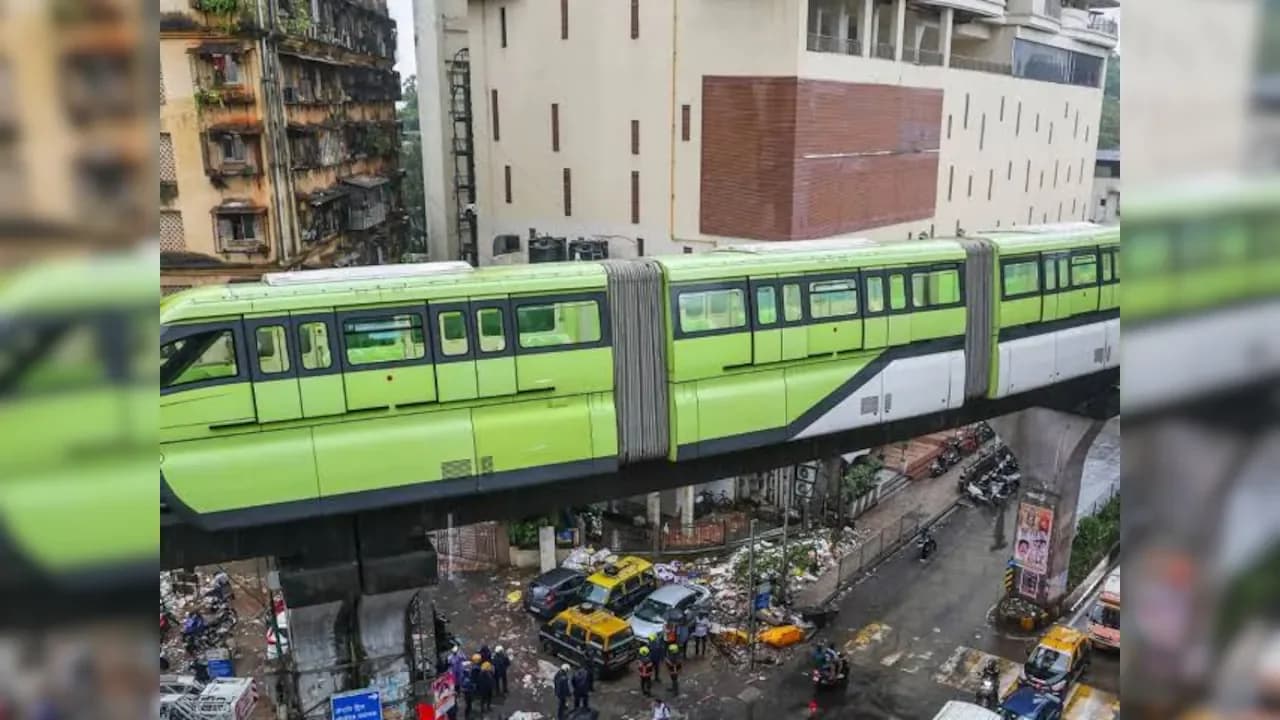

Mumbai's Monorail service will resume operations after a nine-month suspension that began on September 20, 2025. According to reports from Hindustan Times, the service was suspended due to repeated technical failures, safety concerns, and operational challenges. During the suspension period, authorities carried out extensive upgrades including fleet improvements, track repairs, and the installation of a modern Communication-Based Train Control (CBTC) signalling system.
The Mumbai Metropolitan Region Development Authority (MMRDA) has proposed increasing fares to offset rising operational costs. As reported by Hindustan Times, the minimum ticket price could rise to ₹10 for journeys up to 3 km, compared with the existing ₹5 fare. The maximum fare is proposed at ₹70 for trips of 18 km and above, bringing the pricing structure closer to Mumbai Metro fares. This would mark the second fare revision since the Monorail began operations in 2014.
The Monorail system has received critical safety approval from retired Commissioner of Metro Railway Safety P.S. Baghel. However, final clearance from the Maharashtra government's Urban Development Department is still awaited before operations can officially resume. According to reports from Hindustan Times, the MMRDA and the Maha Mumbai Metro Operation Corporation Limited (MMMOCL) have been dealing with significant losses, with the project reportedly recording a loss of ₹460.26 crore during the 2025-26 financial year, largely due to capital expenditure on new train rakes procured from Hyderabad-based Medha Servo Drives.
Officials confirmed that the necessity for the fare revision is driven directly by soaring costs of ongoing operations and track maintenance, coupled with the capital-intensive procurement of brand-new train rakes from the Hyderabad-based manufacturer, Medha Servo Drives. As reported by Hindustan Times, the MMRDA is considering the fare revision to improve the financial sustainability of the loss-making transport system and cover rising operational and maintenance costs.