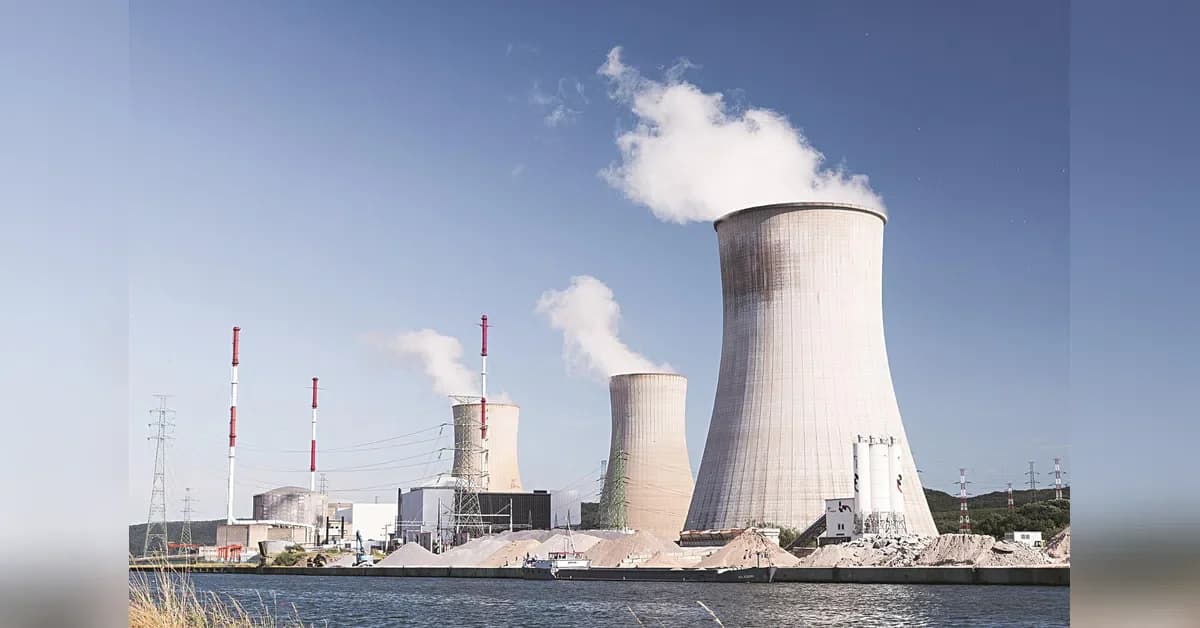
The estimated cost of adding four Russian-designed nuclear reactors at the Kudankulam plant in southern India has surged by more than 55% following construction delays linked to the Ukraine war. According to a written reply to parliament by Atomic Energy Minister Jitendra Singh on Wednesday, the four reactors of 1 gigawatt each are now estimated to cost ₹1.38 trillion ($14.4 billion), representing a significant increase from the 2024 estimates. The war in Ukraine has pushed back construction by almost three years, creating substantial cost overruns across the project. This cost escalation is part of a broader global trend, with similar projects from the US and UK to Bangladesh also suffering sharp increases in expenditure after construction delays. The projected expenditure for two of the new Kudankulam reactors has risen by 73%, while the estimate for the remaining two reactors increased by 40%, as reported by federal government data.
The projected expenditure for the new Kudankulam reactors shows varying degrees of cost escalation across different phases. As reported by federal government data, two of the new reactors have seen their costs rise by 73%, while the remaining two reactors experienced a 40% increase in estimated costs. This differential impact reflects the varying stages of construction and the specific challenges faced during different phases of the project development. The cost overruns are symptomatic of the challenges faced by the nuclear sector globally, with projects like Georgia's Vogtle plant in the US being delivered years behind schedule at more than double its original budget. Similar projects from the US and UK to Bangladesh have also suffered due to sharp increases in expenditure after construction delays.
Despite the cost escalations, the government has maintained its timeline for commissioning the new reactors. According to Minister Singh's parliamentary statement, two of the new reactors will be commissioned through March 2030, with the first expected to start operations in June next year. This represents a delay from the earlier government commitment that all reactors would be completed by 2027. The original two Russian reactors of 1-gigawatt capacity each at Kudankulam are already operational and contribute to India's nuclear power capacity. The government had earlier said that all these reactors will be completed by 2027, but the Ukraine war has pushed back the timeline significantly.
The substantial cost increases are expected to impact the competitiveness of nuclear power in India's price-sensitive power market. As noted by Rupesh Sankhe, senior vice president for research at Elara Capital India Pvt Ltd., while nuclear remains important for climate risk mitigation and energy security, very high costs only enforce the anti-nuclear argument and can create further opposition to projects. The cost overruns will make electricity generated by these plants more expensive, potentially challenging India's ambitious nuclear expansion plans. "While nuclear is important for climate risk mitigation and energy security, costs need to be contained," Sankhe emphasized, adding that this may dent the plant's competitiveness compared to other sources of power. The cost escalations highlight the broader challenges facing India's nuclear sector expansion.

The cost escalations at Kudankulam highlight broader challenges facing India's nuclear sector expansion. According to Singh's parliamentary statement, the costs for building four 700-megawatt domestic reactors at Kaiga in Karnataka and Gorakhpur in Haryana are also set to be revised. Currently, India has 8.8 gigawatts of nuclear power capacity contributing to about 3% of the country's power output. In a significant step towards bolstering India's nuclear infrastructure, Anushakti Vidhyut Nigam Ltd will shortly invite bids for a crucial nuclear island package. This tender encompasses four 700 MW reactors at the Mahi Banswara Rajasthan Atomic Power Project and is worth over ₹28,000 crore as part of the indigenous PHWR program. The government had earlier opened up the sector to private firms, pursuing an ambitious goal of expanding the country's nuclear generation capacity eleven-fold by 2047.