According to reports from The Times of India, Airports Authority of India's (AAI) 2026 National Service and Customer Satisfaction Index Survey has ranked Khajuraho Airport as the highest performer in its category despite the facility having zero commercial flight operations in July and August. The airport, which serves Madhya Pradesh's UNESCO World Heritage temple town, has not handled a single commercial flight for weeks, yet secured the highest customer satisfaction score among airports in its category. This marks the second consecutive time Khajuraho has topped these rankings, having also achieved the distinction in December 2025. The paradox has sent shockwaves through the aviation industry, with the airport currently having no scheduled commercial flights for nearly three months since July 1, with operations likely to resume only in October. For residents like Mani Ram, the recognition is a matter of pride, attributing the success to the airport's spotless terminal and courteous staff.
As reported by The Times of India, AAI's biannual CSI survey measures 33 service parameters including cleanliness, security, baggage handling, signage, Wi-Fi, food outlets and staff behaviour. The index is based on passenger feedback on parameters such as cleanliness, terminal ambience, staff behaviour, ease of movement, security checks, and other service-related aspects, rather than on traffic volumes or connectivity. The survey does not measure the frequency of flights, connectivity or traffic, focusing instead on service quality and passenger experience. The methodology is based on experience and not operational scale, so theoretically a small airport with relatively few passengers can perform better than a large metropolitan hub with congestion problems. Airport Director Santosh Singh explained that the ranking is based on passenger facilities, cleanliness, security arrangements and service quality. The survey measures parking, ground transportation, check-in facilities, cleanliness, Wi-Fi, food courts, staff behaviour, and hygiene, with responses combined into a score out of five. The CSI is compiled from surveys conducted twice a year by independent agencies to ensure the process remains objective, with passengers rating airports on parameters covering ground transport, parking facilities, Wi-Fi connectivity, food outlets, hygiene and cleanliness.
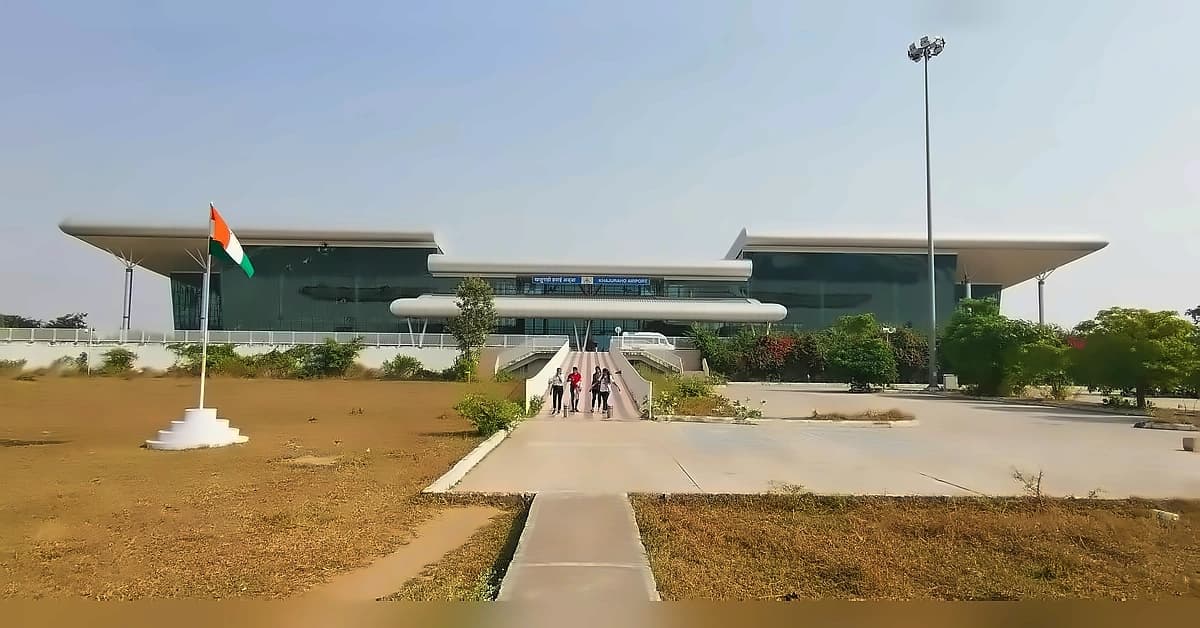
According to the report, even in its busiest days, Khajuraho Airport operated flights on only two routes - connecting Delhi and Varanasi. Even these flights no longer operate, yet the airport secured the highest satisfaction score due to its minimal passenger volumes and minimal congestion before commercial services were suspended. Currently, no scheduled commercial flights are operating from the airport. However, Airport Director Santosh Singh has clarified that construction work is currently underway at the airport, so there will be no flights for two months. He emphasized that the survey on which this ranking is based was conducted when flights were operating, and the results were announced only recently, noting that flight operations are expected to resume around October. The airport's terminal building dates back to the late 1960s, while the first aircraft reportedly landed there in 1978, making it part of the region's aviation story for decades. As per The Times of India, flights from here usually go to Delhi and Varanasi, but there are none since July 1, highlighting the current operational suspension.
The airport's top ranking despite having no regular flights has surprised many locals, prompting questions about the credibility of the survey. Rajeev Shukla, a resident and hotel operator, expressed concern saying, "Khajuraho Airport had also ranked number one in 2025, and we're happy it has achieved the feat again. But, unfortunately, there isn't a single flight operating from here. There were no flights last month either. This is something our officials and political leaders need to think about." In response to local criticism, Airport Director Santosh Singh stated that securing the number one position is the result of hard work by staff and passenger trust, and emphasized that the objective is to provide world-class facilities and continuously improve service quality in the future. The irony is that Khajuraho's biggest problem is not serving passengers well but getting them there - the temple complex is a UNESCO World Heritage Site attracting several hundred thousand tourists annually, but air connectivity has not returned to pre-pandemic levels. The ranking has sparked mixed reactions online, with many social media users joking about an airport winning India's highest customer satisfaction award while its runway remained largely empty for weeks.
The Khajuraho episode raises broader questions about India's aviation ecosystem and airport ranking methodology. Regional airports in India are finding it difficult to retain scheduled flights as airlines switch to more commercially viable routes, with the country's regional airport network having expanded rapidly under schemes like UDAN, but once initial incentives disappear it is hard to maintain regular airline service. While India's domestic aviation network has expanded rapidly with airports handling more than 400 million passengers including international traffic, smaller airports like Khajuraho face unique challenges in maintaining connectivity. The survey's focus on passenger experience rather than operational complexity means that fewer passengers, more happy passengers can achieve high satisfaction levels, but this approach may not align with public perception of the "best airport" when connectivity is limited. The real challenge for policy makers is to ensure airports like Khajuraho can sustain their outstanding service while regaining the one thing every airport essentially exists for - regular flights ferrying people to and from their desired destinations.