India has recently unveiled SHANTI, a comprehensive maritime security framework designed to advance rules-based maritime governance and cooperative security across the Bay of Bengal and Indo-Pacific regions. This initiative comes as undersea cable security incidents continue to escalate globally, with recent reports of Chinese vessels loitering above critical cable systems. The framework represents India's strategic response to growing threats to maritime infrastructure and undersea communication networks that connect the region's economies.
A Chinese-flagged research vessel was recently observed loitering directly above an undersea cable system connecting Taiwan to the United States, prompting Taiwan's Coast Guard to issue a warning. According to Windward, a maritime analysis platform, the 200-foot vessel was moving at slow speed directly over the cable route in the Philippine Sea, with the company describing such slow-speed movement over critical undersea infrastructure as one of the clearest signals used in maritime intelligence gathering. Taiwan's Coast Guard filmed the encounter and warned the vessel to alter its course away from the cable route, highlighting the growing tensions around undersea cable security. The vessel's name and identifying number were withheld, but Windward noted it had operated repeatedly near the disputed Paracel and Spratly Islands and had records placing the same ship as far as the Bay of Bengal and waters off Sri Lanka in earlier years. This incident follows a pattern of Chinese-flagged vessels being linked to several cable incidents in recent years, including suspected sabotage in the Baltic Sea and damage to cables around Taiwan. Analysts believe the recent deployments may gradually normalize China's presence in waters that Taiwan has long regarded as strategically important, though whether the vessel's activity ultimately amounted to scientific research or intelligence collection remains unresolved.
A new report from the Australian National University (ANU) warns that submarine cables face growing threats from state and non-state adversaries, with 86% of cable disruptions caused by anchors or fishing trawlers, 7% by undersea earthquakes, and 4% by abrasion. According to the ANU report, multiple apparent attacks on submarine cables have occurred in recent years, including 27 incidents severing cables connecting Taiwan with its Matsu Islands from 2018 to 2022, and several incidents recorded around Taiwan in 2025. The report highlights that cables connecting Taiwan with its Matsu Islands were severed 27 times from 2018 to 2022, while multiple incidents have occurred off the coast of Norway and in the Baltic Sea in the past five years, including one in November 2024 where a Chinese-flagged vessel was accused of intentionally dragging its anchor in the Baltic Sea and severing two submarine cable networks. As the report notes, state actors are now actively probing and testing cable infrastructure in peacetime as part of broader hybrid warfare strategies, with the intention of being able to rapidly degrade connectivity at the outset of a conflict.
India's undersea cable infrastructure faces significant geopolitical risks as seven international cable systems pass through the Strait of Hormuz, with four carrying critical traffic to and from India. According to reports from The Reason Why, a disruption here would impact banking, financial markets, energy operations, military communications, and India's IT industry. Mostafa Ahmed of the Al Habtoor Research Centre estimates that a 24-hour outage could cost India's IT and services sector up to $920 million. The infrastructure is becoming increasingly targeted for espionage, sabotage, and geopolitical pressure, with Iran seeking to charge fees on cables passing through the Strait of Hormuz and control their repair and maintenance. Iran cites Article 79 of the United Nations Convention on the Law of the Sea (UNCLOS), which allows coastal countries to set conditions for cables entering their territorial waters, and points to Egypt charging transit and licensing fees for cables passing through the Suez Canal. The ANU report emphasizes that submarine cables are maintained and repaired by only a few international operators, including Singapore-owned Global Marine Group, Singapore-based ASEAN Cableship, and Malaysia-based Optic Marine Services, creating significant vulnerabilities for countries like India that rely heavily on these critical infrastructure connections. Submarine cables worldwide now carry roughly 99% of all intercontinental internet traffic, making their protection a growing global security concern.
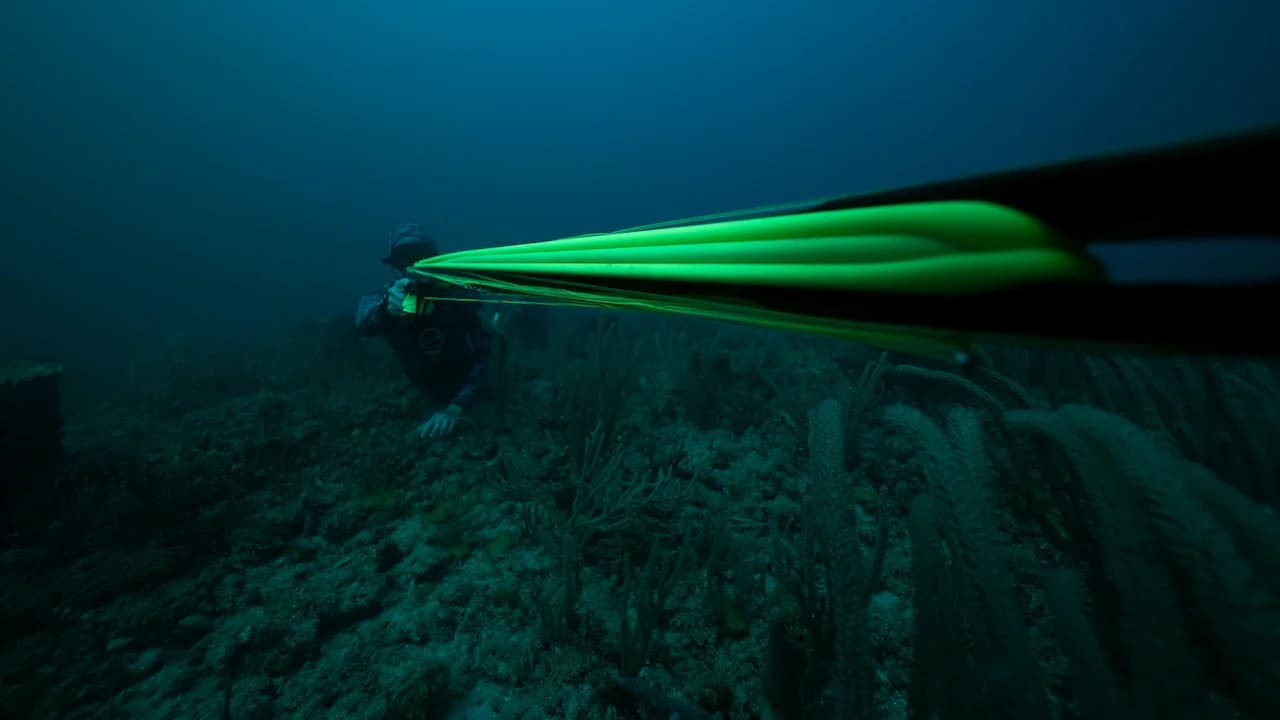
India operates around 18 international cable systems and 23 landing points, but faces significant concentration risks with roughly 95% of India's cables landing near Versova in Mumbai, creating a single point of failure for the country's international bandwidth. As reported by The Reason Why, this compares unfavorably to Singapore, which despite being smaller than Mumbai, hosts nearly 30 cable landing points. India does not manufacture submarine cables, build cable-laying ships, or operate repair vessels, instead relying on Singapore and Dubai-based companies for repairs while spare cables are stored in Sri Lanka. The ANU report notes that Australia lacks a comprehensive strategy to properly protect and govern its submarine cable networks, urging the country to ensure it can swiftly repair cables and have priority access to repair capabilities. The report recommends that Australia could equip its navy ships to conduct cable repairs and should have agreements with cable repair firms that ensure priority repairs if requested by the government. The report emphasizes that the transnational nature of cables – crossing multiple jurisdictions and spanning vast distances – means that effective protection requires sustained engagement with industry, regional partners and close allies.
The Indian government has taken steps to address these challenges, with the Department of Telecommunications designating subsea cables as critical infrastructure last year. As reported by The Reason Why, the Quad has kept cable resilience on its agenda and launched the Partnership for Cable Connectivity and Resilience in 2023. India hosted its first International Subsea Cable Systems Conference in 2025, and the Telecom Regulatory Authority of India (TRAI) and Telecommunications Consultants India Limited (TCIL) have recommended building an indigenous cable-repair fleet, though no action has been taken yet. The Australia-India Cyber and Critical Technology Partnership represents one example of meaningful bilateral cooperation. At the Shangri-La Dialogue in Singapore in May, Australia's Defence Minister Richard Marles warned that the seabed was "becoming a battlefield" and expressed concern about growing threats to submarine cables. A group of 17 countries, including Australia, Singapore, Malaysia, France and the United Kingdom, launched the Guiding Principles for Underwater Infrastructure Defence Exchanges to strengthen cooperation in protecting underwater infrastructure such as cables. The Carnegie Endowment notes that most meaningful cooperation has come through bilateral or trilateral work rather than the Quad as a whole, with the same geopolitical tensions that disrupted oil pipelines and shipping lanes now reaching the internet infrastructure.
Despite current challenges, India is developing new undersea cable projects including Google's America's India Connect project and Microsoft's backing of Lightstorm's I-2SEA cable linking India with Southeast Asia. According to The Reason Why, the next geopolitical contest will extend beyond who controls data or builds AI models to include who builds, owns, and protects the infrastructure that carries it. The ANU report emphasizes that the transnational nature of cables – crossing multiple jurisdictions and spanning vast distances – means that effective protection requires sustained engagement with industry, regional partners and close allies. The report proposes establishing an Indo-Pacific association to bring together regional cable operators to cooperate on mitigating risks and convening a conference in the region to develop shared responses to threats and incidents. Australia, the US and the UK have launched a project as part of their AUKUS security partnership to develop sensors and weapons systems for underwater drones that could protect cables, while the report recommends holding joint exercises with ASEAN and individual partners in South-east Asia to improve monitoring of cables and practice responding to attacks. For over a century, countries have targeted undersea communication cables, with around 600 undersea cable systems running nearly 1.5 million kilometres across the ocean floor, and the hard part remains building and laying them, with only four companies producing these cables at scale - France's Alcatel Submarine Networks, America's SubCom, Japan's NEC and China's HMN Technologies.