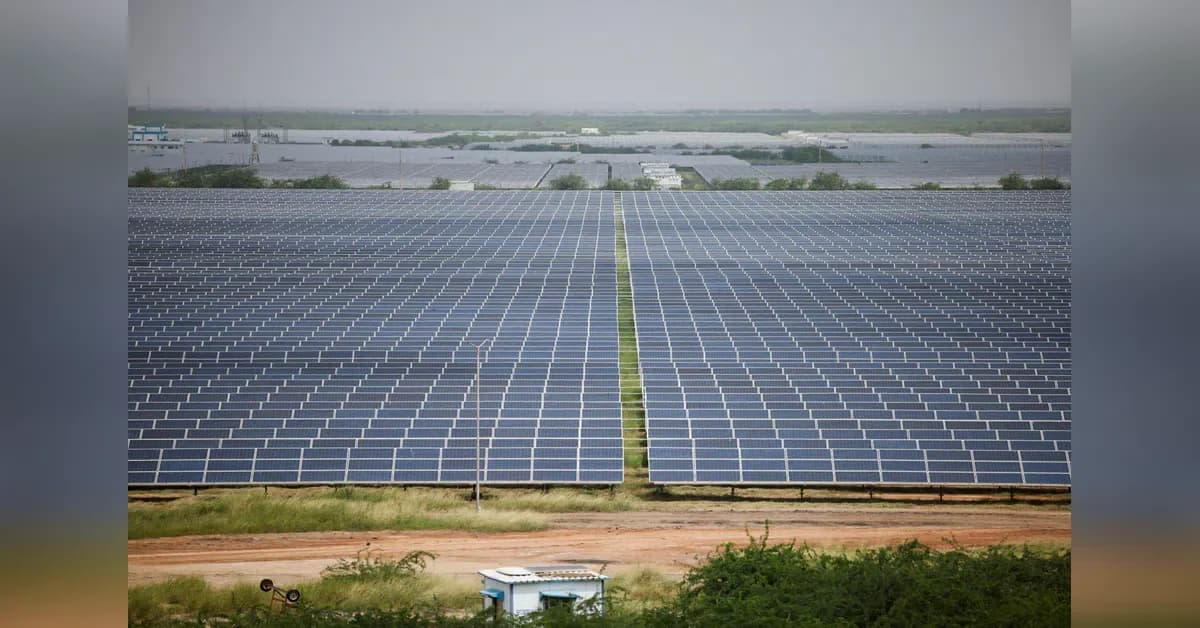
India's rapid solar expansion is creating significant power grid stress, according to a new working paper by the Economic Advisory Council to the Prime Minister (EAC-PM). The study argues that growth in renewables, without adequate expansion in storage and without implementing policies to smooth net load, would add to stress in the power grid. Solar power is forcing conventional sources like thermal-power plants to ramp up and down generation more sharply to meet the net load, creating operational challenges for grid operators. As per the EAC-PM study, while renewable energy has become a critical pillar of India's clean energy transition, the growing share of solar power in the electricity mix is placing increasing stress on grid operations, particularly because energy storage infrastructure has not expanded at the same pace. The report, authored by Sanjeev Sanyal and Satvik Dev, emphasizes that India's biggest electricity challenge has shifted from generating enough power to managing its time of availability and flexibility, with the government recognizing energy storage as crucial for the power system.
India's power demand demonstrates extreme volatility within single days, as highlighted in the EAC-PM study. On May 21 at 3:45 pm, peak demand reached 270.8 GW but at 8:00 am the same day, it was at 224.1 GW. In less than eight hours, the grid took on an additional load of 46.7 GW, which is more than what the entire British grid drew at its peak in all of 2025. The study notes that peak demand and peak price often fall at different hours of the day, creating significant operational challenges for grid management. The report references the well-known 'duck curve', a term used globally to describe the net electricity demand profile in systems with substantial solar penetration, where solar production creates a deep midday dip in net demand for conventional power, followed by a steep evening surge as the sun sets. Power prices on the India Energy Exchange's (IEX) day-ahead market averaged ₹1.11 per unit around midday in May but rose to ₹9.71 per unit at night, highlighting the dramatic price volatility between solar and non-solar hours. The EAC-PM paper has now mapped these net-load curves using high-frequency grid data at every 15-minute interval over a 24-hour period, analyzing individual summer and winter days to identify structural changes in the power system.
The EAC-PM paper reveals fundamental changes in India's power demand patterns that compound grid flexibility challenges. During summer, when cooling demand is high and solar generation is at its strongest, the net-load curve resembles the globally recognized 'duck curve', with a deep midday trough followed by a steep evening rise. In winter, however, the pattern changes into a 'double-humped Bactrian camel', with electricity demand peaking in the morning and again in the evening, separated by a midday dip supported by solar generation. Analyzing data from April 1 to May 31, 2026, the report finds that grid shortages during solar hours occurred on only 6 of 61 days (around 10% of the period), with the largest daytime shortage being 516 MW on April 26, 2026. In contrast, shortages during non-solar hours were significantly more frequent and severe, underscoring the growing challenge of meeting evening demand after solar generation declines. The evening net-load ramp has more than doubled over three years, increasing from around 27 GW in 2023 to 50 GW in 2025 and 65 GW in 2026. The report concludes that these changing demand patterns have shifted the focus from adding generation capacity to improving the flexibility of the grid, with the active constraint now being grid flexibility rather than generation capacity.
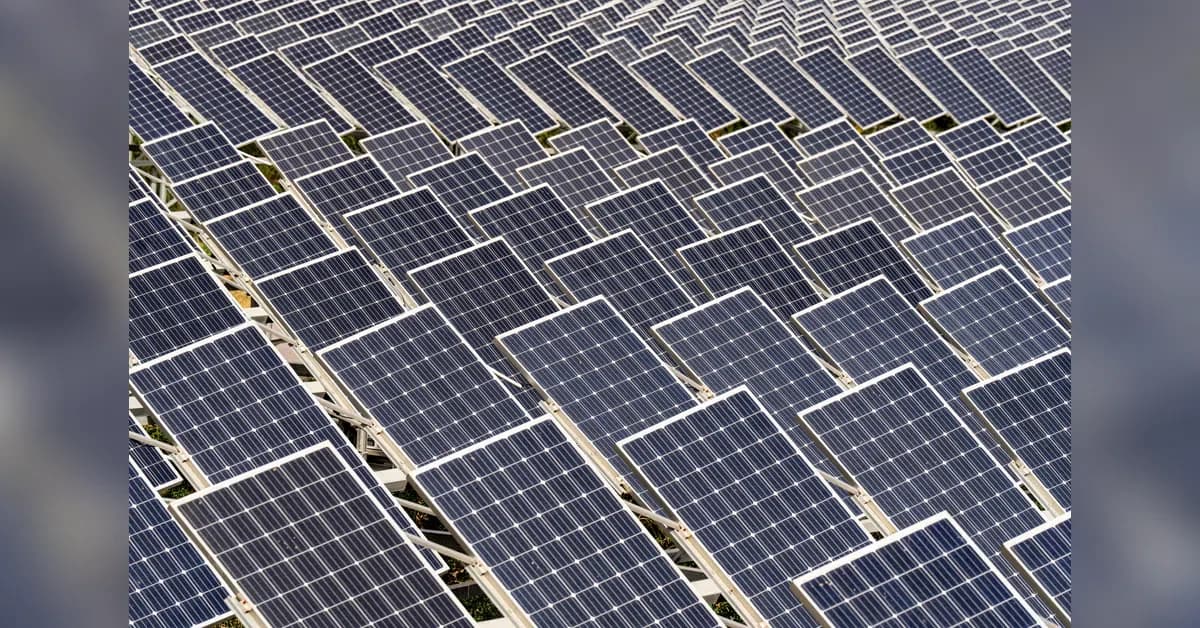
The study reveals a significant storage capacity shortfall that limits grid flexibility. According to the EAC-PM paper, flattening even half of the evening rise in electricity demand during a typical summer day would require about 130 GWh of discharge in the 1 pm-8 pm window, while the country's pumped storage and battery fleet discharged only about 23.8 GWh across an average day in May 2026. The gap is especially evident in battery deployment, where while the National Electricity Plan projected 8.68 GW of grid-scale batteries for 2026-27, only 0.27 GW was in operation till January 2026. The report notes that "the shortfall is overwhelmingly a battery shortfall" and while recent capacity additions have increased Battery Energy Storage System (BESS) capacity to 2.7 GW, the gap still remains large. The study emphasizes that "the best way to smoothen these fluctuations in demand and price is to store electricity when it is abundant and release it when it is scarce," with the most effective solution being to store surplus solar power during the day and discharge it during evening peak hours. The report cites California as an example, where its battery fleet capable of discharging more than 10 GW stores excess solar power during the day and releases it during the evening, reducing the evening net-load swing from nearly 28 GW to about 10 GW.
Electricity pricing demonstrates similar volatility patterns across different time periods. On the India Energy Exchange's (IEX) day-ahead market, a unit of power scheduled for delivery at 1:00 pm cleared at just ₹1.56, while the same unit scheduled for 6:30 pm cleared at ₹10.00, the market's price ceiling. The EAC-PM study identifies three key indicators of grid stress: fluctuating prices, curtailment in solar power, and power shortage, with about 24 GWh of solar wasted daily in May due to curtailment. This represents more than a quarter of Delhi's average daily electricity consumption, highlighting the enormous scale of the challenge. The widening gap between electricity prices during solar and non-solar hours, grid's failure in meeting demand largely in the evening hours and rising curtailment of solar generation for grid stability are signals of the shift from generation to availability management. The report describes this as "the absurdity of solar curtailment," noting that the grid is throwing away clean electricity during the afternoon "only hours before straining to meet its evening peak." Data on power shortages tell a similar story, with the grid failing to meet demand during evening peak hours on 36 of 61 days across April and May, compared with just six days during peak solar hours.