According to Crisil Ratings, India's key infrastructure investments are projected to grow 45-50% through the current and next fiscal years. The ratings agency expects investments across core infrastructure segments to rise to approximately ₹23-24 lakh crore over the two fiscals, maintaining momentum from the past two years. As reported by The Tribune, Krishnan Sitaraman, Chief Ratings Officer at Crisil Ratings, confirmed that "investment growth is likely to remain strong at 45-50% over the current and next fiscals... Consequently, investments in these sectors should rise to ₹23-24 lakh crore., with renewable energy accounting for ₹6-7 lakh crore of this total investment. These sectors account for around half of India's total infrastructure investments and provide strong support to the country's GDP growth trajectory. Despite the West Asia conflict and global uncertainties, India's infrastructure growth story continues to move resolutely towards the Viksit Bharat vision, with tailwinds in multiple sectors including clean energy diversification, logistical debottlenecking, digitalisation, and decarbonisation. Crisil noted that while these sectors are largely insulated from the direct impact of the West Asia conflict, a prolonged crisis could create indirect inflationary pressures.
India's renewable energy capacity is set for explosive growth, with the combined installed capacity of solar and wind projected to rise to 310-315 GW by March 2028, up from about 206 GW as of March 2026. According to Crisil Ratings, renewables are expected to account for 45-47% of the power mix by 2028, a dramatic increase from about a fifth at the start of the decade, 24% in FY2022 and roughly 38% in FY2026. As reported by Times of India, Krishnan Sitaraman, Chief Ratings Officer at Crisil, noted that "renewable energy is projected to account for ₹6 lakh crore – ₹7 lakh crore out of the total ₹23 lakh crore – ₹24 lakh crore investment in key infrastructure segments in FY27–FY28, translating to roughly 26%–29% of the overall spend." The sector continues to benefit from strong government support, with over 100 GW of capacity likely to be added across the current and next fiscals. Two key drivers are expected to power capacity addition growth - a strong executable pipeline of over 95 GW of utility-scale projects with remunerative tariffs accounting for about 60% of capacity addition, while supportive policies and incentives will boost the commercial and industrial segment as well as rooftop installations, contributing the remaining 40%.
The infrastructure boom will be driven by multiple sectors including renewable energy, roads, real estate, data centres, green hydrogen and battery storage. According to Crisil Ratings, renewable energy capacity additions are expected at 50-55 gigawatt annually over the two fiscals, surpassing the previous high of 50 GW logged last fiscal, backed by strong project pipelines and policy support for round-the-clock power solutions. Data centre capacity is projected to grow 35-40% annually through fiscal 2028, fuelled by increasing artificial intelligence and cloud adoption, with battery storage capacity targeted to scale up to 208 gigawatt hour by 2030. The roads sector is expected to see a gradual recovery in project awarding after a slowdown in recent years, with asset monetisation gathering pace as the National Highways Authority of India likely to monetise assets worth ₹70,000-80,000 crore to fund future expansion. Growth is expected to remain strong across segments, with utility projects clocking a compound annual growth rate (CAGR) of about 22%, while the commercial and industrial segment may grow faster at around 28%.
The Centre is preparing a policy to compensate highway developers for potential revenue losses under a barrier-free tolling system, seeking to remove a key hurdle to rolling it out across public-private partnership (PPP) projects. According to Mint, the compensation framework aims to address private operators' concerns about revenue leakage risks as India scales multi-lane free flow (MLFF) tolling nationwide. "While the system is expected to ease congestion and improve efficiency on national highways, private operators have flagged risks of revenue loss if some vehicles pass undetected without paying toll. We had few rounds of meetings with highway developers and based on the inputs received, a policy addressing concerns on revenue leakage would be notified within a month," said one official. Under MLFF, physical toll plazas are replaced with overhead gantries equipped with automatic number plate recognition (ANPR) cameras and radio frequency identification (RFID) readers linked to FASTag accounts, allowing vehicles to travel at highway speeds without stopping. With toll collections growing 14% year-on-year to a record ₹82,900.16 crore across all tolled roads in FY26, even small leakages could become material for private operators. The government plans to scale this system across the country's 1,46,560-km national highway network, with pilots underway in Gujarat and plans to expand to all 1,150 existing toll plazas within a year.
As reported by Crisil Ratings, India's infrastructure push is being propelled by clean energy expansion, logistics improvements and digital infrastructure growth. However, the agency has flagged several risks including delays in renewable energy offtake, slowdown in road project awards, rising residential inventory and weaker IT sector demand for office space. Despite challenges, most players in established sectors are well-positioned to overcome them, given their strong track records and execution capabilities. The commercial office segment is expected to buck the residential trend, driven by continued healthy leasing demand with 6-7% growth in the current and next fiscal, fuelled by flexible workspaces, BFSI sector and global capability centres, leading to declining vacancy levels. The residential real estate sector is expected to witness mixed trends, with demand remaining flat over the current and next fiscal years due to elevated property prices, while the roads sector faces potential impact from a prolonged slowdown in project awards that could affect developers' order books and growth momentum. In renewable energy, key risks include delays in power purchase agreement (PPA) closures and transmission readiness, with around half the capacity awarded over the past three fiscals yet to secure PPAs, exposing projects to offtake risk.
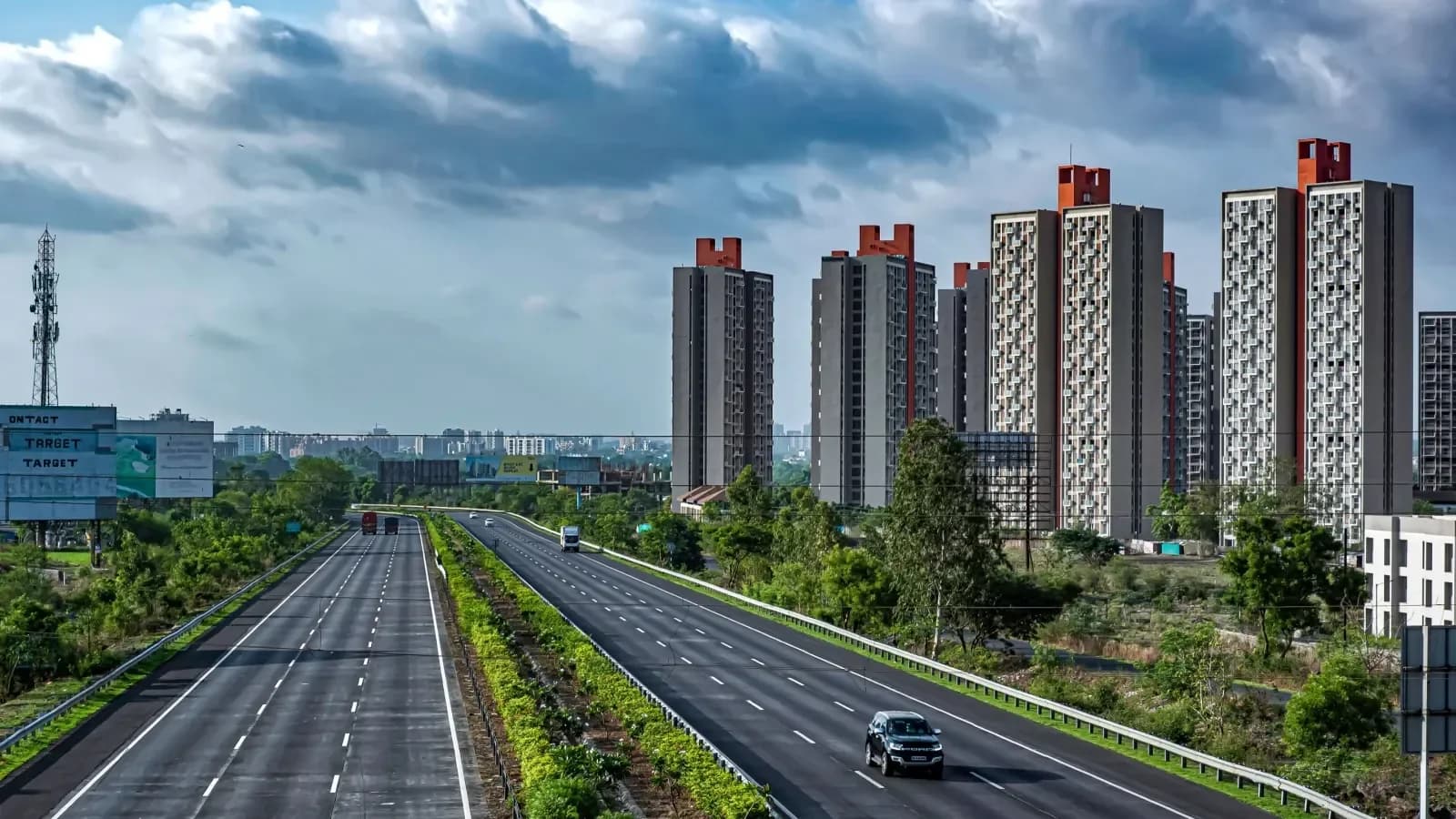
According to Crisil Ratings, about 15-20% of investments are expected to be funded through equity, with mature new-age sectors likely to have better access to capital than nascent ones. The agency noted that healthy balance sheets, stable cash flows and prudent leverage will support credit profiles across sectors. In the roads sector, the National Highways Authority of India is estimated to monetise assets worth ₹70,000-80,000 crore to fund growth. Among new-age sectors, data centres and smart meters exhibit greater bankability due to their relatively more mature business models and higher track records, while battery manufacturing and green hydrogen will require policy support given the relatively early stage of their evolution. Crisil added that credit metrics for renewable energy players should remain comfortable despite rising debt, as cash flows improve alongside capacity additions. Manish Gupta, Deputy Chief Ratings Officer at Crisil Ratings, emphasised that "most of the players in the established sectors are well-positioned to overcome them, given their strong track records and execution capabilities... their healthy credit profiles... provide support."