Indian Railways is broadening its public-private partnership (PPP) framework amid largely stagnant internal revenue generation and the railway ministry's preference for government budgetary support over additional borrowing. According to reports from Mint, this has increased the importance of gross budgetary support (GBS) from the government, while PPPs offer a way to supplement public funding without making every project dependent on government expenditure. The objective is not to replace public investment but to bring private capital into projects where commercial returns and revenue-generation potential make such participation viable.
Railways introduced its participative policy in 2012 to encourage private participation in railway connectivity and infrastructure. As reported by Mint, the framework comprises five principal models: non-government rail (NGR), joint venture (JV), customer-funded projects, build-operate-transfer (BOT) and BOT-annuity. State governments and local bodies can also participate, particularly in new-line and gauge-conversion projects. According to the ministry, 18 projects involving ₹16,686 crore have been completed through PPPs, while seven projects worth ₹16,362 crore are under implementation, including coal and port connectivity projects.
The challenge with railway infrastructure is that many projects have significant economic value but may not generate sufficient direct revenue for a conventional private investment model. According to Mint reports, the two new models can potentially allow Railways to structure projects differently, with risks and payments distributed between the public and private sectors. The parliamentary committee has endorsed this broadening of the PPP framework, while stressing that risk allocation must be balanced enough to protect both investors and Railways' long-term financial interests.
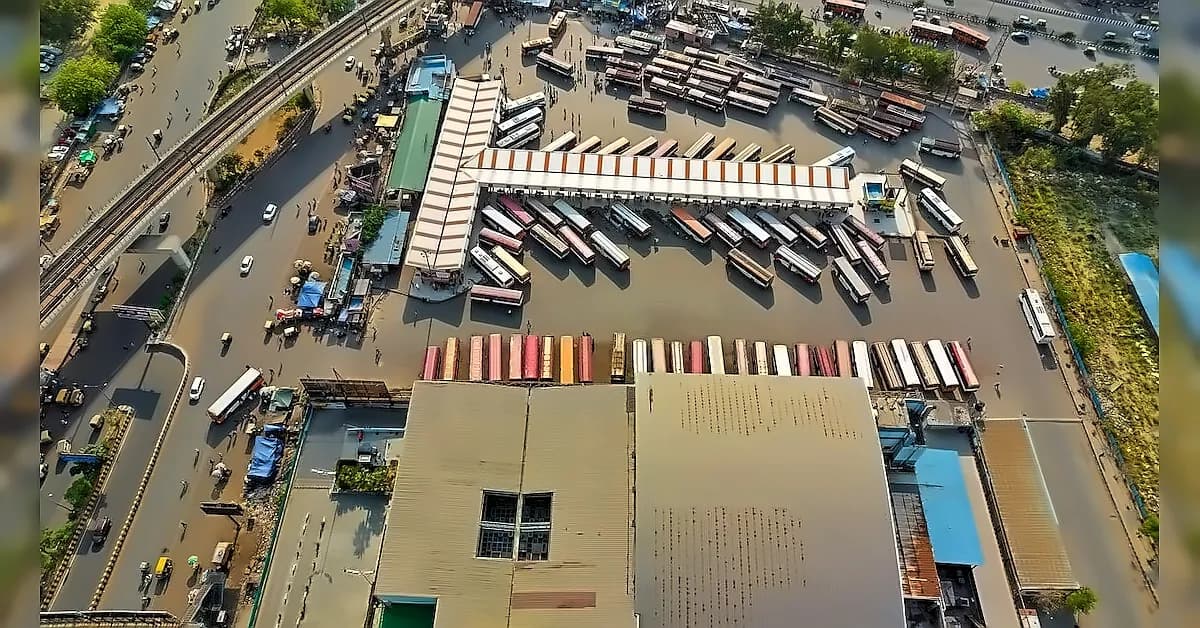
The ministry has identified 54 projects worth a combined ₹1.80 trillion for execution through PPPs. As reported by Mint, the pipeline covers a wide range of assets including new railway lines, doubling and additional lines, station redevelopment, Gati Shakti Cargo Terminals, privately inducted wagons and container rakes, maintenance depots, rolling-stock manufacturing and renewable and conventional power projects. Some of the largest projects include the Itarsi-Manikpur third line, estimated at ₹9,562 crore, the Haridaspur-Vizianagaram fourth line, at ₹8,321 crore, and wagon maintenance depots, estimated at ₹21,000 crore. Station redevelopment is another significant component across major cities including Vijayawada, Avadi, Tambaram, Andheri, Bengaluru, Kalyan, and Chennai Central.
Simply creating PPP projects will not be enough to attract investors, requiring predictable approvals, clearer contractual arrangements and an acceptable distribution of risks. According to Mint reports, Railways is streamlining approval and regulatory processes and establishing a dedicated monitoring framework to resolve contractual, regulatory, financial and implementation bottlenecks. The success of the strategy will ultimately depend on whether the new models can offer bankable returns to private investors while keeping long-term costs and risks manageable for Indian Railways. The emerging approach is better understood as a public-private financing and risk-sharing strategy rather than privatization of the railway network, with the government remaining responsible for strategic priorities while private investors finance commercially viable projects.