Danish shipping giant AP Moller-Maersk is significantly expanding its India operations beyond container manufacturing, with discussions underway with multiple shipyards to build container vessels with capacities of about 3,000 twenty-foot equivalent units (TEUs). According to Business Standard, Amdi Krogh, global head of ocean assets partnership at Maersk, confirmed the carrier is looking to source a larger share of its container demand from India, building on the historic milestone achieved on July 3, 2026 when Maersk became the first international player to order containers from an Indian manufacturer - DCM Containers. The longer-term goal includes building larger vessels in India once capacity expands, though current technical limitations restrict vessel sizes to up to 4,000 TEUs due to lack of dry dock infrastructure. As per Business Standard, one can assume that it will take India six to eight years to develop an ecosystem capable of building large vessels, with significant global shipping line appetite for alternatives to current players.
India on July 3, 2026 unveiled its first domestically manufactured export-import (exim) shipping container for global shipping major Maersk, marking a significant step towards building a domestic maritime manufacturing industry. Union Minister Sarbananda Sonowal unveiled the container at Container Corp. of India's (Concor) inland container depot in Dadri, Uttar Pradesh, during the event. This development represents the first commercially procured India-made export container, rolled out 16 months after Prime Minister Narendra Modi met A.P. Moller-Maersk chairman Robert Maersk Uggla in February 2025. The successful production within this timeline exemplifies the Government's ability to deliver on strategic goals in a timely manner. Sonowal described the milestone as "a defining milestone in our journey towards Atmanirbhar Bharat," reflecting growing global confidence in India's manufacturing capabilities and commitment to building world-class maritime infrastructure.
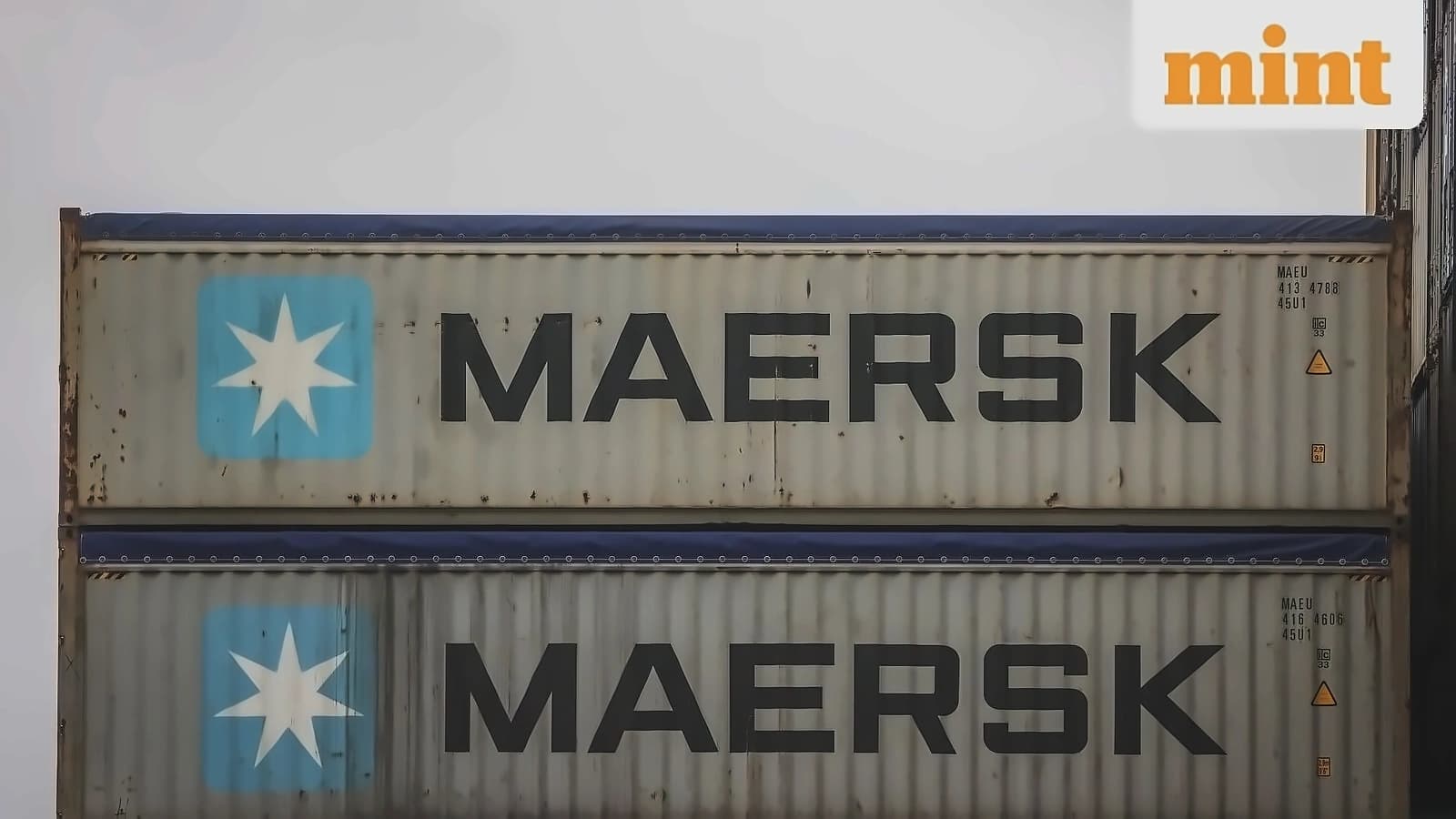
Danish shipping giant AP Moller-Maersk has placed an order for 1,000 containers with DCM Containers, marking the first such order by a global carrier from an Indian manufacturer. According to Business Standard, the order was announced by senior Maersk executives at the unveiling of the export-import grade container manufactured by DCM Containers, headed by Rudra Shriram. The first India-made export container has been manufactured in compliance with international ISO specifications and the International Convention for Safe Containers (CSC), making it eligible for deployment across global shipping routes. Amdi Krogh, global head of ocean assets partnership at Maersk, stated that "Maersk requires around 400,000-500,000 containers every year," while other executives emphasized this is just the beginning and Maersk will look at more opportunities in India across the maritime and logistics space. The event was attended by Marisa Gerards, Ambassador of the Netherlands; Thomas Theeuwes, Managing Director, AP Moller Maersk; Ahmad Hasan, Senior Vice President, Maersk and other senior officials from the ministry, marking the beginning of a long-term commercial partnership that is expected to strengthen India's position in the global maritime value chain.
The initiative is backed by the ₹80,000-crore government support package, with ₹70,000 crore earmarked for shipbuilding and shipyard development and the remaining ₹10,000 crore under the Container Manufacturing Promotion Scheme (CMPS) announced by Finance Minister Nirmala Sitharaman in February. According to union ports, shipping and waterways minister Sarbananda Sonowal, the policy is expected to generate employment, facilitate technology transfer and strengthen India's supply-chain resilience while reducing dependence on imported containers. The scheme provides capex support for establishing Greenfield container manufacturing and expansion of existing brownfield facilities, opex support to bridge the cost gap per container to improve competitiveness of domestic manufacturing, and R&D boost. Under the scheme, the government plans to increase India's annual container manufacturing capacity nearly tenfold to about 7.5 lakh TEUs from current levels. Government officials said the scheme has already begun to show results, even before its formal launch, with "The announcement itself has set the ball rolling with the Maersk order. We expect more significant offtake once the scheme is fully rolled out," as per Business Standard.
The container manufacturing initiative comes as India seeks to compete on a global scale despite facing significant challenges. As reported by Business Standard, China holds a near-monopoly in container manufacturing, and India wants to compete on a global scale, but the lack of scale means there is a price difference that puts Indian manufacturers at a competitive disadvantage. The Maersk order with DCM Containers represents a significant milestone in India's efforts to establish itself as a viable alternative to Chinese manufacturers. The government's ₹80,000-crore plan to subsidise container manufacturing until it achieves a large enough scale to compete with global giants is designed to address these competitive disadvantages and build the necessary scale for sustainable global competition.
The container manufacturing initiative forms part of the Centre's broader strategy to strengthen India's maritime sector through investments in ports, shipbuilding, ship recycling and logistics infrastructure. The government has introduced key legislation such as the Merchant Shipping Act, 2025, the Coastal Shipping Act, 2025, and the Indian Ports Act, 2025, alongside digital initiatives such as One Nation One Port Process (ONOP), the Maritime Single Window and e-Samudra to facilitate ease of business operations. The government has also announced a ₹70,000-crore financial assistance package for shipbuilding and is working on plans to establish a national container shipping line. India has become the world's leading ship recycling nation and three Indian ports rank among the global top 30 in the Container Port Performance Index 2025. This comprehensive approach positions domestic container manufacturing as an important pillar of India's ambitions to emerge as a global maritime hub, alongside its expanding shipbuilding and ship recycling industries.
The government is simultaneously investing in major port infrastructure, including the Vadhavan Port project in Maharashtra, the Galathea Bay International Container Transshipment Port in the Andaman and Nicobar Islands, Tuna Tekra Container Terminal and the Outer Harbour Container Terminal. Officials said domestic container manufacturing is expected to become an important pillar of India's ambitions to emerge as a global maritime hub, alongside its expanding shipbuilding and ship recycling industries. According to Rediff Moneynews, this development comes at a time when the Centre seeks to position India as a global hub for container manufacturing under its maritime self-reliance strategy, with the initiative expected to reduce India's dependence on imported containers, strengthen supply chain resilience and create a globally competitive manufacturing ecosystem. Sonowal emphasized that "Our Government remains firmly committed to converting every vision into reality within stipulated timelines while creating a resilient and self-reliant maritime ecosystem that supports India's rise as a leading global trading nation."