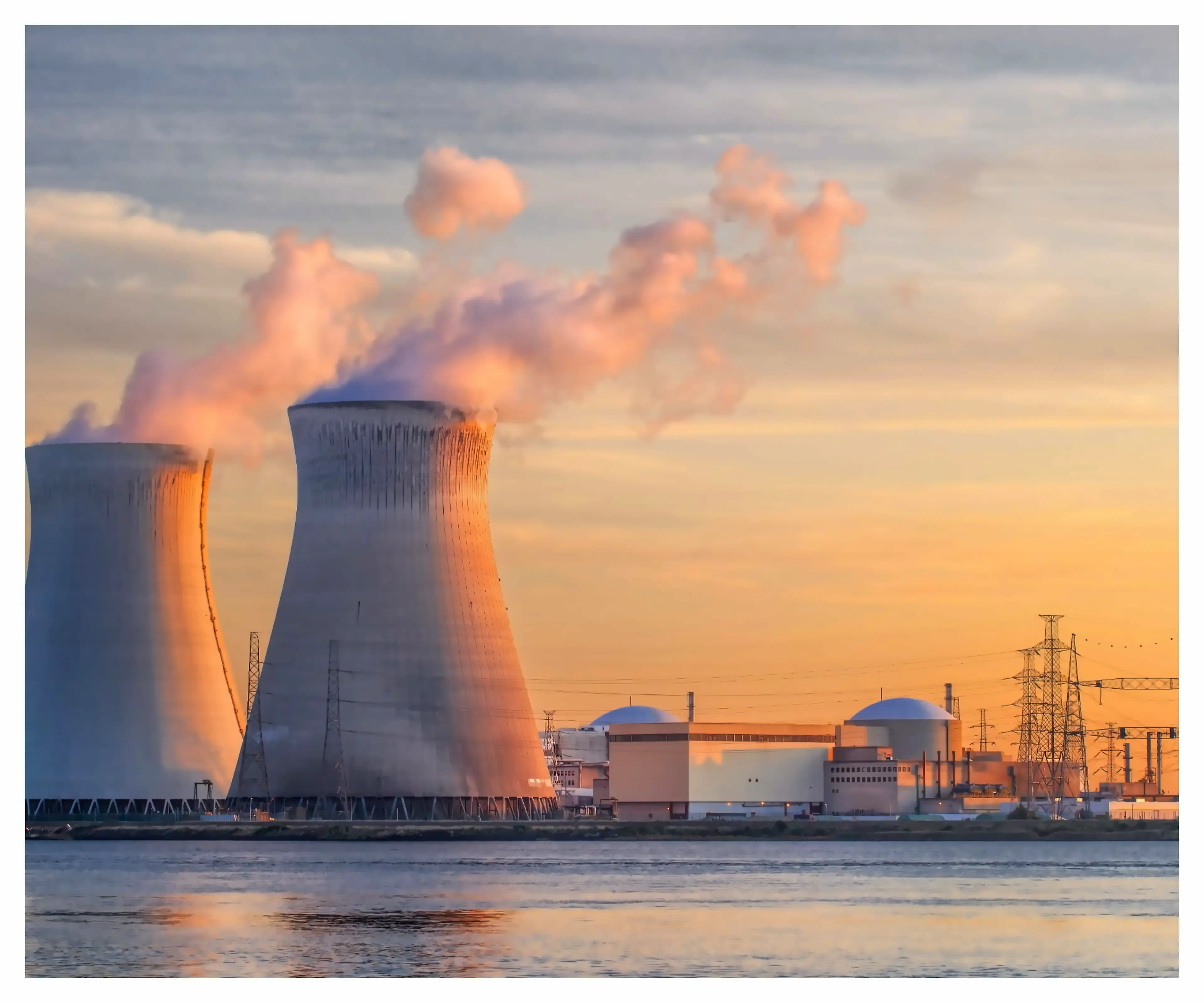
India has achieved a historic milestone in its nuclear energy programme with the indigenously designed and built Prototype Fast Breeder Reactor (PFBR) at Kalpakkam in Tamil Nadu successfully attaining its first criticality on 6th April 2026. As reported by the Press Information Bureau, this 500 MWe reactor built by Bharatiya Nabhikiya Vidyut Nigam Limited (BHAVINI) at the Kalpakkam Nuclear Complex marks the initiation of a sustained nuclear chain reaction. With this achievement, India has officially entered the second stage of its three-stage nuclear power programme, a vision first conceived by Dr. Homi Jehangir Bhabha, the architect of India's nuclear programme. The milestone carries substantial global significance as once fully operational, India will become only the second country in the world after Russia to operate a commercial fast breeder reactor.
The Indian government has taken significant steps to integrate nuclear fusion into its energy planning framework through the SHANTI Act and draft rules. According to reports from Business Standard, the SHANTI Act defines nuclear energy as energy released from atomic nuclei through any process, including fission and fusion, while the draft SHANTI Rules specifically include deuterium-tritium reaction-based fusion reactors in licensing provisions. The rules exempt laboratory-scale fusion research from central government licensing requirements, marking a shift from treating fusion as purely scientific research to positioning it as a future power technology requiring regulatory framework.
India's nuclear energy programme is built on a three-stage nuclear power programme designed by the Department of Atomic Energy to make the most of its limited uranium reserves and vast thorium reserves. As reported by the Press Information Bureau, natural uranium is used as fuel in PHWRs to generate power, with spent fuel producing plutonium that becomes the primary input for the next stage. The plutonium obtained from Stage 1 is used as fuel in Fast Breeder Reactors, which generate more fuel than they consume. The PFBR at Kalpakkam marks India's entry into this stage, with these reactors breeding Uranium-233 from thorium, laying the groundwork for Stage 3. This stage will harness India's vast thorium reserves at scale using the Uranium-233 bred in Stage 2 as fuel, with thorium considered a practically vast energy source and holding the key to India's long-term energy security.
A seven-member committee established by the power ministry in January 2026 is preparing a comprehensive roadmap for nuclear fusion-based power generation in India. As reported by Business Standard, Prabhat Ranjan, co-founder of ASPL Fusion and chairman of the Dr D Y Patil Pratishthan, heads this committee and noted that while there has been positive action regarding nuclear fusion promotion, changes are required in draft rules and regulations with stakeholder suggestions being submitted.
Despite India's established fusion research program and recent nuclear milestones, commercial deployment remains decades away. As reported by Business Standard, China aims for electricity demonstration around 2030, while the UK has allocated £1.3 billion for STEP prototype plant running in 2040. Japan has moved its demonstration target from 2050 into the 2030s, and American private firms with over $14 billion in investor money will attempt net energy gain next year. India's own roadmap from IPR targets a demonstration reactor around 2060, while the Government has announced the Nuclear Energy Mission with the aim of achieving 100 GW of nuclear power generation capacity by 2047 outlined in Union Budget 2025–26, supporting India's broader goal of achieving net zero carbon emissions by 2070.
According to Anujesh Dwivedi, partner at Deloitte India, nuclear fusion could provide round-the-clock clean and safe power at scale to address India's climate change and energy security challenges. As reported by Business Standard, Ghanshyam Prasad, chairman of the Central Electricity Authority, acknowledged that fusion-based technology could play a major role in meeting India's carbon-neutral energy needs. The technology's potential applications include replacing coal and gas plants, supplying industrial heat, producing clean hydrogen fuel, desalinating seawater, and propelling deep-space rockets. With nuclear energy now fast becoming a cornerstone of India's clean energy future, the Government's measures include policy backing, dedicated funding, and indigenous research at its core to build a nuclear future that is both self-reliant and globally significant.