

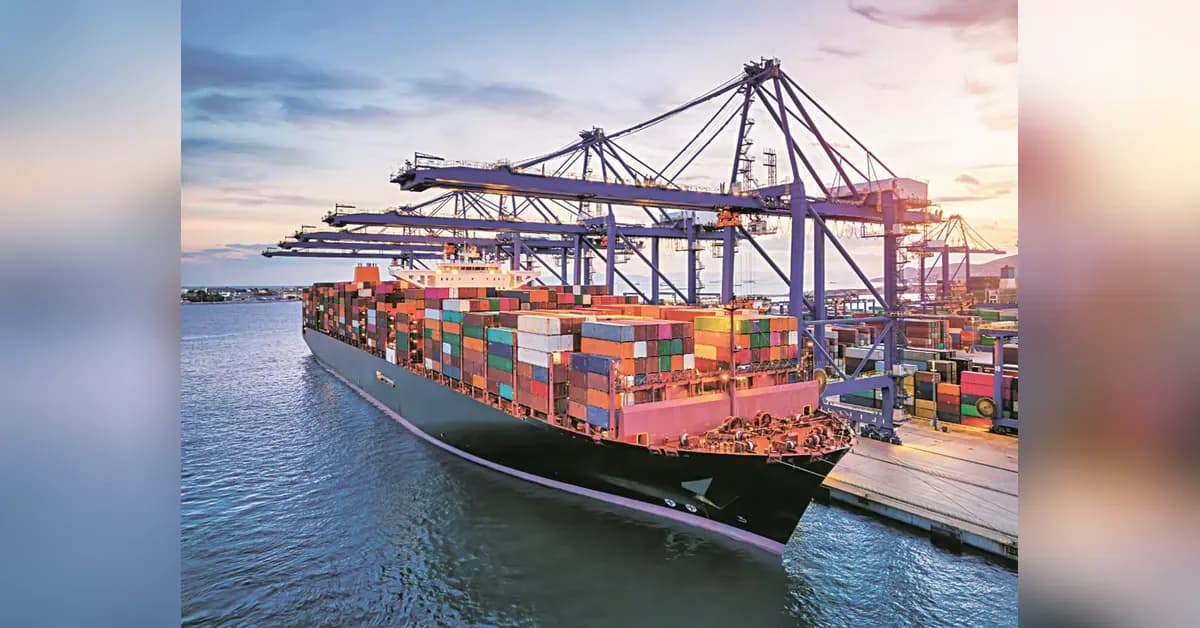

The Centre is developing a hybrid security model for Indian ports under the guidance of the Ministry of Home Affairs, as announced by Shipping Secretary Vijay Kumar at the Port Security Conference. According to reports from Business Standard, Kumar emphasized that security is non-negotiable while ensuring ports remain globally competitive. The government aims to achieve 100 per cent International Ship and Port Facility Security (ISPS) Code compliance across eligible ports, strengthen periodic review and compliance monitoring of port facility security plans, and upgrade security infrastructure, surveillance systems and access control measures.
During internal reviews, the government discovered that security personnel at some ports outnumber on-ground port employees, creating additional operational costs. As reported by Business Standard, Kumar highlighted that India competes with Colombo and Singapore for mainline traffic, and any security-related costs ultimately reflect in port tariffs. The secretary noted that ports such as Jawaharlal Nehru Port Authority in Maharashtra handle 20,000 containers daily, making even minor delays cause severe congestion.
Under the proposed hybrid model, core security functions will be handled by security forces, while non-core functions will be outsourced to trained private security personnel. According to Business Standard, Director General of Maritime Affairs (DGMA) Shyam Jagannathan has been appointed to oversee the bureau's functions. The bureau will be responsible for regulatory and oversight functions relating to ship and port facility security, modelled on the lines of the Bureau of Civil Aviation Security.
Rajendra Kumar, Secretary, Border Management, Ministry of Home Affairs, emphasized the need to infuse technology into coastal security architecture, including ports, to enhance surveillance and generate real-time data for threat response. As reported by Business Standard, Kumar warned that low-cost warfare can easily be mounted by inimical forces, while cybersecurity threats are emerging in a major way, with latest AI models posing autonomous threats to digital infrastructure worldwide.