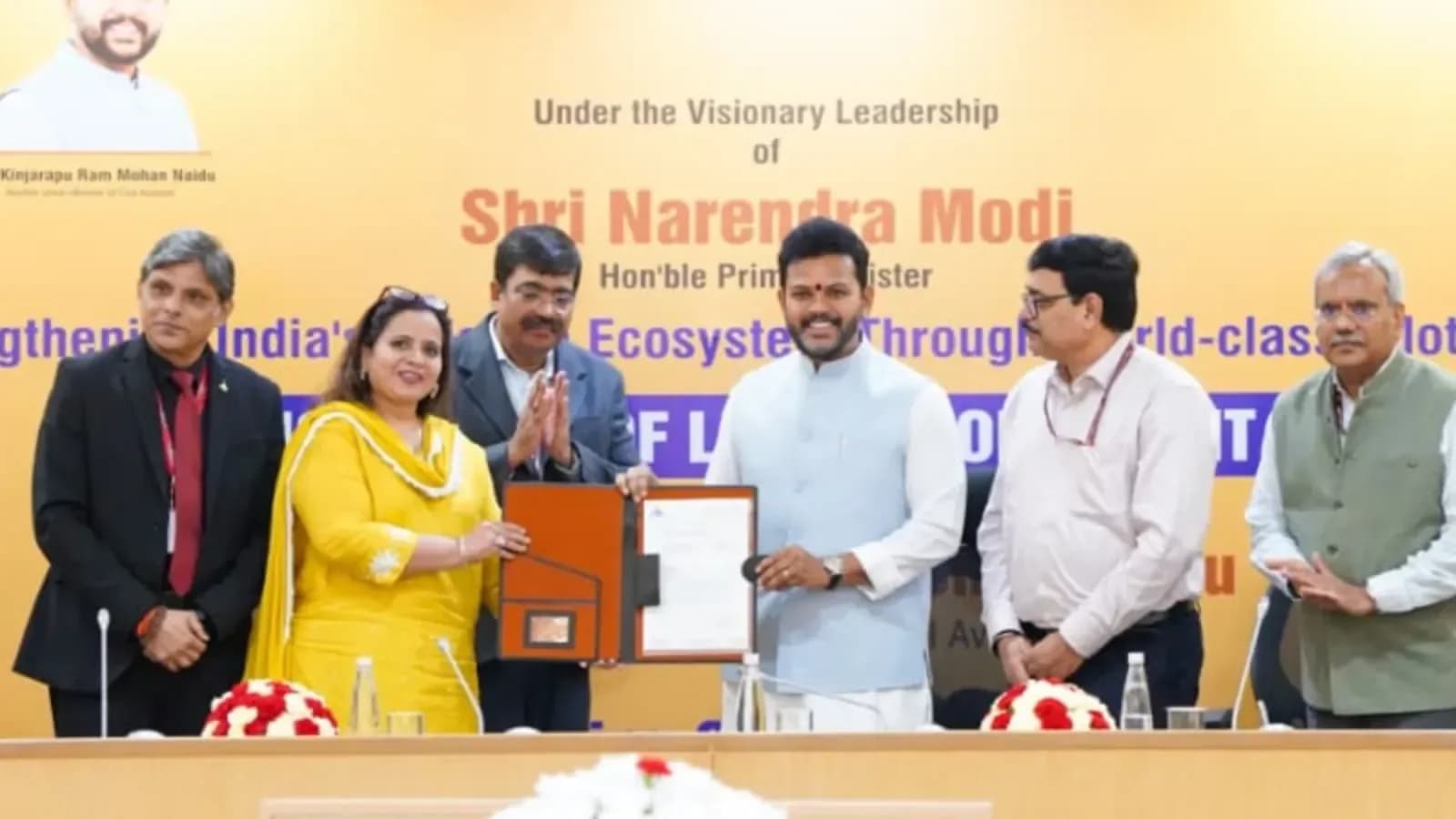
The government will extend financial support to airlines operating under the UDAN regional connectivity scheme from three years to five years in a phased manner to improve the viability of regional routes, Union Minister of Civil Aviation Ram Mohan Naidu announced on Thursday. According to reports from The Economic Times, the revamped scheme -- which has been extended for another 10 years -- will also widen the eligibility criteria for airports to receive viability gap funding (VGF). The minister explained that 'We are going to extend the scheme facility, which was earlier given for three years. Now we are going to do it for five years in a tapered approach. So starting from 100 per cent in the first two years, then 75 per cent, 50 per cent and 25 per cent in the next three years'. The government has offered an outlay of ₹29,000 crores for the next 10 years, which will likely create a solid ecosystem of civil aviation across the country. As per The Economic Times, the UDAN scheme was initially conceived for a 10-year period, which has now been completed, with the revamped version launched by Prime Minister Narendra Modi in Jodhpur on July 4th.

The government has significantly increased the threshold for airports to receive viability gap funding under the UDAN scheme. As reported by Zee News, an airport was classified as unserved or underserved if it had fewer than seven flights a week, which has now been increased to 14 flights a week. For priority regions, including the Northeast and hilly States, the threshold has been increased to 21 weekly flights, enabling a larger number of routes to qualify for VGF support. This change will allow more routes to receive viability gap funding and expand the scope of regional connectivity improvements. The minister noted that 'We are creating either a new terminal or a new airport every single month' and emphasized the need to improve connectivity through policy changes after this infrastructure development phase.
The minister emphasized the government's rapid expansion of airport infrastructure, stating that 'We are creating airports every single month; we are creating either a new terminal or a new airport in the country, but now we have to look forward to how we improve the connectivity'. According to The Economic Times, Naidu highlighted the need to improve connectivity through policy changes after this infrastructure development phase. The government has set an ambitious target of building 100 airports and 200 heliports over the next decade, with the minister noting that close coordination with states would be critical to achieving this goal. The minister added that 'We are creating airports every single month; we are creating either a new terminal or a new airport in the country, but now we have to look forward to how we improve the connectivity'. The expanded programme also envisages the development of 100 airports and 200 heliports while promoting indigenous manufacturing through the procurement of two Hindustan-228 Dornier aircraft for Alliance Air and two helicopters for Pawan Hans.
The government announced operational and maintenance (O&M) support for airports in Tier-2 and Tier-3 cities that are struggling to break even due to low passenger traffic. As reported by Zee News, Naidu explained that some airports are facing losses due to lower passenger volumes, and the government will provide operational support wherever airports are unable to meet their operational expenses. This measure aims to ensure the sustainability of regional connectivity infrastructure. The Centre will, for the first time, provide operational and maintenance support to airports in tier-2 and tier-3 cities that are unable to attain financial viability because of low passenger traffic.
The minister reported 100 per cent participation from all states and Union Territories in the UDAN workshop, demonstrating strong enthusiasm for the scheme and reflecting partnership between the Centre, states and other stakeholders. According to The Economic Times, regarding the Supreme Court's request for a detailed report on rising airfares, Naidu stated that the government would explain its regulatory framework in detail, defending dynamic fare pricing as an internationally accepted practice essential for promoting the aviation sector and improving connectivity. The minister emphasized that dynamic fare pricing is essential for promoting the aviation sector and improving connectivity, allowing airlines in India to follow this internationally accepted practice. The revamped UDAN scheme, which was recently launched for another 10 years by Prime Minister Narendra Modi in Jodhpur on July 4th, has generated strong interest within the aviation industry.