India's cold chain sector is moving beyond capacity expansion to focus on capability improvement, according to a cold chain and warehousing summit themed 'Building Ecosystem for Viksit Bharat'. The country currently faces significant challenges with annual post-harvest losses of nearly $18.5 billion and only 4 per cent of perishables moving through organised cold chains. As reported by The Hindu BusinessLine, the summit emphasized that the next phase must shift from simply adding capacity to improving capability, integration, utilisation and end-to-end connectivity. Sukanta Kumar Panigrahi, Member of the Parliamentary Standing Committee on Agriculture, Animal Husbandry and Food Processing, Government of India, delivered a powerful message about the critical importance of time and temperature management, stating that "A fruit harvested today has a biological clock. Milk collected from a farmer has a quality clock. Fish landed at the harbour has an even faster clock. If we manage time and temperature well, we preserve value. If we fail, we lose food, income and resources. That is why I believe cold chain is not about keeping products cold. It is about keeping value alive."
India's cold storage capacity is projected to reach 43.7 million tonnes by 2031, representing a modest 2.2 per cent CAGR. According to the summit, this projected growth reinforces the need to focus on quality and effectiveness of the existing ecosystem rather than capacity creation alone. The current infrastructure expansion is being driven by India's position as a leading agriculture producer, with the country recording food grain production of about 358 million tonnes in 2024-25 and horticulture production reaching about 371 million tonnes. Dr Devendra Kumar Dhodawat, Former Additional Chief Secretary to the Governor of Kerala and Member, Warehousing Development and Regulatory Authority (WDRA), noted that as India collectively works towards realising the vision of Viksit Bharat 2047, leaders of industry should focus on expanding integrated, efficient and sustainable cold chain infrastructure.
State Bank of India's approach to cold chain financing emphasizes comprehensive agri value chain integration. As reported by The Hindu BusinessLine, Mata Prasad, DGM – ABU and GSS at SBI, highlighted that their financing covers construction of cold storage, plant and machinery, working capital and other requirements. The bank's strategy focuses on providing appropriate financial solutions based on the nature of activities, borrowers and cash flow profiles across the complete agri value chain. Speaking at the summit, Shri Mata Prasad, DGM – ABU and GSS, State Bank of India, emphasized that cold chain infrastructure represents an important opportunity to connect agriculture infrastructure, food processing and logistics exports, with the bank's approach looking at the complete agri value chain and providing the right financial solution depending upon the nature of the activity, the borrowers and the cash flow profile.
Industry experts emphasized the growing integration between warehousing, cold chain and supply chain operations. Shri Sanjay Bajpai, Industry Veteran and Advisor at ASSOCHAM, noted that supply chains are becoming increasingly trust chains, depending on standardisation, quality preservation and market resilience. The summit highlighted the importance of planning industrial townships, warehousing and multimodal logistics parks at junctions of trunk infrastructure, railway lines and highways to capitalize on current developments. Shri Amrit Lal Meena, Former Chief Secretary, Government of Bihar, and Former Special Secretary (Logistics), DPIIT, Ministry of Commerce, Government of India, emphasized that industry should take advantage of these developments and through conferences such as this one, meaningful recommendations should emerge that reach appropriate forums for implementation. Shri Amrit Lal Meena, Former Chief Secretary, Government of Bihar, and Former Special Secretary (Logistics), DPIIT, Ministry of Commerce, Government of India, added that "It is time that industry associations and state governments plan their industrial townships, warehousing and multimodal logistics parks, including smaller logistics parks, at the junctions of trunk infrastructure, railway lines and highways."
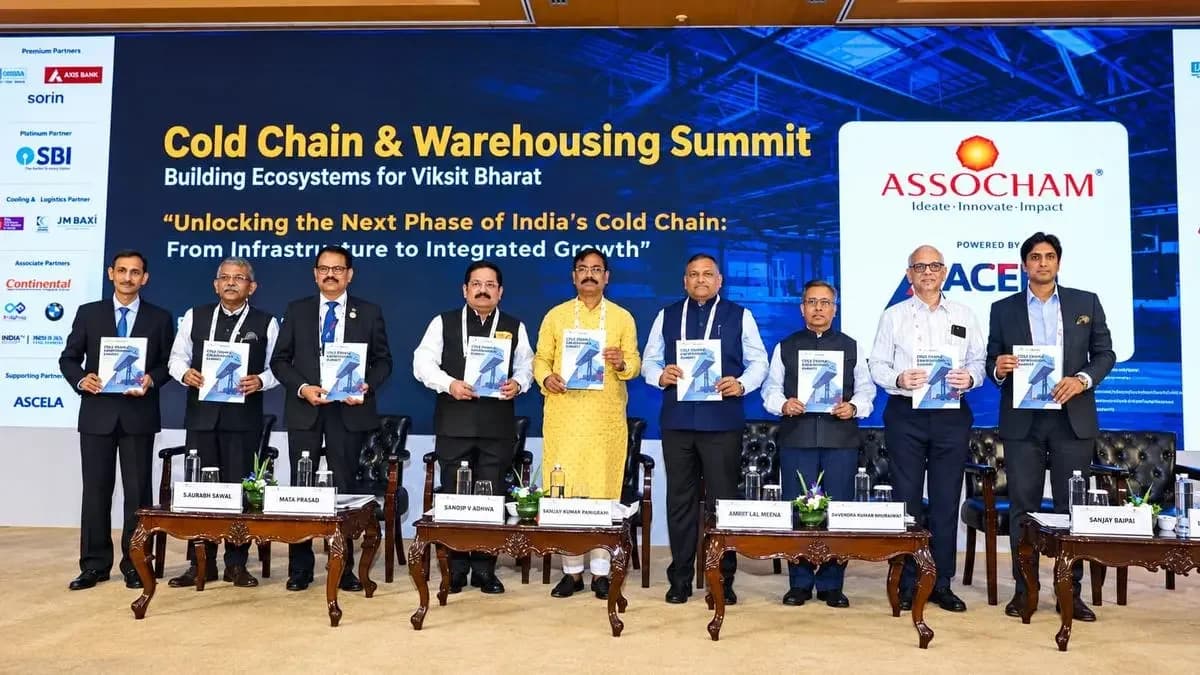
The summit concluded with calls for practical implementation of cold chain and warehousing recommendations. Saurabh Sanyal, Secretary General at ASSOCHAM, urged participants to develop practical, actionable recommendations that can reach appropriate forums for implementation. The event emphasized that cold chain infrastructure represents an important opportunity to connect agriculture infrastructure, food processing and logistics exports, with the focus shifting from temperature control to value preservation and supply chain resilience. Shri Ajit Kumar Panda, Chairman and Managing Director, CONCOR, delivered a special address, while the summit reaffirmed ASSOCHAM's commitment to strengthening the cold chain and warehousing ecosystem by bringing industry, government and other stakeholders together on a common platform. The summit highlighted the importance of cold chain, warehousing and multimodal logistics in making Indian supply chains more competitive, resilient and globally integrated.