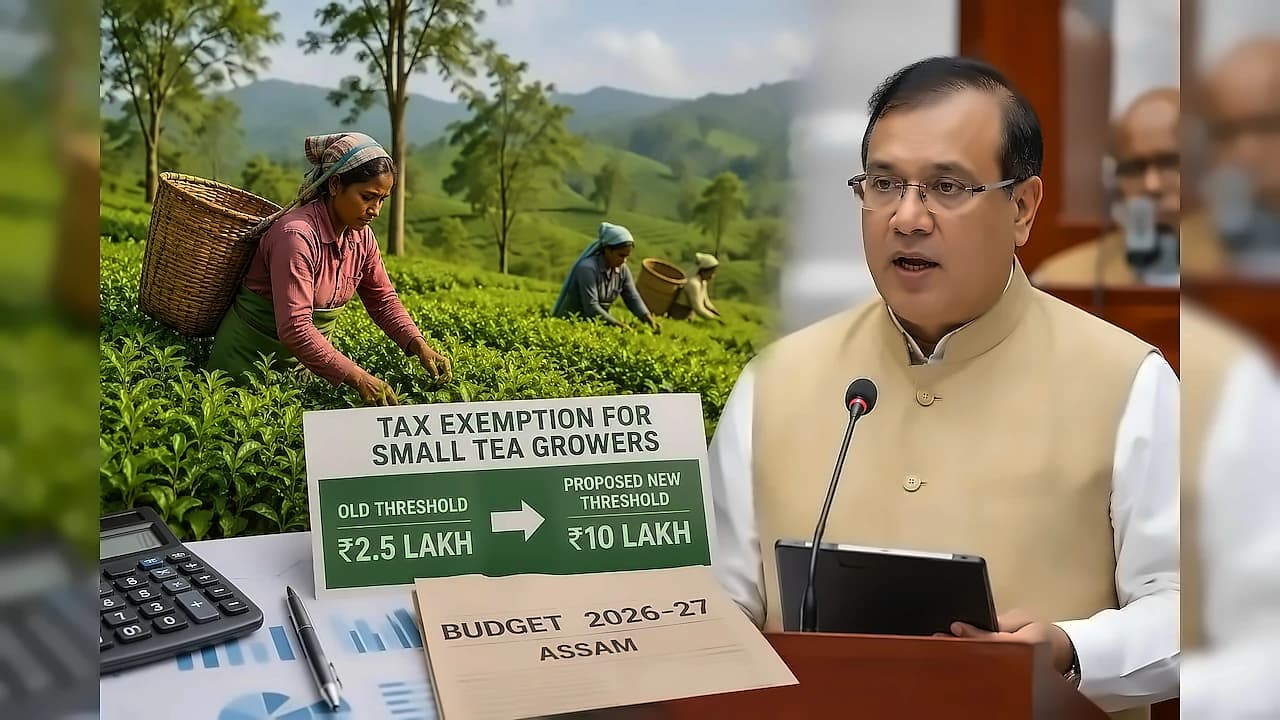
Finance Minister Swapan Dasgupta presented the ₹4.38 lakh crore budget for the remaining eight months of the 2026-27 financial year, marking the first major financial roadmap of the new government. As reported by Business Standard, the budget proposes an outlay of ₹4,38,775 crore focused on employment generation, welfare expansion, infrastructure development, healthcare, education and industrial growth. The Finance Minister launched a scathing attack on the previous Mamata Banerjee government, alleging that the new administration had inherited a massive debt burden of ₹8,15,891 crore from the previous regime. However, Dasgupta expressed confidence that the government would be able to steer the state back towards financial stability with the support of the Centre and a series of fiscal reforms. The budget represents a shift towards a more targeted approach to social spending while retaining the welfare approach, with all existing social protection schemes to continue but modified to ensure benefits reach vulnerable sections.
The budget announced 1 lakh new government vacancies to be filled, including 20,000 police posts and 50,000 teaching posts with 33% reservation for women. State government employees received a major boost with a 20% hike in Dearness Allowance, raising the total DA rate from 18% to 38% for state government employees, effective October 1, 2026. The government announced a ₹14,000 crore for VB-G RAM G scheme for rural employment, a new Bhorsa Karmasathi scheme providing ₹3,000 per month to unemployed youth, and salary hikes for ASHA workers and mid-day meal cook-cum-helpers. Additionally, the government introduced the 'Bharosa' scheme under which graduates from families earning less than ₹1 lakh annually will receive ₹3,000 per month, while other eligible unemployed persons will get ₹2,000. Pensions for senior citizens, widows and specially-abled persons have been increased by ₹500, and retired journalists will receive a monthly pension of ₹5,000.

In a major push for unemployed youth, the government launched the Yuva Shakti Bharosa Scheme providing financial assistance to jobless youth aged 21 to 45 years. Under this scheme, unemployed graduates will receive ₹3,000 per month, while non-graduates will get ₹2,000 per month. This represents a significant expansion of the existing 'Bharosa' scheme, demonstrating the government's commitment to addressing youth unemployment through targeted financial support. The scheme forms part of the broader employment generation strategy outlined in the budget presentation.
The budget announced a major push for women's welfare with ₹36,000 crore allocated for the Annapurna Bhandar scheme, under which eligible women will receive financial assistance of up to ₹3,000 per month. An allocation of ₹550 crore has been earmarked for free bus travel for women, while pregnant and lactating mothers will receive a one-time assistance of ₹21,000. These measures represent a comprehensive approach to women's welfare, addressing both financial security and mobility needs. The government also announced ₹1,000 crore for tourism branding around Durga Puja, with Darjeeling to be developed as an eco-adventure tourism hub and a tiger safari planned in Jhargram.
The government allocated ₹5,000 crore for industrial incentives and introduced a West Bengal Investment Promotion Framework with focus on industrial development through cluster approach along industrial corridors. The framework aims to encourage investments in both MSMEs and major industrial projects, giving priority to investments in North Bengal and Paschimanchal, encouraging the use of green energy and incentivising investments in emerging technologies such as electric vehicles, semiconductor devices and designs, green hydrogen and defence manufacturing. Among projects under consideration are a semiconductor manufacturing unit in Durgapur and a defence manufacturing hub in Bankura and Birbhum. The government plans to revisit the Urban Land Ceiling policy, long viewed by industry as a constraint, and develop a land bank by identifying and reclaiming unutilised industrial land with public sector undertakings.
The West Bengal government announced plans to develop a greenfield airport in Kalyani to address passenger congestion at the Netaji Subhas Chandra Bose International Airport in Kolkata. According to reports from Business Standard, Finance Minister Swapan Dasgupta announced that 1,000 to 1,500 acres would be identified in Kalyani for this major aviation infrastructure project. The proposed airport will form part of a broader connectivity plan, with a techno-economic feasibility study undertaken for metro links between Durgapur-Asansol and Siliguri-Jalpaiguri. Additionally, new airports will be developed at Purulia, Balurghat and Malda under the UDAAN scheme, with the government also planning to develop the deep-sea project at Tajpur through the PPP model at Dandanpatrabarh in Purba Medinipur.