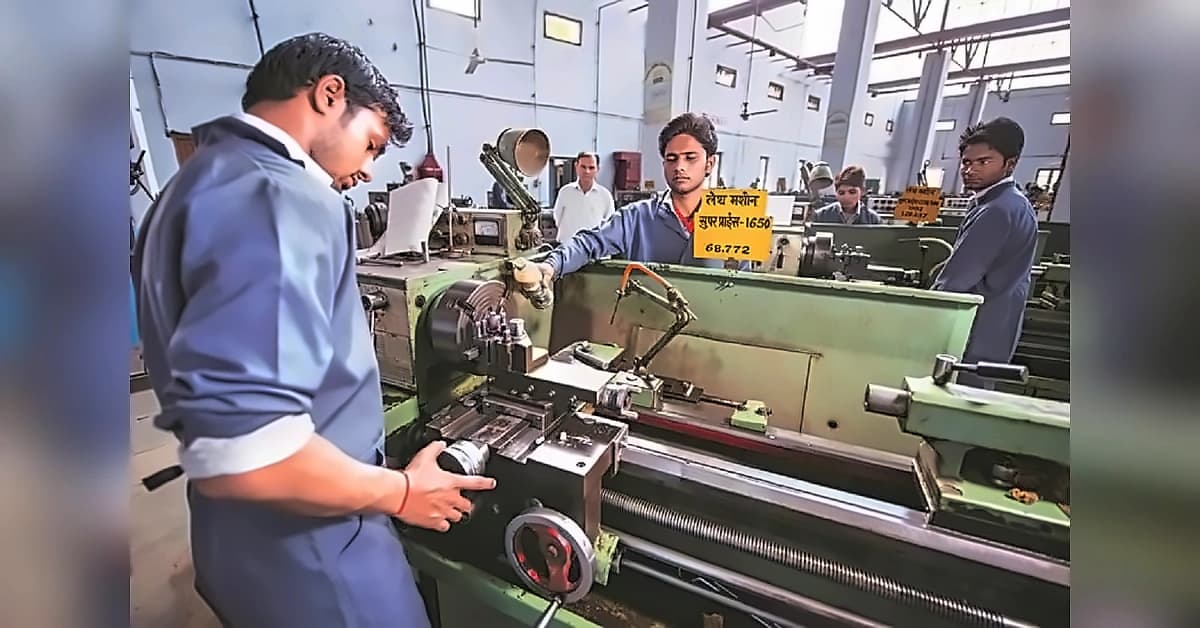
India's manufacturing ambitions are no longer being driven solely by the Centre, as states increasingly compete to attract the next wave of investments. According to reports from Business Standard, initiatives such as Make in India and the Production-Linked Incentive (PLI) scheme are pushing the country towards becoming a global manufacturing hub, with states now sharpening their pitches through generous incentives, land subsidies, industrial corridors, logistics networks, and sector-specific policies. Industry experts emphasize that this competition involves much more than subsidies, with states leveraging their unique strengths to attract investors. As per Industry News, experts say infrastructure, talent, logistics and sustainability are becoming as important as incentives in manufacturing investment decisions.
Haryana is betting on both electronics manufacturing and sustainability, proposing draft policies for Electronics System Design and Manufacturing (ESDM) and e-waste recycling that aim to attract ₹10,000 crore in investments and create around 75,000 jobs over the next five years. As reported by Business Standard, the ESDM policy focuses on boosting electronics design, component manufacturing and innovation through dedicated manufacturing clusters, while the e-waste policy seeks to build a circular economy ecosystem and position Haryana as a hub for responsible electronics recycling. The state is leveraging its proximity to Delhi NCR and strong automotive ecosystem to attract manufacturers, as noted by Chetan Mathur, CEO of Warp Weft Connect, who highlights how Haryana is combining its strategic location with established industrial strengths.
Beyond Haryana, Uttar Pradesh, Gujarat and Tamil Nadu are actively positioning themselves as electronics manufacturing hubs, with several other states including Karnataka, Maharashtra, Andhra Pradesh, Telangana and Odisha also competing in this space. According to Vaibhav Maloo, Managing Director of Enso Group, states are no longer selling only subsidies but are selling sector-specific manufacturing propositions. Gujarat is leveraging its strong logistics backbone alongside policy support, with the state's ports handling over 30% of India's total port cargo in 2024-25. Uttar Pradesh is offering 100% electricity-duty exemption for 10 years, dual-grid support, land rebates, and stamp-duty exemptions under its semiconductor policy. Karnataka is betting on electronics design and semiconductor-linked investments, while Andhra Pradesh is expanding its electronics and battery-material supply chains. Telangana is building dedicated electronics clusters, and Maharashtra continues to leverage its established industrial base.
The electronics manufacturing sector has demonstrated remarkable growth, expanding from ₹1.9 trillion in 2014-15 to ₹11.3 trillion in 2024-25, as reported by Vaibhav Maloo. The semiconductor sector has become another strategic battleground following the launch of the India Semiconductor Mission, with the Centre committing ₹76,000 crore to support the sector and approved projects worth around ₹1.60 trillion across six states as of April 2026. Experts identify electronics manufacturing, electric vehicles (EVs), batteries and energy storage, semiconductors, renewable energy, and advanced manufacturing as the fiercest competition areas, with EVs and batteries being competitive because they connect multiple ecosystems including auto, electronics, chemicals, charging and recycling. As per Industry News, textiles remain important because of their employment generation potential and export opportunities, particularly in states with established industrial ecosystems.
As manufacturing expands, sustainability is moving from a compliance issue to a strategic differentiator, with states increasingly incorporating renewable energy targets, environmental compliance requirements, and waste-management frameworks into industrial policies. According to reports from Business Standard, India generated around 1.39 million tonnes of e-waste in 2024-25, while reported recycling reached 1.15 million tonnes in the same year, highlighting both the scale of the challenge and the need for formal recycling infrastructure. Chetan Mathur believes sustainability will increasingly influence investment decisions, as global customers are increasingly evaluating suppliers on ESG parameters, making sustainability a competitive advantage rather than just a compliance requirement. As per Industry News, sustainability is no longer just a compliance requirement; it is becoming a competitive advantage, particularly for sectors like electronics, EVs, and semiconductor manufacturing where e-waste, battery waste, water consumption, and energy intensity present growing challenges.