The Securities and Exchange Board of India (SEBI) has proposed allowing employers to make consolidated mutual fund investments on behalf of employees through payroll deductions, as part of a broader move to relax third-party payment norms while retaining safeguards against money laundering. According to the consultation paper released on May 21, 2026, this proposal aims to balance "ease of investing in genuine cases" with compliance under the Prevention of Money Laundering Act (PMLA). The facility would be available to all listed and EPFO registered companies and AMCs themselves, with participation remaining voluntary for employees who may opt for salary deduction for mutual fund schemes of their choice.
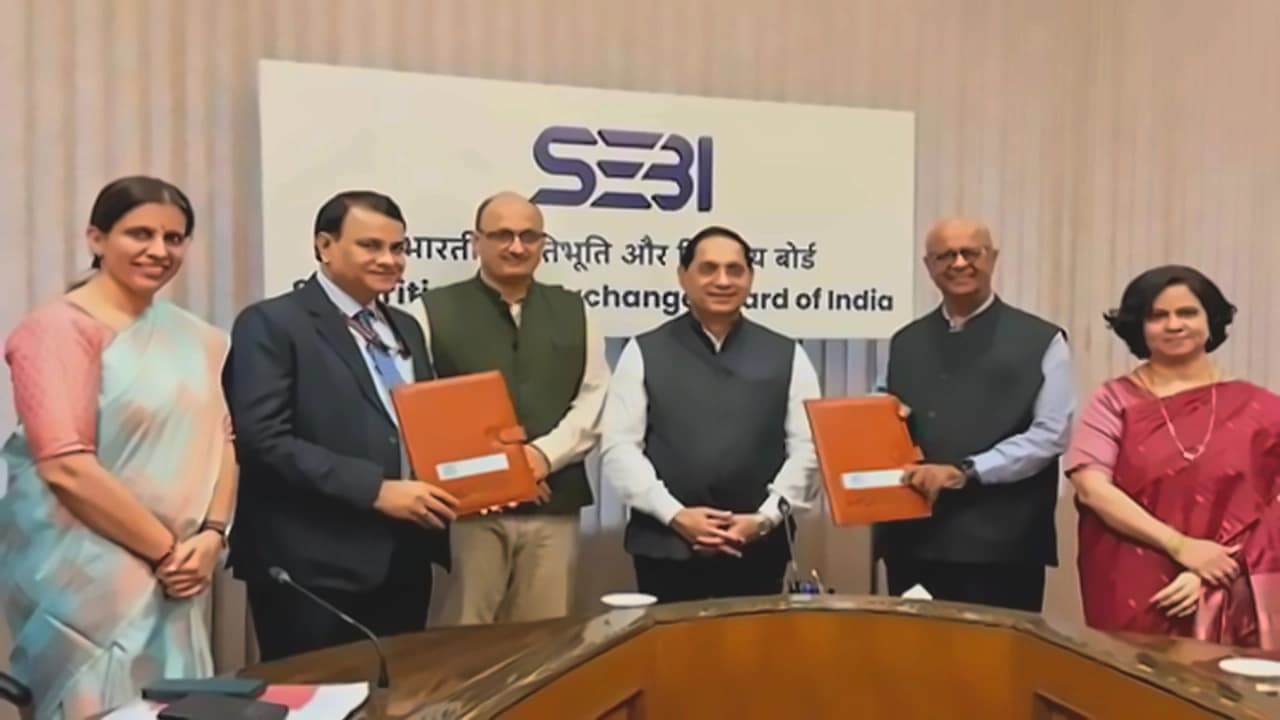
The National Institute of Securities Markets (NISM) and the Indian Institute of Corporate Affairs (IICA) have formalized their collaboration through a Memorandum of Understanding (MoU) signed on May 19, 2026, in Mumbai. According to reports from The Times of India, this partnership brings together institutions established by different regulatory bodies to strengthen India's capital markets infrastructure. The MoU was signed by representatives of both institutions in the presence of senior officials, including NISM Director Sashi Krishnan, and marks a long-term partnership between SEBI, NISM and IICA.
Under the MoU framework, the two institutions will jointly develop certification courses, executive education modules and training programmes, including specialized programmes for Sebi officials and professionals from the regulatory and financial sectors. As reported by The Times of India, this collaboration aims to strengthen capacity building, research, policy development and training across securities markets and corporate regulation. The partnership will also include joint research studies, curriculum development, policy support initiatives, faculty exchange programmes and the organisation of conferences to share best practices. According to the Ministry of Corporate Affairs, the collaboration will focus on building a stronger and more transparent financial ecosystem.
The partnership will concentrate on strengthening corporate governance, ESG frameworks and capital markets in India. According to the Ministry of Corporate Affairs, the MoU aims to build a performance-driven corporate governance ecosystem that enables MSME access to capital markets, strengthens sustainability disclosures and promotes evidence-based research in emerging regulatory domains. The collaboration will cover insolvency frameworks, valuation standards, board governance, responsible investing, sustainable finance, market integrity and emerging regulatory challenges. As reported by The Times of India, the partnership will also seek to improve MSME access to capital markets, strengthen sustainability disclosures, enhance investor education and support evidence-based regulatory research.
At present, SEBI rules mandate that all payments for investments in mutual funds originate directly from the investor's own bank account and be routed only through RBI-authorised payment aggregators or SEBI-recognised clearing corporations. The regulator has received representations from the mutual fund industry seeking relaxation in third-party payment norms in specific scenarios, including salary payments by employers and commission payouts by asset management companies. SEBI has proposed several safeguards for enabling third-party payments, including validation of the relationship between the payee and beneficiary, robust KYC verification, compliance with PMLA provisions, and ensuring that dividend or redemption proceeds are credited only to the beneficiary's verified bank account. Public comments on the proposals can be submitted until June 10, 2026.