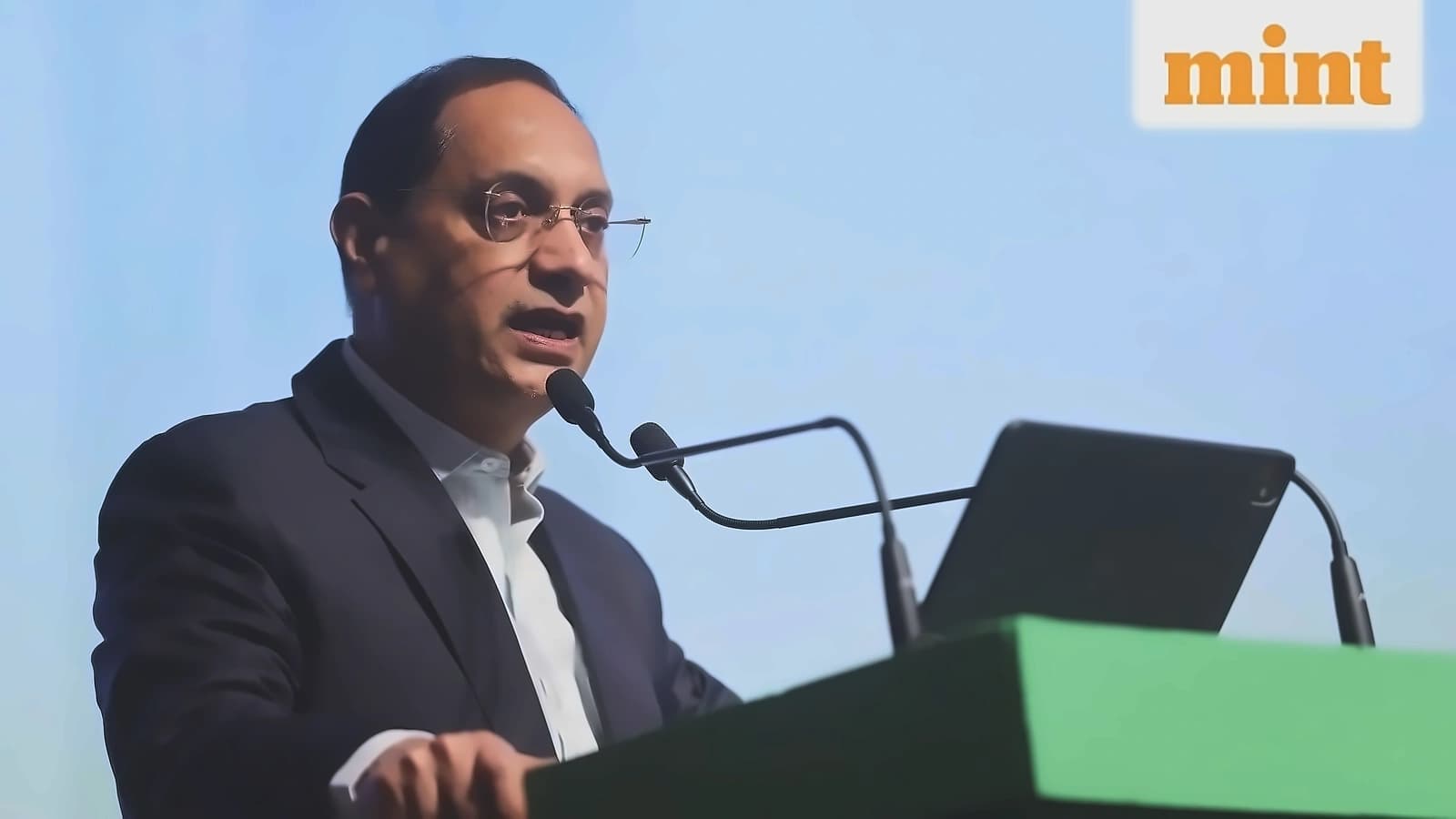
SEBI chairman Tuhin Kanta Pandey announced that direct mutual fund plans will become the default option on asset management companies' digital platforms from November 1, 2026. According to reports from Mint, CNBC TV18, ET Now, The Hindu BusinessLine, and Business Standard, the announcement was made at NDTV Profit Ignite in Mumbai on October 28, 2026. The move is part of SEBI's efforts to improve transparency and help investors make informed decisions. Vedant Gupte, Co-Founder and CEO of Trackk, explained that from November 1, when investors open an AMC's app to start a SIP, the cheaper direct plan will be pre-selected. Investors choosing regular plans will be required to be informed about their higher expense ratios, as part of efforts to improve transparency around mutual fund costs. The change applies specifically to investment choices made through AMC digital platforms from November 1, with existing regular plan investments and SIPs remaining unaffected.
Direct and regular plans of the same mutual fund scheme invest in the same underlying portfolio, but their expense ratios differ significantly. As reported by Mint, CNBC TV18, ET Now, The Hindu BusinessLine, and Business Standard, direct plans are purchased directly from the mutual fund house without a distributor and generally have lower expense ratios, while regular plans are purchased through distributors or intermediaries with distribution-related costs included in their expenses. For example, if the annual expense ratio of a regular plan is 0.5 percentage points higher than its direct counterpart, the difference on an investment of ₹5 lakh would amount to ₹2,500 over a year. Over longer investment horizons, even small differences in costs can significantly affect final corpus due to expenses reducing available amounts for returns generation. According to Business Standard, the expense ratio is the annual charge deducted from a mutual fund scheme's assets to cover fund management and operating costs, reflected in the scheme's net asset value rather than being collected as a separate bill from investors.
Recent analysis demonstrates the practical impact of plan choice on long-term wealth creation. A ₹10,000 monthly SIP for 20 years at an assumed 12% return in a direct plan grows to roughly ₹99.9 lakh, while the same SIP at an assumed 11% return in a regular plan grows to roughly ₹87.35 lakh. This translates into a difference of approximately ₹12.56 lakh, which exceeds half the total investment amount of ₹24 lakh. The gap becomes more significant as SIP amounts increase, with a ₹5,000 monthly SIP resulting in a difference of approximately ₹4.30 lakh between the two plans. Business Standard provides detailed illustrations showing how an investor putting ₹10,000 every month into the same mutual fund through direct and regular plans for 20 years could result in a difference of approximately ₹9.47 lakh in favour of the direct plan, despite both investments having the same underlying portfolio and assumed pre-expense return. These figures are based on historical fund performance and should not be treated as forecasts of future returns, but they demonstrate how differences in expenses and returns can compound over the long term. "While money that is invested compounds, expenses create a drag on that compounding," explains Renu Maheshwari, co-founder and principal adviser of Finscholarz Wealth Managers.
Despite SEBI's push for direct plans, regular plans continue to dominate the retail mutual fund market. According to the latest AMFI-Crisil Factbook 2026 data reported by Mint, retail investors held mutual fund assets (AUM) worth ₹18.95 lakh crore as of March 2026, of which 36.7% is invested in direct plans, while the remaining 63.3% is still in regular plans. Harsh Vardhan Dawar, ACA, CFA, FRM, Founder of Wealth Cafe, explained that mutual funds and insurance continue to be push-products and are sold rather than bought by investors, which explains the large share of regular plans in the total AUM. Vedant Gupte noted that the dominance of regular plans in retail AUM does not necessarily reflect investor preference, as many investors enter the mutual fund market through distributors who typically sell regular plans. Since the expense ratio difference compounds over 15–20 years, it can significantly affect long-term returns, making SEBI's change particularly impactful for investors who tend to stick with pre-selected options. "Making direct plans the default may prevent accidental investment in regular plans by requiring a conscious decision to choose the costlier plan," says Vedant Gupte, co-founder and CEO of Trackk.
SEBI has made it mandatory for consolidated account statements (CAS) to disclose the commission paid to distributors on all SIP transactions through regular plans, as reported by The Hindu BusinessLine. This new requirement ensures investors have complete visibility into the true cost of their investments. The regulator is also requiring distributors to inform investors about higher expense ratios when they choose regular plans, helping investors understand the additional costs of investing through a distributor. While commission charges may be small individually, they add up significantly over a 10-12 year investment period. Mutual fund distributors earn trail commissions of 0.50-1.17% on equity schemes, 0.70-1% on ELSS funds, 0.50-0.80% on hybrid and balanced advantage funds, and 0.20-0.50% on debt funds. According to Business Standard, the regulator's objective is not simply to push investors towards cheaper products, but to ensure they understand the costs and risks attached to their investment decisions. "Investors cannot control performance, but expense ratio is a factor they can control," says Vishal Dhawan, CEO and founder of Plan Ahead Wealth Advisors.
Feroze Azeez, Joint CEO of Anand Rathi Wealth, indicated that the change may not significantly affect distributors' income, as investors who buy mutual funds directly through AMC websites are generally do-it-yourself (DIY) investors who typically opt for direct plans. As reported by The Hindu BusinessLine and Business Standard, making direct plans the default option is unlikely to materially change their behaviour. Investors who rely on distributors for financial planning, fund selection, portfolio construction, and ongoing guidance are likely to continue investing in regular plans through them, as they value the services and support provided. However, the change will improve transparency rather than disrupt the distribution ecosystem, as investors who currently rely on distributors are likely to continue doing so. According to SEBI's investor survey cited by Mint, 63% of households were aware of at least one securities-market product, but only about 9.5% participated in the market. Business Standard reports that experts expect the change to benefit retail investors and gradually increase the share of direct-plan AUM, but does not expect a material impact on overall mutual fund inflows. The new rule covers AMCs' own digital platforms, and existing investments won't switch automatically, making it important for investors to review the costs associated with existing and new mutual fund investments carefully before making any switches.