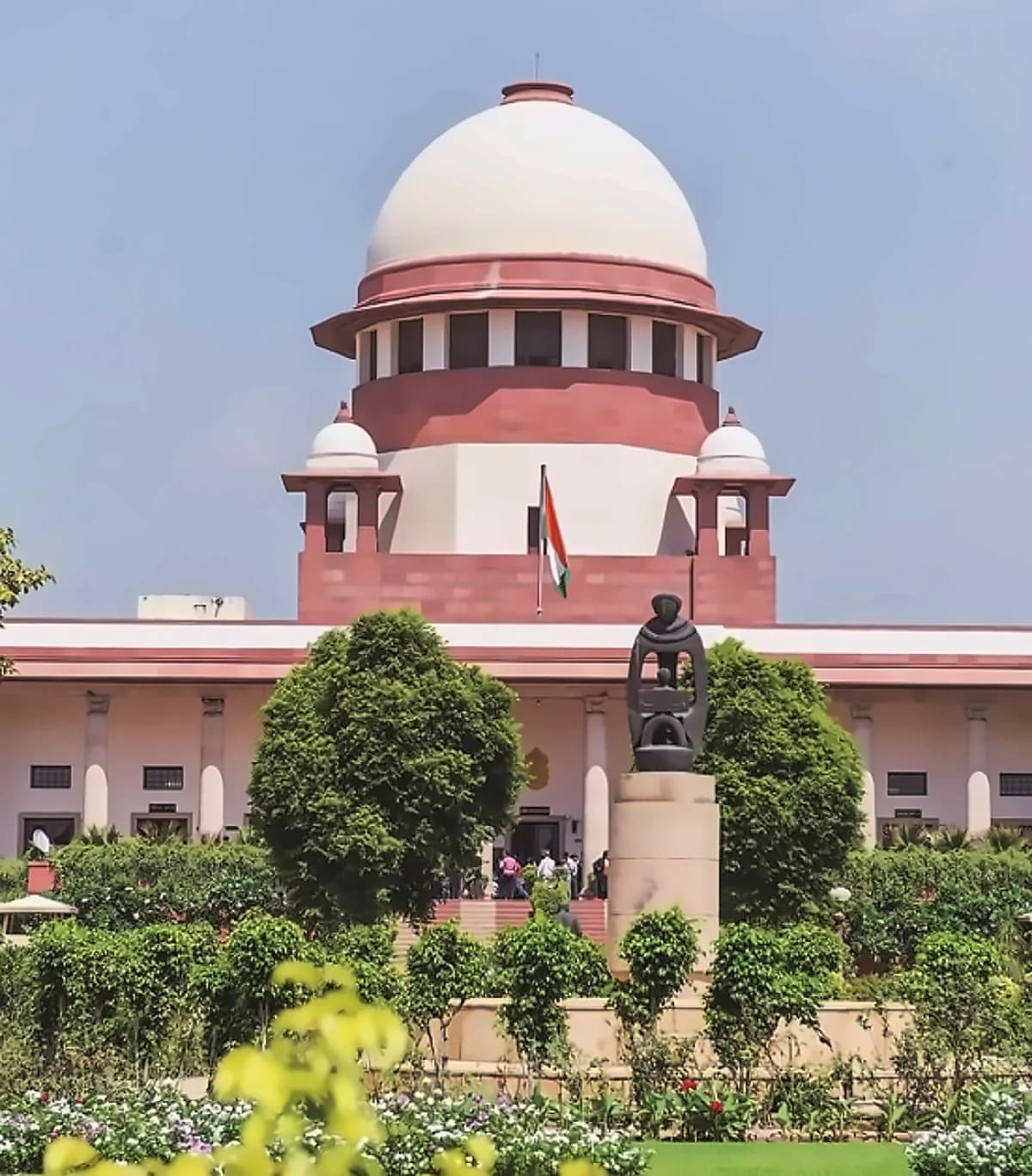
Hospital and pharmaceutical stocks extended losses for a second consecutive session on Thursday, with Fortis Healthcare shares falling 10% over the past two sessions and Apollo Hospitals Enterprises declining 9% during the same period. According to The Economic Times, Max Healthcare is down 8%, while Dr Agarwal's has slipped over 1%. The broader healthcare space saw significant declines, with Fortis Healthcare among the top losers on the Nifty 50, Krishna Institute of Medical Sciences (KIMS) slipping 2.8% to ₹725.85, Aster DM Quality Care declining 1.4% to ₹687.60, and Yatharth Hospital & Trauma Care Services relatively resilient, down 0.3% at ₹1,029.10. The sell-off came after the Supreme Court raised concerns over the wide gap between the price at which hospitals procure medicines and the maximum retail price charged to patients, with the court citing the example of a cancer drug with an MRP of around ₹27,000 despite its price to the retailer being only about ₹2,700. Following the Supreme Court's concerns, the BSE Hospitals Index slipped around 5%, with 16 of its 17 constituents witnessing a decline, as reported by ET Now.
The Supreme Court on Tuesday (September 30, 2026) expressed serious concern over the sharp disparity between the price charged to retailers and the price paid by customers for essential medicines, observing that steep markups place an enormous burden on taxpayers and amount to 'carnage'. According to reports from Live Law, a Bench of Justices Vikram Nath and Sandeep Mehta questioned the Centre why the maximum retail price (MRP) of essential medicines such as cancer drugs could not be capped at 16 per cent over the price to retailer (PTR), as provided for under the Drugs (Prices Control) Order, 2013 (DPCO, 2013). The court's observations came while hearing petitions filed by advocate Kishan Chand Jain and paediatric surgeon Sanjay Kulshrestha, seeking its intervention to regulate the prices of drugs, medical equipment, and generic medicines and make them more affordable. As per The Economic Times, the second regulatory concern relates to high markups on oncology drugs, which account for 4-6% of hospital revenue. At yesterday's hearing, the Bench asked why a uniform 16% margin cap could not be enforced across all pharma products, with Justice Mehta remarking 'There are essential medicines for cancer for which MRP is ₹27,000 and PTR (Price To Retailer) is ₹2,700. That is absolute rampage and carnage, and broad daylight dacoity with the patients.' The court also directed the government to investigate allegations that patients are often compelled to purchase medicines from in-house or designated pharmacies attached to hospitals, flagging significant pricing disparities between single-drug medicines and combination formulations.
Brokerages have now provided detailed estimates of how potential medicine pricing regulations could impact hospital profitability. Jefferies estimates that medicines and consumables account for around 15-20% of hospital revenue and pegged the potential EBITDA impact at 2-5% under various price-cap scenarios, assuming hospitals are unable to pass on the impact. Axis Capital estimates a worst-case impact of 2-3% on revenue and 7-9% on EBITDA, assuming hospitals can offset only 60% of the revenue impact through repricing treatment packages and other service components. Macquarie estimates that medicines, consumables and implants accounted for around 21% of private hospital revenue in FY26, with hospitals not separately disclosing pharmaceutical-related costs, though Macquarie estimates around two-thirds of this cost is attributable to pharmaceuticals. According to The Financial Express, Sunny Agrawal from SBI Securities notes that hospital pharmacies can contribute around 10-25% of a hospital's revenue and profitability, making any restriction on pharmacy margins a significant concern. Thomas V Abraham from Mirae Asset Sharekhan expects the market to expect a 2-4% reduction in EBITDA from current estimates in the base case, but warns that a broader 16% cap could lead to substantially larger impact. The brokerage highlighted that hospitals generally do not separately disclose pharmacy revenue, making it difficult to calculate exact impact on earnings.
Hospitals face varying levels of exposure to government-funded healthcare schemes, which could amplify the impact of potential pricing regulations. HSBC flagged that Max Health, Fortis, Global Health (Medanta) and Narayana Health have 17-21% revenue exposure to schemes, compared with 9-11% for Aster and Apollo Hospitals, and 14% for Manipal Health. BofA notes that drugs and consumables account for 25-30% of tertiary-care bills, with a large portion of pharmacy drugs having regulated margins of 16-20%. The Supreme Court has now expanded its focus to include hospital practices that force patients to purchase medicines exclusively from in-house pharmacies, questioning corporate hospitals that make it mandatory for patients to buy medicines only from their own chemists, stating 'Corporate hospitals are industries. It is not a service at all. Why should the common man suffer all this?'
Pharmaceutical industry executives told Business Standard that the difference between PTR and MRP should not be equated with manufacturer profit. According to industry sources, medicines pass through multiple stages such as distributors, stockists, retailers, and hospital pharmacies, and the final price can reflect taxes, discounts, credit terms, returns, expiries, storage, and distribution costs. Oncology pricing is different as many cancer therapies are injectables or biologics and require cold chain storage, specialised handling, and trained administration, making them reach patients through hospitals and hospital pharmacies rather than neighbourhood chemists. Solicitor General Tushar Mehta, appearing for the Centre, acknowledged the concern but said the government would have to find a way forward while 'balancing equities'. As reported by Live Law, the Solicitor General said 'The pharma company is not the gainer. The gainer is the private hospital' and sought time to place before the court details of the existing mechanisms governing drug pricing. The FDA Commissioner has urged the Centre to frame guidelines to address the 'permissible gap between trade procurement price and declared MRP', with the court posting the matter for further hearing on October 12, 2026. Meanwhile, Goldman Sachs remains constructive on the Indian hospital sector, suggesting that the market reaction may have been more severe than the earnings impact implied by its analysis, while Emkay Global Financial Services believes the broader healthcare universe is unlikely to face any significant earnings disruption.