Prime Minister Narendra Modi commissioned three indigenously designed and built naval ships at the Syama Prasad Mookerjee Port in Kolkata on June 20, 2026, during his visit to West Bengal. According to the Ministry of Defence, the landmark ceremony was presided over by PM Modi at approximately 9:15 AM before he addressed the gathering on the occasion. The vessels represent key operational capabilities across maritime combat, hydrographic surveying, and anti-submarine warfare, designed by the Indian Navy's Warship Design Bureau and constructed by Garden Reach Shipbuilders & Engineers (GRSE), Kolkata. These frontline platforms reflect the Navy's balanced approach to capability development, strengthening blue-water operations, enhancing maritime domain awareness, and securing coastal waters against evolving threats.
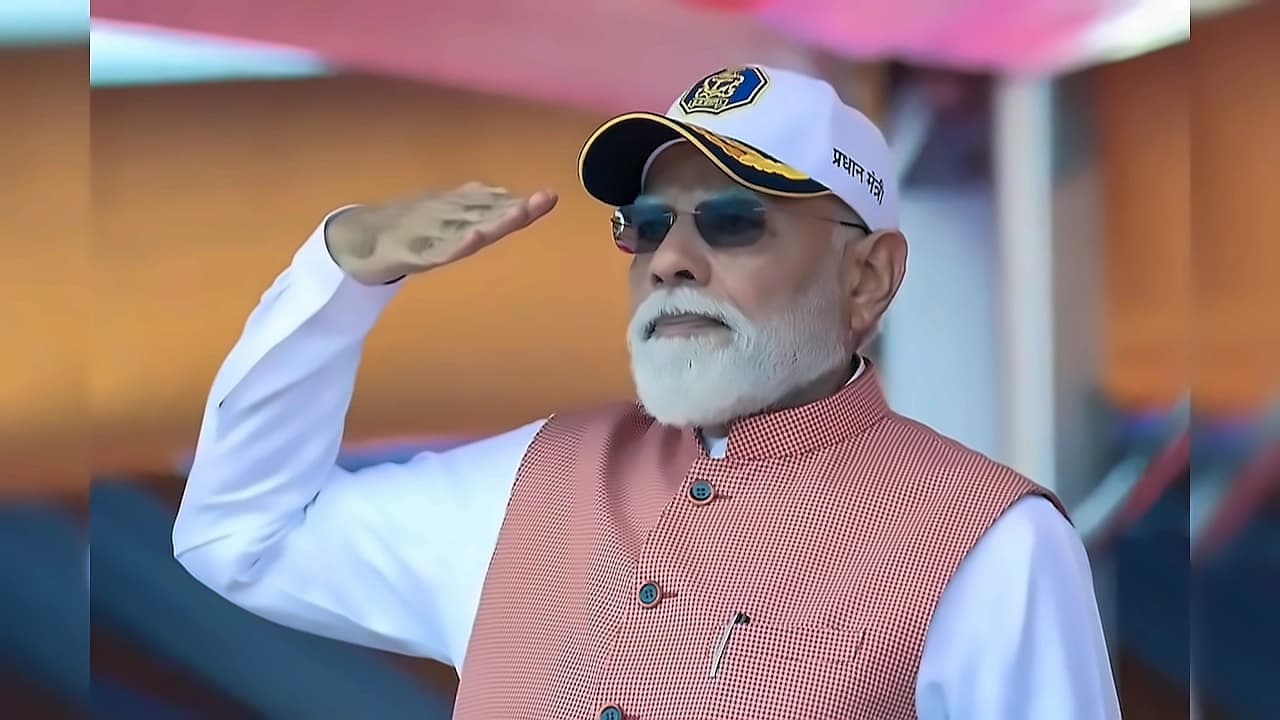
The new BJP government has decided to observe 'Paschimbanga Divas' or West Bengal Day on June 20, marking a significant milestone in the state's history. According to reports from Business Standard, this decision comes as the central government seeks to strengthen its relationship with the state government to fulfill the aspirations of West Bengal's people. The observance has been a subject of political debate in the state, with the Trinamool Congress government preferring to celebrate Bangla Divas on Poila Baisakh, the Bengali New Year, while the BJP marks June 20 as Paschimbanga Divas.
June 20 marks the day in 1947 when the Bengal Legislative Assembly voted in favour of the creation of a separate province that eventually became West Bengal after Partition. As reported by Business Standard, this day represents a crucial moment in the state's history, ensuring West Bengal remains an integral part of India. The prime minister highlighted the invaluable role of Dr. Syama Prasad Mookerjee in this process, noting that this year marks the 125th Jayanti of Dr. Mookerjee. Prime Minister Modi emphasized that "Today, 20th June is of immense significance in West Bengal's history. This was the day which ensured that West Bengal remains an integral part of India. The role of Dr. Syama Prasad Mookerjee was invaluable in the same."
In his address after commissioning the naval ships, PM Modi emphasized India's commitment to self-reliance in defence manufacturing, stating that the nation does not want to remain only a buyer country in the defence sector. "Today India no longer wants to remain a mere buyer in the defence sector. Our military power cannot become a market for the world. The definition of our strength does not lie in becoming the world's market. The definition of our power lies in my self-reliance," he said. Modi highlighted India's recent maritime achievements, noting that over 40 warships and submarines have been commissioned in the last few years, and 45 large naval platforms are under construction. He specifically mentioned India's demonstration of maritime capabilities through the commissioning of aircraft carrier INS Vikrant and stressed that "A country whose maritime power is strong will also have a strong economic and strategic influence and India understands this reality well. India is preparing itself for this, and today is a testament to our capabilities and our skills."
Steel Authority of India Limited (SAIL) supplied the entire 5,700 tonnes of specialised DMR-grade steel for the three newly commissioned naval ships, reinforcing India's defence manufacturing capabilities. According to Business Standard, the steel supplied includes special-quality Defence Metallurgical Research (DMR) 249A-grade hot-rolled sheets and plates, which are high-strength, micro-alloyed and corrosion-resistant steels specifically developed for strategic defence and naval applications. Ashok Kumar Panda, chairman and managing director of SAIL, stated that the company remains deeply committed to national self-reliance, with the company focusing heavily on the Special Plate Plant at the Rourkela Steel Plant to stay ahead of the defence sector's growing needs. SAIL continues to support the nation's Atmanirbhar Bharat initiative by producing specialised steel for critical naval platforms, with the specialised steel also forming the backbone of vessels such as INS Ajay, INS Nistar and INS Anjadeep.