
Prime Minister Narendra Modi emphasized that budget reforms and allocations must be viewed as part of a long-term journey rather than short-term trading documents. Speaking at the first post-budget webinar on "Technology, Reforms and Finance for Viksit Bharat," Modi stated that the national budget is not a short-term trading document; it is a policy roadmap. According to News Arena Network, he noted that budget decisions related to various factors provide lasting strength to the economy and should not be viewed in isolation. Modi observed that the effectiveness of the Budget should also be assessed on solid and substantive parameters, emphasizing that the webinar should focus on meaningful brainstorming rather than limiting discussions to formal exchanges.
The Prime Minister highlighted the dramatic transformation in public capital expenditure over the past decade, with public capital expenditure rising from ₹2 lakh crore 11 years ago to over ₹12 lakh crore in Union Budget 2026-27. As reported by News Arena Network, Modi stated that this rise in public capital expenditure has laid a strong foundation for expansion of the economy. The higher allocation signals the private sector to invest with renewed vigour and leverage Budget announcements for 2026-27. Modi emphasized that India's resilience over the past decade was driven by conviction-led reforms and sustained efforts to improve ease of doing business, with the government anchoring India's growth strategy around record capital expenditure on highways, railways, ports, airports, digital infrastructure and energy networks.
Modi urged the Indian industry to step up investment and innovation, stating "India Inc should come forward with fresh investment and innovation. Financial institutions and analysts should help design practical solutions and improve market confidence." According to The Times of India, he called for closer collaboration between the government, industry and knowledge partners to ensure that reforms translate into tangible outcomes. The Prime Minister emphasized that when the government, industry and knowledge partners come together, "reforms translate into results and announcements on paper turn into achievements on the ground." Modi proposed creating a "Reform Partnership Charter" to formalize collaboration between government, industry, financial institutions and academia as part of the goal of achieving Viksit Bharat by 2047.
Indian stocks experienced significant volatility following the FY27 budget announcement, with markets tumbling as much as 3% in intraday trading on 1 February. As reported by Mint, the decline was triggered by Finance Minister Nirmala Sitharaman's announcement of increased securities transaction tax (STT) on futures to 0.05% from 0.02%, and on options to 0.15% from 0.01%. Despite the initial selloff, stocks recovered some losses and closed 2% lower on the day. The FY27 budget announced by Finance Minister Sitharaman includes a capex of ₹12.2 trillion, along with developments in sectors such as MSMEs, biopharma, semiconductors, and critical minerals.
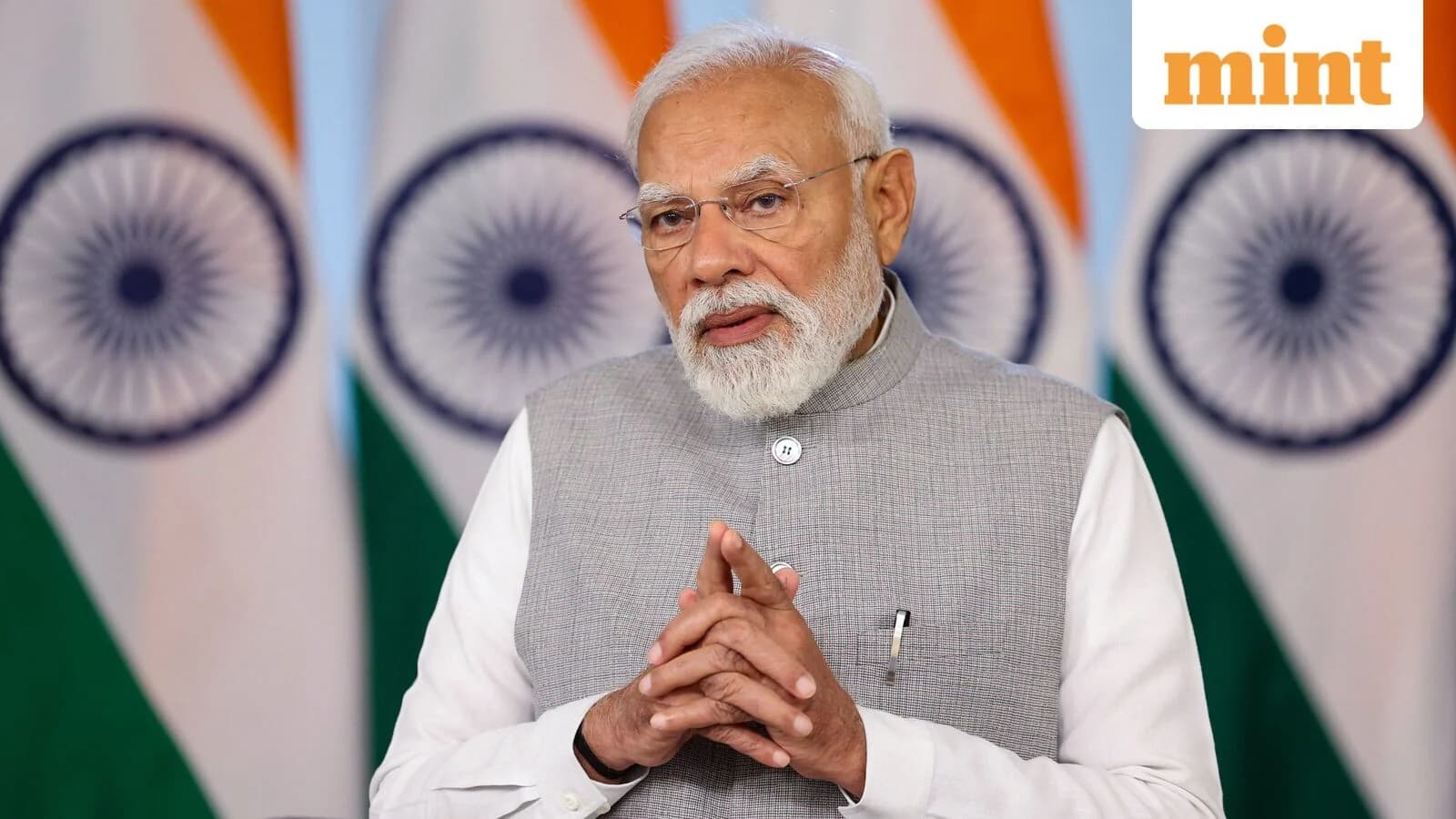
Modi emphasized the need for greater participation in infrastructure and innovation in financial models, stating that "we must strengthen project sanction methodologies and improve the quality of appraisal." According to The Times of India, he said the country needs to extensively use AI, blockchain and data analytics to improve transparency, speed and accountability. The Prime Minister noted that to sustain the reform express momentum, we not only need to focus on policy intent, but also have to focus on delivery excellence. He listed out investor-friendly policies including simplified foreign investment framework with greater predictability and measures for deepening of the bond market, adding that new instruments with less risk should be developed to attract sustained foreign investment. Modi stressed that reforms should be evaluated not by announcement but by their impact on the ground level and called for continuous monitoring of impact through grievance redressal systems.