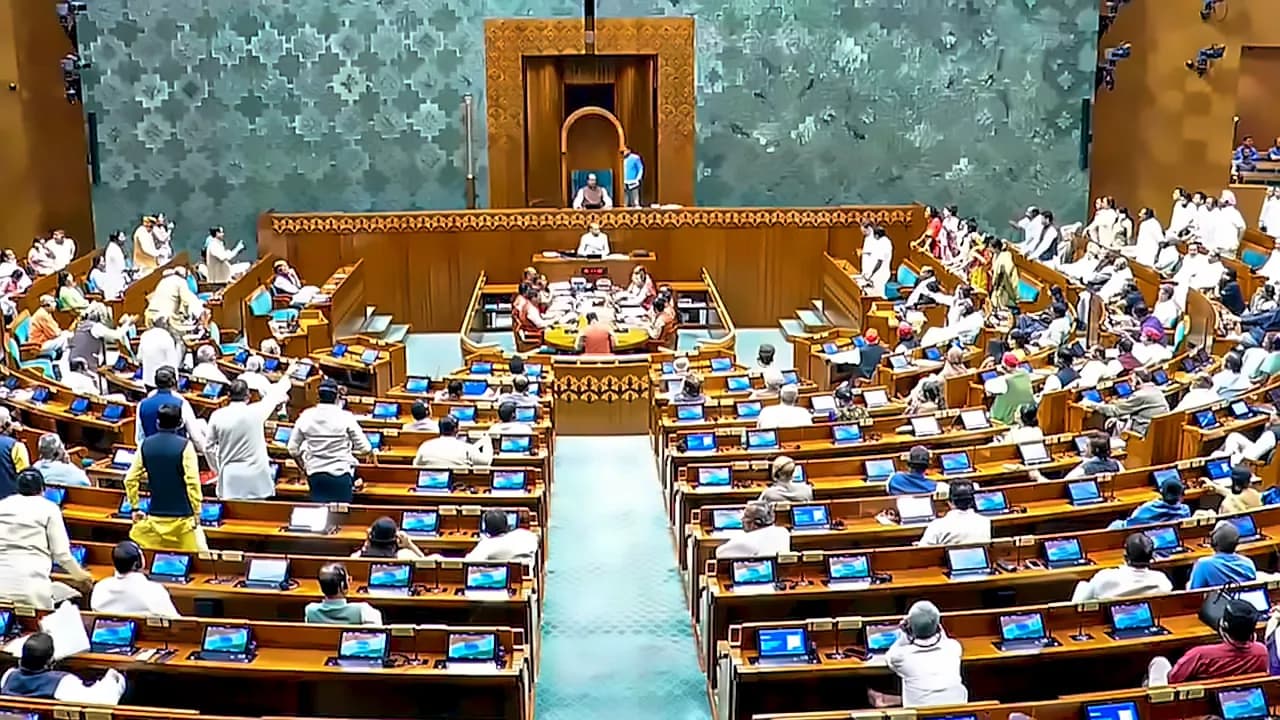
Parliament's 2026 Monsoon Session concluded on Thursday with both Houses adjourned sine die after 12 Bills were introduced and 11 were passed. According to reports from Business Standard, the session saw 33 hours of total parliamentary time spent, with the Indian Statistical Institute Bill, 2026 remaining the only pending legislation. The Lok Sabha was adjourned sine die by Speaker Om Birla at 11:06 AM, followed by the Rajya Sabha, bringing the 19-sitting Monsoon Session to an end. The Mines and Minerals (Development and Regulation) Amendment Bill, 2026 was passed by the Rajya Sabha on Thursday, following the Lok Sabha's adjournment sine die. The session also saw the passage of two Bills replacing ordinances promulgated before the session, including the Supreme Court (Number of Judges) Amendment Bill and the Income-Tax (Amendment) legislation.
The NEET controversy and police action against student protesters dominated the Monsoon Session, with the Opposition demanding a debate on alleged examination irregularities, education minister Dharmendra Pradhan's resignation and accountability for the July 20 crackdown. As reported by Times of India, Opposition leader Rahul Gandhi asked, "Who shot the students? Who gave the order to beat up the students with lathis with nails?" The Opposition linked any debate to accountability over the alleged police action, with Rahul Gandhi rejecting the government's offer for discussion, saying the Opposition was not interested in an "Amit Shah lecture." Home Minister Amit Shah was present during the closing proceedings, with the Opposition shouting "apologise, apologise" and "who ordered the lathi-charge?" as he entered the House. Shah had earlier stated the government was ready for detailed discussion on the student protests. The session was also marked by repeated disruptions over issues including alleged irregularities concerning donations to the Ayodhya Ram Temple and other related matters.
According to PRS Legislative Research data, 10 of the 12 introduced Bills were cleared by both Houses, with the Indian Statistical Institute Bill, 2026 remaining pending. The session produced a broad legislative package including the Public Examinations (Prevention of Unfair Means) Amendment Bill, 2026, which has received presidential assent and seeks to strengthen the integrity of public examinations by providing for speedy investigations and time-bound trials, along with higher penalties for offences. The MSME Development (Amendment) Bill provides for a national digital platform for free and voluntary registration of MSMEs, while seeking to improve access to finance and speed up the resolution of delayed-payment disputes. The Bankers' Books Evidence Bill expands the definition of bankers' books to cover physical, electronic, digital, virtual and cloud-based records. As reported by Business Standard, the Foreign Contribution (Regulation) Amendment Bill was referred to a Joint Parliamentary Committee for detailed scrutiny amid Opposition demands that it be withdrawn. None of the 12 introduced Bills were referred to Standing Committees during this session, contrasting with the previous year's Monsoon Session where five of 13 Bills were referred to committees.
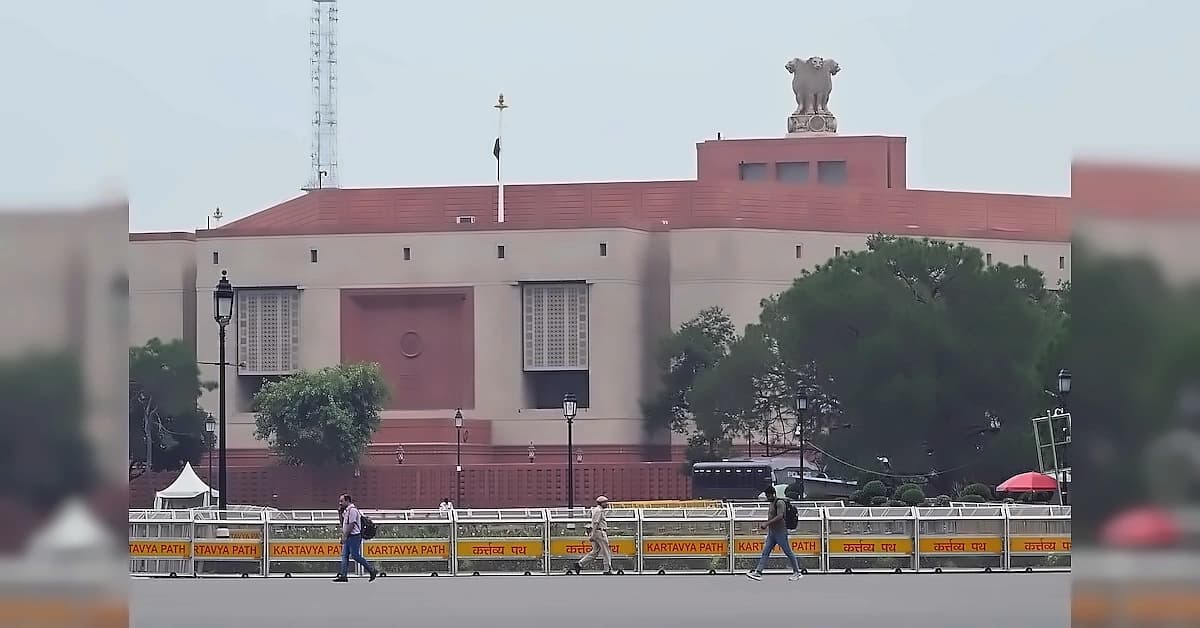
The Public Examinations (Prevention of Unfair Means) Amendment Bill, 2026 accounted for the highest parliamentary discussion with 17 hours 34 minutes across both Houses. As reported by Business Standard, the remaining 10 Bills together accounted for 15 hours 24 minutes of discussion, bringing the total time spent on the 11 passed Bills to 32 hours 58 minutes. Seven Bills received five minutes or less of discussion in the Lok Sabha, with the Registration of Births and Deaths (Amendment) Bill and Supreme Court (Number of Judges) Amendment Bill each receiving four minutes. Parliamentary Affairs Minister Kiren Rijiju acknowledged that parliamentary discussion remained limited, stating "it was not a good session in terms of discussion" despite passing 11 bills. Lok Sabha productivity stood at 19% compared with 39% in Rajya Sabha, according to Rijiju's assessment. In his concluding remarks, Rajya Sabha Chairman C P Radhakrishnan expressed concern over the disruptions, saying members had not made full use of the opportunities available to raise matters concerning the public.
The closing proceedings unfolded amid familiar slogans and disruptions, with the Opposition continuing to demand accountability for the July 20 police action. Prime Minister Narendra Modi and Union Home Minister Amit Shah were present during the closing proceedings, as reported by Times of India. On the final day, Lok Sabha proceedings opened with all six stanzas of Vande Mataram being rendered, marking a first for Parliament. Parliamentary Affairs Minister Kiren Rijiju flagged low parliamentary productivity, stating that while 12 Bills were passed, it was not a good session in terms of discussion. The government had earlier expressed its desire for "meaningful debate, discussion and decisions on issues of National importance," but the session was dominated by political confrontations and disruptions over the NEET controversy. Despite the legislative output, the session recorded low productivity with Lok Sabha functioning with approximately 19% productivity and Rajya Sabha's productivity at approximately 39%, according to the Ministry of Parliamentary Affairs.